

Presenters at the American Society of Nephrology's Kidney Week 2023 discussed the past, present, and future of pediatric chronic kidney disease, as well as explored the obstacles and solutions for effective trial designs.
Presenters at the American Society of Nephrology's Kidney Week 2023 discussed the past, present, and future of pediatric chronic kidney disease, as well as explored the obstacles and solutions for effective trial designs.

The American Society of Nephrology (ASN) Kidney Week 2023 will take place in Philadelphia, Pennsylvania, from November 2-5, as experts from across the globe gather to discuss the latest innovations in renal care and current issues facing the field.

Data on empagliflozin in chronic kidney disease (CKD) showed the drug had similar efficacy across subgroups, but more data is needed to really understand the benefit of the drug in CKD, said Jennifer Green, MD, professor of medicine at Duke University School of Medicine, member of Duke Clinical Research Institute, and EMPA-KIDNEY collaborator.

The studies reviewed estimates of economic and humanistic impact on both patients with chronic kidney disease (CKD) as well as their caregivers.

Daniel E. Weiner, MD, MS, board certified nephrologist and lead navigator at Tufts Clinical and Translational Science Institute, spoke on the limitations and future potential of value-based payment systems for chronic kidney disease (CKD), including the End-Stage Renal Disease (ESRD) Treatment Choices (ETC) Model and the Kidney Care Choices (KCC) Models.

Curtis Warfield, MS, senior quality analyst, Indiana State Department of Health, and regional leader of National Kidney Foundation's Kidney Advocacy Committee, spoke on limitations regarding the current process of educating and managing lifestyle interventions for patients with chronic kidney disease (CKD), and how nephrologists can better integrate these strategies.

More than 1 in 4 adults have 1 or more conditions that fall into the cardio-renal-metabolic category, according to findings released during Kidney Week 2022.

It has been 3 years since new kidney care payment models were announced by HHS, and at a session at Kidney Week 2022, the associate division director of nephrology at the University of Alabama at Birmingham described his organization’s participation in Kidney Care First, one of the value-based care models announced in 2019.

Jen Gunter, MD, obstetrician and gynecologist, author, and specialist in chronic pain medicine and vulvovaginal disorders, spoke on the change in perspective regarding the medical and scientific community's role in dispelling health care misinformation on social media and in the press.
Jennifer Green, MD, professor of medicine at Duke University School of Medicine, member of Duke Clinical Research Institute, and EMPA-KIDNEY collaborator, discussed findings of the EMPA-KIDNEY trial presented at Kidney Week 2022, which showed a 28% improvement for patients with chronic kidney disease (CKD) on empagliflozin, whether in reduced mortality from cardiovascular disease or progression of CKD.

With no sign that medical misinformation is going away, a session at Kidney Week 2022 delved into how nephrologists and researchers can educate and inform the public.

A study presented at Kidney Week 2022 examined the effect of combining diet coaching with financial assistance for Black adults with hypertension and advanced chronic kidney disease.

Access to care remains a key issue when trying to deliver equitable kidney health care to patients, explained O.N. Ray Bignall II, MD, assistant chief diversity and health equity officer at Nationwide Children’s Hospital.

Brent W. Miller, MD, board certified nephrologist and professor of clinical medicine at Indiana University School of Medicine, discussed new and emerging technologies for at-home hemodialysis and peritoneal dialysis, as well as efforts that have been made to address uptake issues for patients with kidney disease.
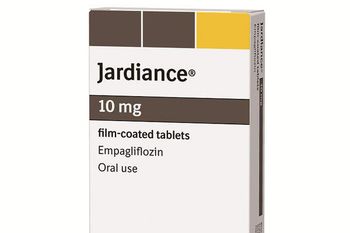
Empagliflozin, a sodium-glucose cotransporter 2 (SGLT2) inhibitor, reduced the risk of death or worsening progression of chronic kidney disease (CKD) by 28%, according to results published Friday at Kidney Week 2022.

Physicians and scientists are worried about the future pandemic preparedness, and the reasons why are largely due to social and political influences, according to a keynote speech and panel discussion on the first day of Kidney Week 2022.

Sessions at Kidney Week 2022 range from combatting medical misinformation to learning about the latest clinical advances, as well as championing health equity for patients with kidney disease.

Susan E. Quaggin, MD, FASN, president of the American Society of Nephrology (ASN) for the 2021-2022 term, discussed the major focuses and breakthroughs in nephrology to be presented at Kidney Week 2022, which include novel treatments for common and rare kidney diseases, as well as efforts to address disparities for transplant and care access.

Although their underlying mechanisms differ, finerenone reduces albuminuria to the same extent as SGLT2 inhibitors, said George Bakris, MD, professor of medicine and director of the American Heart Association Comprehensive Hypertension Center at the University of Chicago Medicine.

Can a population health framework focused on a certain set of patients with chronic disease (ie, chronic kidney disease [CKD]) improve care in the primary care setting?

With the impact of coronavirus disease 2019 (COVID-19) evident in patients with renal disease, a discussion at Kidney Week focused on ways to engage them in clinical trials.

Recognizing chronic kidney disease (CKD) can lead to earlier implementation of interventions among patients, ultimately reducing the risk of end stage renal disease, said Shweta Bansal, MD, FASN, associate professor of medicine in the nephrology division at the University of Texas Health Center at San Antonio.

Although renal replacement therapy is a clinically meaningful end point, trials must include numerous patients and follow them for long periods of time, said Kunihiro Matsushita, MD, an associate professor in the Department of Epidemiology and Division of Cardiology at Johns Hopkins University.

Understanding patients’ social determinants of health (SDOH), including their past experiences with discrimination and medical mistrust, can help improve patient-reported outcomes (PROs), according to new research.
During Kidney Week, various studies discussed not only the effect coronavirus disease 2019 (COVID-19) has on patients with end-stage renal disease (ESRD) but also new attacks of acute kidney injury (AKI) that can cause severe illness or even death.

The use of estimated glomerular filtration rate (eGFR) equations in assessing chronic kidney disease (CKD) for Black patients may lead to underdiagnosis and undertreatment, according to a nephrologist speaking at Kidney Week.

Several symptoms patients with chronic kidney disease (CKD) experience are approved indications for medical cannabis, said Joshua L Rein, DO, FASN, a nephrologist at Mt. Sinai Hospital in New York City.

In reviewing the previous literature on health disparities in kidney disease, there is not a lot described in patients with kidney pathologies outside of ESKD and dialysis, said Jill Krissberg, MD, a pediatric nephrology fellow at Stanford University School of Medicine.

After conducting further genome-wide association studies (GWAS), we will be able to inform communities about the potential implications of gene expression in their kidneys, said Adriana Hung, MD, MPH, associate professor of medicine at Vanderbilt University in an interview with Bryce Rowan, a statistical genetic analyst.

Additional studies about roxadustat, a drug in the new class of hypoxia-inducible factor stabilizers, were released during Kidney Week; one of them explored its role in lowering cholesterol in patients with chronic kidney disease (CKD) and anemia.