

The PURPOSE trials illuminated the ways in which lenacapavir could be used as a means of pre-exposure prophylaxis effectively, but also featured several adverse events.
The PURPOSE trials illuminated the ways in which lenacapavir could be used as a means of pre-exposure prophylaxis effectively, but also featured several adverse events.
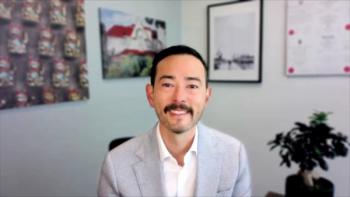
To truly shift the landscape in obesity care, explains Jaime Almandoz, MD, MBA, UT Southwestern, care models and policies must also consider quality of life and total health outcomes.

Insurance hurdles in value-based cancer care create delays and anxiety for patients and providers, complicating access to essential treatments, explained Coral Omene, MD, PhD, of Rutgers Cancer Institute and RWJBarnabas Health.

Brian Slomovitz, MD, of Mount Sinai Medical Center, compares relacorilant plus nab-paclitaxel with existing treatments for platinum-resistant ovarian cancer and highlights the ROSELLA trial’s global scope.

Systemic barriers beyond just the price of drugs can impact health care costs, emphasizing the need for comprehensive affordability solutions, explained H. John Beardsley, MBA, of CoverMyMeds, and Fauzea Hussain, MPH, of McKesson.

Adam Colborn, JD, associate vice president for congressional affairs, Academy of Managed Care Pharmacy (AMCP), shares updates on the Ensuring Community Access to Pharmacist Services (ECAPS) Act of 2025, which was introduced in the House of Representatives last month.

Research from Anjali Vaidya, MD, FACC, FASE, FACP, Temple University Hospital, reveals critical care gaps for patients with methamphetamine-associated pulmonary arterial hypertension (PAH), emphasizing the need for early diagnosis and integrated support.

Leaders in oncology share why the American Society of Clinical Oncology (ASCO) meeting remains a top global gathering for breakthroughs, networking, and lifelong learning.
Medicare Part B drug negotiations in 2028 pose challenges for providers, requiring new payment systems and strategies to ensure patient access, explained H. John Beardsley, MBA, of CoverMyMeds, and Fauzea Hussain, MPH, of McKesson.

With potential lung cancer nodules sometimes slipping through the cracks, educating stakeholders about artificial intelligence (AI) that can catch nodules early could be helpful in cancer treatment.

Gary Falcetano, PA-C, AE-C, explains that proactively managing seasonal allergies can significantly decrease the overall inflammatory burden, thereby improving both physical symptoms and potentially mitigating neuroinflammation's impact on mental well-being.

Constance Blunt, MD, medical oncologist, Mary Bird Perkins Cancer Center, shares how one mobile health care initiative is addressing critical barriers to medical access for underserved populations.

In this final part of a recent interview with Jonathan Strober, MD, UCSF Benioff Children's Hospital and phase 2/3 Vibrance-MG study investigator, he explains the difficulty of evaluating investigative treatments for pediatric patients who have myasthenia gravis.

According to Merrill H. Stewart, MD, Ochsner Health, the test can more accurately identify high-risk patients while helping others avoid unnecessary invasive procedures.
Gary Falcetano, PA-C, AE-C, features insights on how unaddressed chronic allergy symptoms contribute to mental health burdens and the critical role of early immunoglobulin E trigger identification in managing both physical and psychological wellbeing.
Relacorilant combined with nab-paclitaxel (Abraxane) significantly improved progression-free and overall survival in patients with platinum-resistant ovarian cancer in the phase 3 ROSELLA trial, according to Brian Slomovitz, MD, one of the investigators.
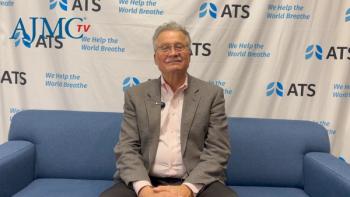
Mild asthma could be better treated with the recent approval of the combination of albuterol/budesonide.
Lenacapavir works to both treat and prevent HIV, making it a promising drug should it be approved by the FDA later this month.
Developments in artificial intelligence (AI) can help clinicians to diagnose thoracic conditions that may be miss on first glance.

Dirk Arnold, MD, PhD, medical director, Asklepios Tumour Biology Centre, discusses a phase 3 clinical trial investigating amivantamab in metastatic colorectal cancer.

Jill Feldman, cofounder and president, EGFR Resisters, shares the importance of being proactive in managing dermatologic toxicities in epidermal growth factor receptor (EGFR)–positive lung cancer.
The value of the combination of albuterol/budesonide is high due to its alleviating of corticosteroid burden, according to Reynold Panettieri Jr, MD.

Danny Rischin, MD, medical oncologist, clinician researcher, Peter McCallum Cancer Centre, discusses a novel adjuvant treatment approach for patients with locally advanced cutaneous squamous cell carcinoma (CSCC).

Switching patients with chronic lymphocytic leukemia (CLL) from ibrutinib to zanubrutinib has led to fewer cardiac adverse effects and a reduced workload for Mohit Narang, MD, managing partner at Maryland Oncology Hematology.

The landscape of treatment for bronchiectasis could change significantly with the approval of brensocatib, offering a more direct method of stemming the adverse events related to the condition, explains James Chalmers, MD, University of Dundee.
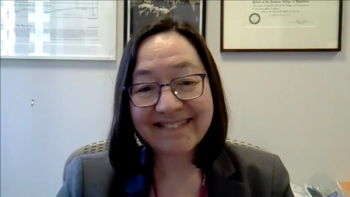
Margrit Wiesendanger, MD, PhD, highlights how social determinants of health and equitable treatment access are critical to improving lupus outcomes, particularly in minority populations.
Ibrahim Aldoss, MD, associate professor, City of Hope, explores recent findings on ponatinib as a first-line treatment for Philadelphia chromosome–positive acute lymphoblastic leukemia (Ph+ ALL).
Different dosages of brensocatib proved effective in treating people living with bronchiectasis when studied in the ASPEN trial.

Vincent Picozzi, MD, medical oncologist and director of the Pancreaticobiliary Program at Virginia Mason, discusses findings from the PANOVA-3 trial, which represents a significant breakthrough in locally advanced pancreatic cancer (LA-PAC) treatment.

Manmeet Ahluwalia, MD, MBA, FASCO, chief of medical oncology, chief scientific officer, and deputy director of the Miami Cancer Institute of Baptist Health South Florida, discusses a groundbreaking clinical trial for non-small cell lung cancer (NSCLC) brain metastases.