

Elaine Siegfried, MD, of Saint Louis University School of Medicine, summarized the recent American Academy of Dermatology guideline update for atopic dermatitis (AD).
Elaine Siegfried, MD, of Saint Louis University School of Medicine, summarized the recent American Academy of Dermatology guideline update for atopic dermatitis (AD).

Edward "Ted" Arrowsmith, MD, MPH, medical director for pathways at OneOncology and managing partner at Tennessee Oncology, talks about challenges and changes in clinical pathways and the importance of keeping them updated.

A social-impact startup, Pittsburgh-based Fabric Health is adept at using community engagement to help members and their families navigate the complex world of health care—meeting customers where they are at, knowing time is often their most valuable resource.

According to Ian Neeland, MD, there are 2 main reasons for the shortage of injectable semaglutide: the fact that oral semaglutide has not yet been tested for weight loss, and that most practitioners just overlook it as an option.

Mike Brown, vice president of managed services at Cardinal Health, discusses how Cardinal Health has worked to integrate key digital health solutions among hospitals across the United States.

David Adamson, MD, founder and CEO of ARC Fertility, discusses how physicians should consider moral and ethical variations of patients when adhering to professional guidelines in fertility care.

Ed Clarke, MD, of Banner Health weighs in on whether health systems should invest in the social determinants of health.
Ian Neeland, MD, highlights that oral semaglutide is more accessible and that patients should avoid switching drug types during the shortage.
Margaret Liang, MD, MSHPM, gynecologic oncologist and health services researcher and director, Gynecologic Oncology Fellowship Program, Cedars-Sinai Cancer Center, discusses financial toxicity in cancer care and how institutions can help alleviate the financial burden for patients.
Melinda C. Aldrich, PhD, MPH, associate professor in the departments of medicine, thoracic surgery, and biomedical informatics at Vanderbilt University, discussed recently updated lung screening guidelines from the American Cancer Society and the importance of equity across populations as new guidelines are developed.

Kimberly Westrich, MA, of the National Pharmaceutical Council, explained how she envisions value assessment tools to be used in the US health care system in coming years.

Michael Gieske, MD, director of lung cancer screening at St. Elizabeth Health Care, discusses disparities in lung cancer incidence and mortality that the Rural Appalachian Lung Cancer Screening Initiative aims to address.

In this interview with Katie Cecconi, community service program coordinator at the UPMC Vision Institute, we learn more about the institute’s mobile eye care initiatives and how its services are working to overcome care equity gaps.

Jonathan Silverberg, MD, PhD, MPH, of George Washington University School of Medicine and Health Sciences, explains the benefits of using Janus kinase (JAK) inhibitors to treat patients with atopic dermatitis (AD).

Amy Laughlin, MD, MSHP, of Orlando Health commented on at-home cancer care costs and shared her predictions on how at-home cancer care will evolve.
Ian Neeland, MD, of University Hospitals Harrington Heart & Vascular Institute, describes challenges patients with diabetes face during the semaglutide shortage and alternative options he gives his patients to prevent therapy disruptions.

Kathi Mooney, PhD, RN, FAAN, of the University of Utah, discussed technologies she and her team developed to help improve the quality of life of patients with cancer and their families.

Andy Blauvelt, MD, MBA, president of Oregon Medical Research Center, recommends new novel topical therapies over topical steroids for patients with atopic dermatitis (AD).

Elaine Siegfried, MD, of Saint Louis University School of Medicine, discusses how the recent guideline update by the American Academy of Dermatology (AAD) affects dermatologists' atopic dermatitis (AD) treatment decisions.

While the Enhancing Oncology Model is the successor of the Oncology Care Model, it includes some very real challenges for participating practices, explained Lalan Wilfong, MD, senior vice president of payer and care transformation at The US Oncology Network.

In recently published data from the phase 3 PROTECT trial, teplizumab slowed the progression of type 1 diabetes in children and adolescents.
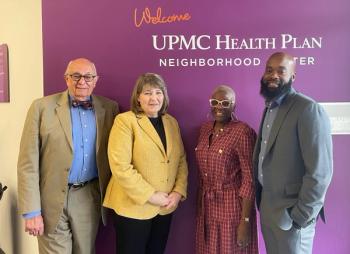
In September, The American Journal of Managed Care® joined 4 individuals whose involvement with UPMC Health Plan, a Strategic Alliance Partner of AJMC®, has proved to be instrumental in furthering health equity and providing high-quality care in Pennsylvania, Ohio, West Virginia, and Maryland.

Mark A. Socinski, MD, executive director at AdventHealth Cancer Institute, discussed the emergence of targeted therapies for lung cancer and their ongoing impact on outcomes for certain patients.

Jun Gong, MD, of Cedars-Sinai Medical Center, discusses the latest data on adagrasib in colorectal cancer, the importance of conducting genomic testing, and more.

A one-size-fits-all approach to alternative payment models (APMs) often isn’t very fair to community practices, said Miriam Atkins, MD, FACP, president of the Community Oncology Alliance.
Justin Bekelman, MD, director of the Penn Center for Cancer Care Innovation, sat with our hosts Emeline Aviki, MD, MBA, and Stephen Schleicher, MD, MBA, for our final episode of 2023 to discuss the importance of collaboration between academic medicine and community oncology and testing innovative cancer care delivery in these settings.
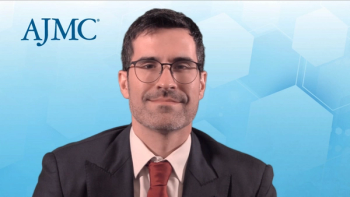
Tiago Biachi de Castria, MD, PhD, associate member in the Department of Gastrointestinal Oncology at Moffitt Cancer Center, discusses how precision medicine tools have aided oncologists in treating patients with solid tumors, while reducing overall toxicity.
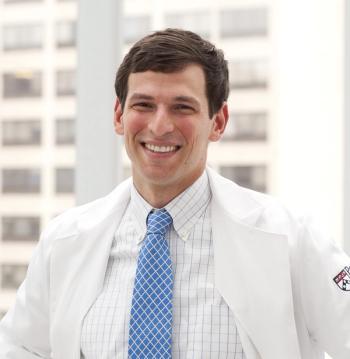
David Fajgenbaum, MD, MBA, MSc, cofounder of Every Cure, shared that the organization is able to reduce clinical trial costs to $1 to $5 million per drug trial, and that clinical trials are not always necessary to expand a drug's indication.
Our top coverage from this year’s Revolutionizing Atopic Dermatitis (RAD) conference highlighted the evolving therapy landscape for patients with AD.

"From a health benefit standpoint, specifically, the employees have to be able to access care, they have to be able to afford the care that they are going to receive, and the benefits also have to be relevant to employees," Bruce Sherman, MD explains.