

Geri Landman, MD, MPH, cofounder and chair of Moonshots for Unicorns, talks about how the lack of government funding for PGAP3 research led her to take it upon herself to work toward a cure for her daughter.
Geri Landman, MD, MPH, cofounder and chair of Moonshots for Unicorns, talks about how the lack of government funding for PGAP3 research led her to take it upon herself to work toward a cure for her daughter.

Bevey Miner, executive vice president of health care strategy and policy, Consensus Cloud Solutions, discusses the importance of incorporating structured data into digital health policy to improve the speed and efficiency of shared information across multiple health settings.
Chase Hendrickson, MD, MPH, Vanderbilt University Medical Center, attributes gaps in continuous glucose monitoring (CGM) prescribing rates to patient demographics, endocrinologists' longer familiarity with the technology, and the availability of ancillary support in endocrine clinics.
Amitkumar Mehta, MD, MBA, associate professor of medicine and director of the lymphoma and chimeric antigen receptor (CAR) T-cell therapy programs, University of Alabama at Birmingham, highlights the need for novel therapy approaches for patients with high-risk mantle cell lymphoma (MCL).
Dr. Parth Rali, MD, of Temple University Hospital explained the challenges of managing patients with intermediate-risk pulmonary embolism (PE) and how risk stratification tools can help to address these challenges.

Jeffrey Sippel, MD, MPH, discusses the trend of insurance claim denials related to non-invasive ventilators for patients with ALS.
Christian John Lillis, cofounder and executive director of the Peggy Lillis Foundation for C difficile Education & Advocacy, explained how FDA-approved microbiome-based therapeutics help to treat and prevent C difficile infection.

Kimberly Maxfield, PhD, of the FDA discussed actions been taken by the FDA since President Biden's reauthorization of the Biosimilar User Fee Act (BsUFA) III last year, as well as what they plan to achieve through 2027.
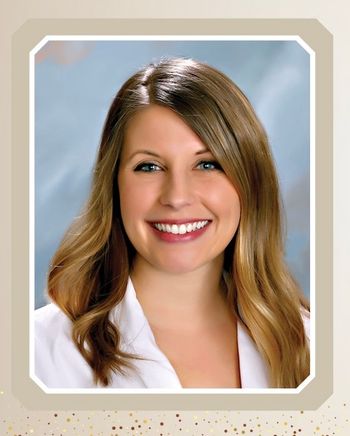
In this interview with The American Journal of Managed Care®, Katie Queen, MD, addresses the complexity of obesity as a medical condition, pivoting to virtual care while ensuring that patients who lived in a rural location continued to receive adequate care, and the importance of integrating awareness of obesity and chronic disease prevention into local food culture.
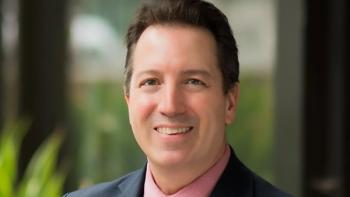
Alexander Fay, MD, PhD, joined for a Q&A about the current state of spinal muscular atrophy (SMA) treatment and the unanswered questions in the field.
Alyson Moadel-Robblee, PhD, deputy director of community engagement and cancer health equity at Montefiore Einstein Comprehensive Cancer Center, discussed the center's evolving patient distress screening process and the Bronx Oncology Living Daily support program for patients with cancer.
Due to the frequent rejection of claims for noninvasive ventilators by Medicare Advantage plans, individuals with amyotrophic lateral sclerosis (ALS) are experiencing disproportionately high rates of hospital admissions.

Michael Fang, PhD, researcher and assistant professor in the division of Cardiovascular and Clinical Epidemiology at Johns Hopkins University, discussed recent findings in the type 1 diabetes (T1D) space that may alter the way providers address diabetes diagnoses.
To combat C difficile, Christian John Lillis, cofounder and executive director of the Peggy Lillis Foundation for C. Diff Education & Advocacy, noted that awareness and innovation must continue to increase.
Ruben A. Mesa, MD, president and executive director of Atrium Health Levine Cancer Institute and Atrium Health Wake Forest Baptist Comprehensive Cancer Center, discusses key challenges and opportunities for improving cancer care among rural and minority patients.
With the recent development of various new treatments, April Armstrong, MD, MPH, discusses the new standards she and other dermatologists hope to set for treating patients with atopic dermatitis (AD).
Amal Trivedi, MD, MPH, professor at Brown University, discusses the qualities that led him to nominate David J. Meyers, PhD, to receive the Seema S. Sonnad Emerging Leader in Managed Care Research Award. The American Journal of Managed Care® presented the award to Dr Meyers at the 2023 Patient-Centered Oncology Care® meeting.
Amid National C. Diff Awareness Month, Christian John Lillis, cofounder and executive director of the Peggy Lillis Foundation for C. Diff Education & Advocacy, explains the foundation's "See C. diff" campaign and what the PLF hopes the public will learn throughout the month.

Mark A. Socinski, MD, discussed how the understanding of lung cancer has evolved over time, as well as how its heterogeneity impacts treatment strategies.
Natasha Halasa, MD, MPH, Vanderbilt University Medical Center, discusses the most pressing diarrheal illness challenges and successful strategies physicians can use to reduce this burden in patients.
Amitkumar Mehta, MD, MBA, University of Alabama at Birmingham, notes the long-term data and potential curative effects of chimeric antigen receptor (CAR) T-cell therapy, while expressing optimism about bispecific therapy with ongoing evolution and the chance of significant patient responses.

Edward "Ted" Arrowsmith, MD, MPH, medical director for pathways at OneOncology and managing partner at Tennessee Oncology, highlights the need for trust between payers and providers, as well as finding balance in building consistent clinical pathways while prioritizing specific practice needs.
Industry stakeholders and patient advocacy groups are raising concerns with CMS due to high denial rates for non-invasive ventilators (NIVs) by Medicare Advantage plans.

Care in the fourth-trimester, when the birth has taken place and the mother and baby return home, is crucial for the well-being of the mother or the birthing person, Takiyah Durham, MBA, explains in an interview.
There is a lot of noise in the health care system, and oncologists need to collaborate and decide on common shared goals, said Lucy Langer, MD, MSHS, national medical director of oncology and genomics at UnitedHealthcare.

Leveraging technology intelligently can make the patient-doctor interaction much more seamless and connected, said Samyukta Mullangi, MD, MBA, medical director of oncology at Thyme Care, medical oncologist at Tennessee Oncology.
Regardless of kidney disease subtype, biomarkers can successfully ascertain risk of kidney disease progression, said Steven Coca, DO, MS, of the Icahn School of Medicine at Mount Sinai.
Peter A. Lio, MD, clinical assistant professor of dermatology and pediatrics at Northwestern University's Feinberg School of Medicine, lists barriers to care for dermatology patients.
Peter A. Lio, MD, clinical assistant professor of dermatology and pediatrics at Northwestern University's Feinberg School of Medicine, describes different methods dermatologists can use to treat atopic dermatitis (AD).
There is great value, both for clinical trials and clinical practice, in biomarkers that identify patients at greatest risk of developing chronic kidney disease (CKD) after acute kidney injury, explained Steven Coca, DO, MS, Icahn School of Medicine at Mount Sinai.