

Gene therapy is only one exciting area of treatments in the pipeline to potentially treat inherited retinal disease, said Byron L. Lam, MD, professor of ophthalmology, University of Miami Miller School of Medicine's Bascom Palmer Eye Institute.
Gene therapy is only one exciting area of treatments in the pipeline to potentially treat inherited retinal disease, said Byron L. Lam, MD, professor of ophthalmology, University of Miami Miller School of Medicine's Bascom Palmer Eye Institute.

On this episode of Managed Care Cast, we speak with the lead researcher from a study published in the June 2023 issue of The American Journal of Managed Care® about how employers and their employees are utilizing direct-to-consumer telehealth to reduce the cost of care.

Andy Blauvelt, MD, MBA, president of Oregon Medical Research Center, discusses challenges many physicians face in getting approved for the most effective drugs to treat patients with atopic dermatitis (AD).

In this interview from SLEEP 2023, Andrew McHill, PhD, of Oregon Health and Science University (OHSU), explains the importance of individualizing sleep hygiene recommendations.

Improving access to diabetes technology so that everyone can benefit is a top priority, said David Maahs, MD, PhD, professor of pediatrics at Stanford University and division chief of pediatric endocrinology at Lucile Packard Children’s Hospital.

Biosimilars are starting to make a significant impact in overall drug spending, which is what they are designed to do, said Scott Soefje, PharmD, director of pharmacy cancer care at Mayo Clinic.

Future myasthenia gravis therapies have different mechanisms of action than current treatments, said James F. Howard Jr, MD, professor of neurology at the University of North Carolina at Chapel Hill.
David Maahs, MD, PhD, professor of pediatrics at Stanford University and division chief of pediatric endocrinology at Lucile Packard Children’s Hospital, talks about the Timely Interventions for Diabetes Excellence dashboard, increases in continuous glucose monitoring, and more.

Tycel Phillips, MD, hematologist-oncologist at City of Hope in Duarte, California, discusses the need for novel treatments for patients with diffuse large B-cell lymphoma (DLBCL).

Michael Thompson, president and CEO of the National Alliance of Healthcare Purchaser Coalitions, gave insight into the themes of the upcoming National Alliance Leadership Summits.
Susan Escudier, MD, FACP, vice president of value-based and quality programs for Texas Oncology, discusses how collaboration between oncologists and primary care physicians (PCPs) can improve patient satisfaction and outcomes.

In this interview from SLEEP 2023, Dayna Johnson, PhD, MPH, MSW, MS, addresses the various pathways through which cardiovascular health is adversely affected by suboptimal sleep health.

Mark Fendrick, MD, and Nicholas Bagley, JD, discuss how the ruling in Braidwood v Becerra could affect availability of preventive care.

Courtney DiNardo, MD, MSCE, the lead author on a study presented at EHA 2023 evaluating a new therapy for chronic myelomonocytic leukemia and acute myeloid leukemia, discusses the FDA Fast Track Designation for IO-202 and strategies for raising awareness and improving diversity in clinical trials.
The most exciting treatment for inherited retinal disease was approved in 2017, but there are many novel treatments in phase 2 or phase 3 trials at this point, said Byron L. Lam, MD, professor of ophthalmology, University of Miami Miller School of Medicine's Bascom Palmer Eye Institute.

Martin Griesshammer, MD, PhD, from the Johannes Wesling University Clinic, spoke on the current unmet needs in treating polycythemia vera (PV) and how multistakeholder collaboration can help address them.
More data is emerging on the efficacy of several triplet therapies to treat single-class refractory multiple myeloma (MM), potentially giving patients more therapy options than ever before, according to Tel-Aviv Sourasky Medical Center's Yael Cohen, MD, at the European Hematology Association 2023 Congress.

Wojciech Jurczak, MD, PhD, lead researcher on the L-MIND study evaluating a new treatment combination in diffuse large B-cell lymphoma (DLBCL), gave an overview of the trial results that were presented at the European Hematology Association 2023 Congress.

Jennifer Brown, MD, PhD, Dana-Farber Cancer Institute, shared her thoughts on the current research regarding Bruton tyrosine kinase (BTK) and B-cell lymphoma 2 (BCL-2) inhibitors in chronic lymphocytic leukemia (CLL) and what providers should keep in mind before prescribing them.

MD Anderson Cancer Center's Hans Lee, MD, shared considerations for possible infection risk associated with bispecific therapies used to treat relapsed/refractory multiple myeloma (MM) at the European Hematology Association 2023 Congress
James F. Howard Jr, MD, professor of neurology at the University of North Carolina at Chapel Hill, explains how nerve and muscle signaling in the neuromuscular junction go awry in myasthenia gravis.

Tycel Phillips, MD, hematologist-oncologist at City of Hope in Duarte, CA, discussed the utility of epcoritamab in diffuse large B-cell lymphoma (DLBCL) and the potential impacts the bispecific antibody's recent approval will have in the community oncology setting.
Barb Kunz, MS, LCGC, senior genetic counselor at the US Oncology Network, discussed the importance of germline genetic testing in patients with triple-negative breast cancer and other cancer types.
If payers can agree on consensus criteria to improve care quality or costs, that will help physicians remember and try to be compliant, said Samyukta Mullangi, MD, MBA, incoming medical director at Thyme Care.
The pilot 4T study showed consistent hemoglobin A1C improvement in all children with type 1 diabetes (T1D) after 1 year, underscoring the importance of early continuous glucose monitoring (CGM) following diagnosis, explained David Maahs, MD, PhD, professor of pediatrics at Stanford University and division chief of pediatric endocrinology at Lucile Packard Children’s Hospital.
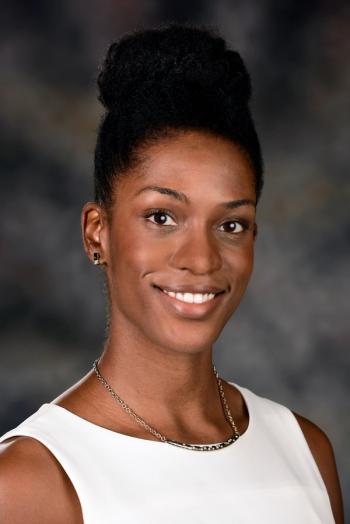
In this interview with The American Journal of Managed Care®, Symielle A. Gaston, PhD, MPH, of the National Institute of Environmental Health Sciences (NIEHS) of the National Institutes of Health, explores the relationship between sleep health and outcomes disparities among patients of various races and ethnicities.

Targeting insomnia with cognitive behavior therapy is almost like a frontline therapy, because by doing so, you’re able to improve a whole host of other symptoms that would coexist with insomnia, explained Sheila Garland, PhD, MSc, Memorial University in Newfoundland, Canada.
Research is finding that there is an intricate connection between sleep and inflammation, such that lack of sleep can increase inflammation, noted Andrew McHill, PhD, an assistant professor at Oregon Health and Science University.

Robert Sidbury, MD, MPH, professor of pediatrics at Seattle Children's Hospital, discusses best practices that physicians and parents of infants with atopic dermatitis (AD) can do to help manage flare- ups, as well as barriers to care, which he presented at the Revolutionizing Atopic Dermatitis conference.
Dayna Johnson, PhD, MPH, MSW, MS, the Rollins School of Public Health at Emory University, discusses principal findings from the analysis of a 35-day sleep intervention study that utilized a mobile mindfulness app to manage stress and anxiety combined with healthy sleep practices.