
Patients with relapsed/refractory myeloma from lower socioeconomic groups face worse quality of life, even in countries with universal health care, according to Francesco Sparano, MSc, of the Italian-based GIMEMA Foundation.
Patients with relapsed/refractory myeloma from lower socioeconomic groups face worse quality of life, even in countries with universal health care, according to Francesco Sparano, MSc, of the Italian-based GIMEMA Foundation.

Rucaparib maintenance improved progression-free survival (PFS) in homologous recombination deficiency (HRD)-negative advanced ovarian cancer, irrespective of baseline prognostic factors.
Long-term CARTITUDE-1 data show ciltacabtagene autoleucel (cilta-cel) may offer lasting remission and survival in relapsed/refractory multiple myeloma, according to Sundar Jagannath, MBBS, of the Icahn School of Medicine at Mount Sinai.

In this interview, Richard J. Nowak, MD, MS, principal investigator of the MINT trial of inebilizumab for generalized myasthenia gravis (gMG), discusses the trial’s key findings, including significant improvements in patient- and physician-assessed outcomes, as well as longer-term implications and future areas of investigation.
The Beat AML Master Trial found high remission rates and promising safety with triplet therapy in patients with acute myeloid leukemia (AML), according to Ashley Yocum, PhD.
Lorna Warwick, CEO of the Lymphoma Coalition, highlights findings underscoring the vital role of clinician communication in managing adverse effects and supporting patient confidence in lymphoma and chronic lymphocytic leukemia (CLL) care.
Sanjay Ramakrishnan, MD, senior lecturer, University of Western Australia, breaks down how to communicate the value of dupilumab using patient-centered language and sports metaphors to patients.

Surbhi Sidana, MD, MBBS, director of the Myeloma Disease Focused Group at Stanford University, provides a reintroduction to CARTITUDE-4 and insight on how this phase 3 investigation builds on previous findings of CAR T vs standard-of-care findings in relapsed/refractory multiple myeloma (RRMM)

A teledermatology program in Georgia helped identify patients with skin lesions that warranted in-person follow-up with a physician.
Shorter venetoclax durations in patients with acute myeloid leukemia (AML) and myelodysplastic syndromes (MDS) yielded comparable survival outcomes in a new study, challenging treatment norms.

This study highlights the vital role of caregivers in supporting women living with pulmonary arterial hypertension (PAH) and underscores the need to enhance caregiver support and address unmet needs to improve patient outcomes.

CEPHEUS trial lead investigator Saad Z. Usmani, MD, MBA, FACP, FASCO, explains how the trial both builds on current knowledge of newly diagnosed multiple myeloma and how transplant-ineligible status may affect therapeutic decision-making.
Results show the regimen of epcoritamab plus R-ICE could serve most patients as a bridge to either autologous stem cell transplant or CAR T-cell therapy.

New data shows that barzolvolimab offers sustained complete responses and significantly improved quality of life for patients with chronic spontaneous urticaria, with a favorable safety profile.

Sessions and posters at the 2025 European Hematology Association Congress evaluated the potential and real-world practices of using artificial intelligence (AI) to predict and improve outcomes for patients with hematological diseases.
At the 30th European Hematology Association (EHA) Congress, hematology experts highlight breakthroughs in treatment, the importance of patient voices, and challenges in making innovations accessible worldwide.

Dr Rugo discusses the promising outcomes of trastuzumab deruxtecan for HER2+ breast cancer, addressing interstitial lung disease risks and retreatment strategies.
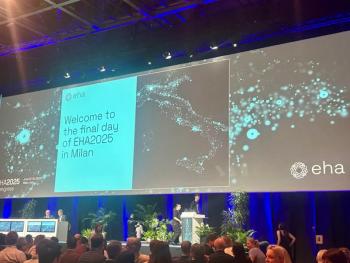
The late-breaking abstracts presented on the last day of the 2025 European Hematology Association (EHA) Congress show “what a vibrant clinical specialty we’re in,” according to session cochair Brian Huntly, PhD.
Unaddressed adverse effects, such as fatigue, significantly reduce patient confidence in care plans and negatively impact quality of life for individuals with lymphoma and chronic lymphocytic leukemia (CLL), according to Lorna Warwick, CEO of Lymphoma Coalition.
At the European Hematology Association (EHA) 2025 Congress, Ashley Yocum, PhD, highlights how the Beat AML Master Trial advances safe, personalized treatment and expands targeted therapy options for patients with acute myeloid leukemia (AML).

Adolescent and young adult (AYA) patients with hematological diseases have unique needs that require a multidisciplinary strategy to ensure their mental and sexual well-being during and beyond treatment, clinicians and patients agreed.
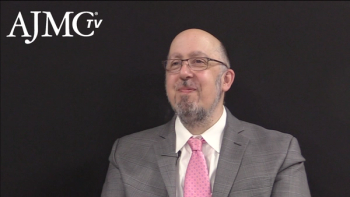
Adding polatuzumab vedotin to rituximab, gemcitabine, and oxaliplatin (R-GemOx) significantly improved overall survival in transplant-ineligible patients with relapsed/refractory diffuse large B-cell lymphoma (R/R DLBCL), according to Matthew Matasar, MD, of Rutgers Cancer institute.
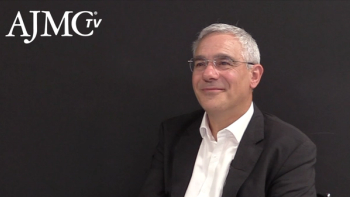
The phase 3 IRAKLIA trial assesses subcutaneous isatuximab via on-body injector vs intravenous (IV) administration, in combination with pomalidomide and dexamethasone, in relapsed/refractory multiple myeloma (RRMM).

Abstracts presented during the plenary session of the 2025 European Hematology Association (EHA) Congress spanned from novel drug regimens for myeloma and lymphoma to investigation of leukemias on the molecular and genetic levels.
Patients with relapsed/refractory (R/R) multiple myeloma and lower socioeconomic status reported significantly worse quality of life and a higher burden of symptoms, according to Francesco Sparano, MSc, of the GIMEMA Foundation.

Our knowledge of the effects of space and low gravity on blood cells, clotting, and anemia continues to expand, but further research is needed as commercial spaceflights are poised to grow in popularity.

While the tax exclusion for employer-sponsored health care was not included in the House-passed reconciliation bill, it remains a revenue target for Congress, risking inclusion in the Senate's version.
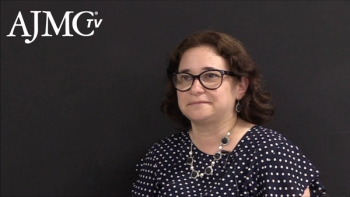
Early results from the phase 1 SANRECO trial suggest that divesiran is safe and well tolerated, and may reduce the need for phlebotomy in patients with polycythemia vera by increasing hepcidin levels and improving iron regulation, according to lead investigator Marina Kremyanskaya, MD, PhD.

A combination of acalabrutinib and venetoclax showed better results with the addition of obinutuzumab, whereas mixed findings in a cross-trial comparison were complicated by the inclusion of deaths related to COVID-19.

Skepticism still persists around the use of measurable residual disease (MRD) for clinical and regulatory decision-making in the European context, but panelists explained the next steps that are required to advance the use of MRD.

259 Prospect Plains Rd, Bldg H
Cranbury, NJ 08512
© 2025 MJH Life Sciences®
All rights reserved.