All News

Om P. Ganda, MD, director, Lipid Clinic, Joslin Diabetes Center, discusses cholesterol and lipidemia as high risk factors for cardiovascular disease (CVD), where diabetes itself is a risk factor for CVD. Dr Ganda refutes the misconception that exposure to cholesterol complications begins for adults 40 years old or over; these complications, he points out, can begin at a very early age depending upon the individual. Individuals can face CVD in their early 20's and 30's due to the cumulative burden of cholesterol.
Howard Wolpert, MD, senior physician in adult diabetes at Joslin Diabetes Center, director of Joslin Institute for Technology Translation, and associate professor at Harvard Medical School, recognizes 3 issues with current care delivery models that with modification, can change diabetes care in this emerging digital health era. These factors, he pointed out, include: a serious lack of diabetes specialists, an unsuccessful acute-based therapeutic model that concentrates on prescriptive dose adjustment, and an unrealistic care delivery model of patient scheduled office visits. Dr Wolpert believes that care models currently in place are not effectively promoting patient engagement, self-care and self-management skills. Further, they do not adequately satisfying the needs of a patient with a chronic disease like diabetes who may require 24/7 support.

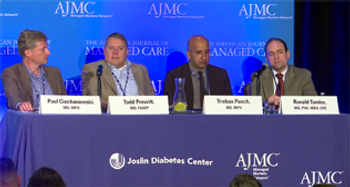
Dennis P. Scanlon, PhD, faculty member and health services researcher at Penn State University, and associate editor of The American Journal of Managed Care, leads a discussion on diabetes and patient care management that is concentrated on patient behavior, patient motivation, and ultimately, patient adherence. He is joined by Paul Ciechanowski, MD, MPH; Todd Prewitt, MD, FAAFP; Trishan Panch, MD, MPH; and Ronal Tamler, MD, PhD, MBA, CDE.

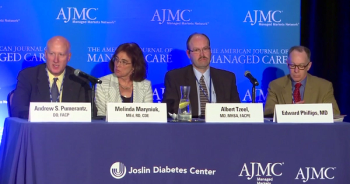
Osama Hamdy, MD, PhD, FACE, leads a discussion on how clinicians and diabetes educators can integrate clinical practices and multi-disciplinary approaches in managing patient lifestyles, and are more effective when covered by insurance. He is joined by Andrew S. Pumerantz, DO, FACP; Melinda Maryniuk, MEd, RD, CDE; Albert Tzeel, MD, MHSA, FACPE; and Edward Phillips, MD.

Frank Hu, MD, PhD, professor of nutrition and epidemiology at Harvard T.H. Chan School of Public Health and professor of medicine at Harvard Medical School, provides insight into the report of the 2015 Dietary Guidelines Advisory Committee, which spends days reviewing hundreds of thousands of scientific studies in order to develop the report that will later become the basis for policy decision making, according to Dr Hu.

This week the American Diabetes Association Scientific Sessions was held in Boston with results on 2 cardiovascular outcomes trials for diabetes drugs, and FDA advisory panels voted in favor of 2 PCSK9 inhibitors.

Delegates from the American Medical Association and the American Academy of Pediatrics have voiced a strong support to banning non-medical exceptions to childhood vaccination, citing a danger to public health.

A preliminary review of Amgen's evolocumab antibody (Repatha) by the Endocrinologic and Metabolic Drugs Advisory Committee, raises a few safety concerns and a call for ongoing monitoring, especially in patients with a high-risk of cardiovascular disease.

The Center for Health Policy at Brookings and the USC Leonard D. Schaeffer Center for Health Policy and Economics came together for a half-day forum that concentrated on examining and studying the future of the Medicare program. In a 5-part working paper series, healthcare stakeholders examined trends, asked questions, and formulated proposals that would prepare the Medicare program for this incoming class of seniors.

Brand Logo

259 Prospect Plains Rd, Bldg H
Cranbury, NJ 08512

609-716-7777

© 2025 MJH Life Sciences®

All rights reserved.

Secondary Brand Logo
Alt TextAlt Text