

A psoriasis researcher discusses a new class of psoriasis treatments.
A psoriasis researcher discusses a new class of psoriasis treatments.

Health plans on the Affordable Care Act (ACA) exchanges will be required to display quality ratings starting with the 2020 plan year, according to an announcement from CMS, which is expanding the 5-star rating system it uses on Medicare plans to the health insurance exchanges.


This week, the top managed care stories included the Trump administration looking to bar legal immigrants from using public benefits; a study in The American Journal of Managed Care® finding that a law to limit surprise medical bills is working; data on Affordable Care Act enrollment showing the effect of subsidies.

Coverage of our peer-reviewed research and news reporting in the healthcare and mainstream press.

The researchers called for more work to discover specific exposures in patients with leukemia that lead to infections after treatment ends.

The August issue of The American Journal of Managed Care® (AJMC®) featured research on surprise medical billing policies, social determinants of health, and the value of chimeric antigen receptor T-cell therapies, among other topics. Here are 5 findings from research published in the issue.

Parents treated for tobacco addiction within a pediatric office were associated with a significant decline in smoking rates as opposed to standard offices.

Generic drug makers are being accused of blocking a Congressional probe into their pricing practices; Illinois has become the first state to require insurance companies to pay for EpiPens for kids in cases of severe allergic reactions; Tufts Health Plan and Harvard Pilgrim Health will merge to create a new company covering 2.4 million people across New England.

The authors call for more personalized screening protocols to find cancer earlier in younger adults, as well as public health efforts to address obesity.

FDA's approval of entrectinib for neurotrophic tyrosine receptor kinase (NTRK) fusion-positive tumors represents a new paradigm in cancer treatment; It treats a cancer based on a common biomarker seen across different tumors rather than based on the location in the body where the cancer originated. The FDA also gave approval to entrectinib for the treatment of adults with metastatic non–small cell lung cancer whose tumors are ROS1 positive.

Under a proposed rule released today, the agency would require new health warnings on cigarette packages and advertisements, which would feature pictures and images depicting some of the lesser-known health risks, including bladder cancer and heart disease.

Researchers aiming to better understand the role of estrogen in the development of Parkinson disease (PD) and its potential as a treatment found that brain-selective estrogen therapy resulted in motor improvements in male mice with PD-like symptoms.

Researchers showed the potential of combining 2 precision medicines to overcome treatment resistance.

Scientists uncovered a rare, inherited gene mutation, known as RABL3, that raises the risk of pancreatic and other cancers.
Planned Parenthood plans to withdraw from Title X program, amid looming Trump Administration rule changes; a new cure accepted by the FDA for a deadly strain of tuberculosis has been found to have a 90% success rate in a patient trial; opioid distribution to patients has began to change amongst doctors with new recommendations based around set prescribing levels.

Chronic active lesions, which are identified by their darkened outer rims, are associated with more aggressive multiple sclerosis and earlier disability, according to new research from the National Institute of Health.

While air pollution has long been associated with cardiovascular and respiratory diseases, this is believed to be the first longitudinal study of air pollution and emphysema progression.

Timothy R. Smith, MD, RPh, is president and chief executive officer of StudyMetrix Research. He is a fellow of the American College of Physicians and the American Headache Society, a certified physician investigator of the Academy of Clinical Research Professionals, and vice president of the National Headache Foundation. Dr Smith has a special interest in patient and physician issues related to the treatment of headache in primary care. This is part 2 of an interview conducted by an editor from The American Journal of Managed Care®.
Timothy R. Smith, MD, RPh, is president and chief executive officer of StudyMetrix Research. He is a fellow of the American College of Physicians and the American Headache Society, a certified physician investigator of the Academy of Clinical Research Professionals, and vice president of the National Headache Foundation. Dr Smith has a special interest in patient and physician issues related to the treatment of headache in primary care. This is part 1 of an interview conducted by an editor from The American Journal of Managed Care®.

The US Preventive Services Task Force is recommending screening all adults for illicit drug use; Senator Chuck Grassley, R-Iowa, is asking the FDA to perform more unannounced inspections of foreign drug manufacturing facilities; 5 years after Congress passed a law to reduce unneccessary diagnostic imaging tests, the law has yet to be implemented.

The viewpoint paints a picture of a challenge that is 2-fold: a growing amount of people are injecting opioids in rural communities, which is an emerging risk factor for HIV transmission, and these communities often lack the infrastructure or resources to prevent, diagnose, and treat HIV.
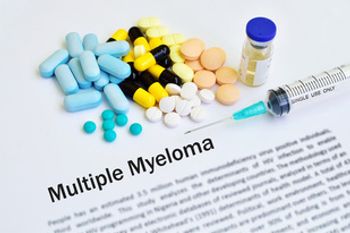
In Latin America, there has been slower uptake of newer therapies to treat multiple myeloma (MM) in public clinics versus private clinics, which has led to disparities in outcomes.

Women exposed to the chemical triclosan, which is found in products like soap and toothpaste, are at an increased risk for developing osteoporosis.

The National Institute of Allergy and Infectious Diseases, the World Health Organization, and the Congolese government announced that 2 experimental antibody-based treatments for Ebola are working so well that they will now be offered to all patients in the Democratic Republic of Congo; enrollment in insurance exchanges under the Affordable Care Act remains stable for people with lower incomes who received subsidies, but premium increases caused a 24% decline for people who did not qualify for assistance; scientists are repurposing old drugs or combining them with traditional antibiotics in an effort to combat antibiotic-resistant bacteria.

As disruptive medical technologies emerge, often unanticipated, bioethical issues arise, presenting challenges for employers navigating what benefits to offer to their employees.

Using data from 330 millennials responding to an online survey in December 2018, a Welltok survey revealed that 78% of the age group feel that employers are not doing enough to support their well-being.

Implementing a comprehensive social determinants of health program and addressing the root causes of medication nonadherence could mean the difference between a 3- and 4-star rating in Medicare Advantage.

As our country continues its push to lower the cost of healthcare, especially among the burgeoning population of seniors with age-related disabilities, transitioning to a value-based insurance design payment model that rewards value, rather than quantity, will become progressively more important. In the realms of musculoskeletal pain and movement dysfunction, this transition must be accompanied with sincere efforts to identify treatments that can effectively manage pain and reduce the total cost of care.

The Department of Homeland Security said that it was promoting the ideals of self-sufficiency, self-reliance, industriousness, and perseverance, but it also acknowledged that the vast majority of the 266,000-plus commenters on the rule opposed the change and noted that some people may decide to drop out of benefit programs.

259 Prospect Plains Rd, Bldg H
Cranbury, NJ 08512
© 2025 MJH Life Sciences®
All rights reserved.