

US Oncology Network
Latest Content

Coverage from the Minnesota meeting of the Institute for Value-Based Medicine, chaired by Rajini Katipamula-Malisetti, MD, vice president of medical oncology at Minnesota Oncology.
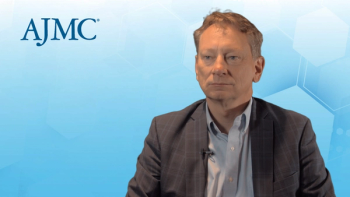
Even though there is a 1-year gap between the Oncology Care Model and the Enhancing Oncology Model, there remain value-based oncology payment programs with private payers, said Glenn Balasky, executive director of Rocky Mountain Cancer Centers.

Co-hosted by Memorial Sloan Kettering Cancer Center, the most recent Institute for Value-Based Medicine® event took place on September 22, with a focus on improving cancer care delivery through innovation.
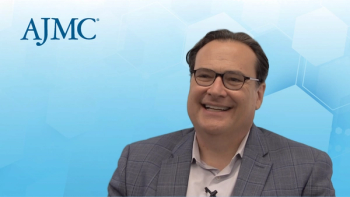
While commercial payers have been engaged with the shift to biosimilars, they all have their own preferred biosimilar, which makes it challenging for practices, explained Lalan Wilfong, MD, vice president of payer relations & practice transformation at The US Oncology Network.
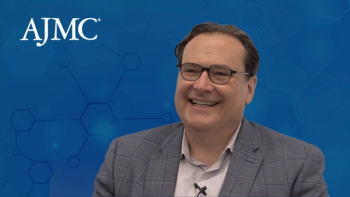
The 1-year gap after the end of the Oncology Care Model (OCM) means some practices have to make hard decisions regarding cost of care or the financial health of the practice, explained Lalan Wilfong, MD, vice president of Payer Relations & Practice Transformation at The US Oncology Network.


The Institute for Value-Based Medicine series visits Texas Oncology in Austin.
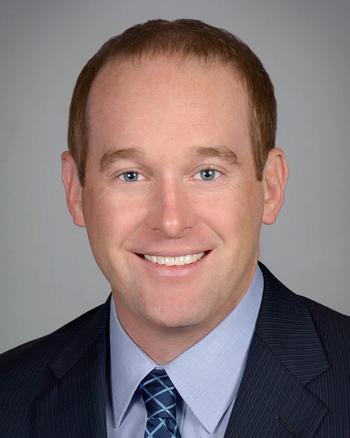

There are some similarities among various value-based payment programs for cancer care, but they are not identical, said Susan Escudier, MD, FACP, vice president, value-based care and quality programs, Texas Oncology.
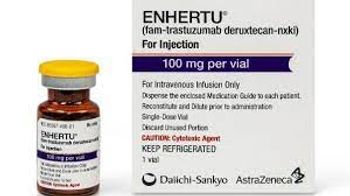
The approval came exactly 2 months after results from the landmark DESTINY-Breast04 trial showed that the antibody drug conjugate reduced the risk of disease progression or death by 50% compared with chemotherapy for HER2-low patients with both hormone receptor (HR)–positive and HR-negative disease.
Telemedicine visits can make physicians more efficient, but the ability to report symptoms can add to the workload burden as staff try to figure out which symptoms need to be addressed, said Susan Escudier, MD, FACP, vice president of value-based care and quality programs, Texas Oncology.
Even though the Oncology Care Model (OCM) ended on June 30, 2022, there are some improvements that practices should continue implementing, said Susan Escudier, MD, FACP, vice president of value-based care and quality programs, Texas Oncology.
The use of digital health solutions has been a tremendous benefit during the pandemic that should continue, said Susan Escudier, MD, FACP, vice president, value-based care and quality programs, Texas Oncology.
Although the Oncology Care Model (OCM) is ending June 30, 2022, it does not mean practices can turn back the clock and revert to how they provided care prior to the OCM, explained Debra Patt, MD, PhD, MBA, executive vice president of Texas Oncology.

Debra Patt, MD, PhD, MBA, executive vice president of Texas Oncology, discusses the path of telemedicine reimbursement during the pandemic and possible ways it will change after the pandemic.
Four experts from The US Oncology Network partnered with The American Journal of Managed Care® to present a webinar, “Beyond the OCM: How Are Commercial Payers & Employers Delivering Value-Based Cancer Care?”
Debra Patt, MD, PhD, MBA, executive vice president of Texas Oncology, discusses how enhancements to telemedicine precipitated by the COVID-19 pandemic have made lasting and meaningful changes to oncology care, including that these care improvements will persist post pandemic.
Experts from The US Oncology Network discuss the future of value-based cancer care, and what practices can do as the Oncology Care Model expires.
Experts from The US Oncology Network discuss the future of value-based cancer care, and what practices can do as the Oncology Care Model expires.
Experts from The US Oncology Network discuss the future of value-based cancer care, and what practices can do as the Oncology Care Model expires.
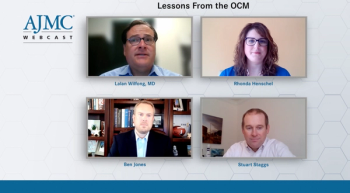
Experts from The US Oncology Network discuss the future of value-based cancer care, and what practices can do as the Oncology Care Model expires.
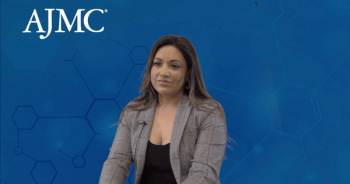
Angela Storseth-Cooper, associate director, Government Relations & Public Policy, The US Oncology Network, discusses state-level legislation that community oncology practices can leverage to address issues involving pharmacy benefit managers and the vertical integration of health plans and specialty pharmacies.
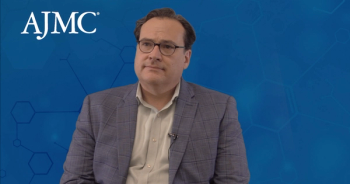
Lalan Wilfong, MD, vice president of Payer Relations & Practice Transformation at The US Oncology Network, speaks on how use of health economics and outcomes research has benefitted patient care in the community oncology setting and where it can be further leveraged in the pursuit of value-based care.
The first in-person Community Oncology Alliance (COA) meeting in 2 years will feature sessions on practice management, health disparities, and more. A virtual option is available.

The panel said the prior authorization system was intended not just to make sure treatments are necessary but also to ensure that practices get paid; however, it needs a lot of work.
How Value-based Care Is Changing Radiation Oncology for the Better

Studies have shown that administering trilaciclib prior to chemotherapy can reduce myelosuppression and improve health-related quality of life. Jerome Goldschmidt, MD, said future studies will look at how it interacts with immunotherapy.
Advertisement
Advertisement
Trending on AJMC
1
Pipeline Advances in Sjögren Disease Bring Targeted Therapies Closer
2
FDA Approves Pirtobrutinib for Untreated CLL/SLL Without 17p Deletion
3
Oral Targeted Anticancer Medication Use Following High-Deductible Health Plan Enrollment
4
Preparing Practices for the Next Era of Hepatitis B Care
5