Zoe D. Draelos, MD, from Duke University, notes that clascoterone cream's unique sebum reduction mechanism provides effective, highly tolerable, and core acne treatment.

Zoe D. Draelos, MD, from Duke University, notes that clascoterone cream's unique sebum reduction mechanism provides effective, highly tolerable, and core acne treatment.

Michael Wang, MD, endowed professor in the department of Lymphoma & Myeloma at MD Anderson at MD Anderson Cancer Center in Houston, Texas, discusses data in mantle cell lymphoma presented at ASH 2025.


Steven Nathan, MD, commented on the significance of nerandomilast data presented at the ERS Congress 2025, highlighting the novel anti-fibrotic agent's sustained efficacy and tolerability compared with existing therapies, while emphasizing the need for improved access and earlier diagnosis in the field of interstitial lung disease.


Amer Zeidan, MBBS, discusses how the future of acute myeloid leukemia (AML) treatment is shifting toward all-oral combination therapies like decitabine-cedazuridine plus venetoclax, which could become a new standard of care by reducing patient clinic burden while maintaining efficacy comparable to current intravenous regimens.

A panelist discusses the most significant research findings on bispecific antibody therapy for relapsed/refractory multiple myeloma presented at ASCO 2025, highlighting breakthroughs and novel therapies that may shift treatment paradigms, assessing the clinical implications for improving patient management and outcomes, and exploring emerging trispecific therapies with potential to further transform future care.

Ryan Haumschild, PharmD, MS, MBA, CPEL; and Perry B. Shieh, MD, PhD, discuss how gene therapies like delandistrogene moxeparvovec for Duchenne muscular dystrophy and onasemnogene abeparvovec for spinal muscular atrophy are showing promising long-term efficacy in stabilizing motor function and potentially transforming treatment outcomes, while addressing ongoing challenges including ensuring equitable access, managing high costs, and the need for sustained durability data.

A panelist discusses how recent clinical studies on dry eye disease emphasize the importance of precise diagnosis and targeted treatments such as cyclosporine formulations and varenicline nasal spray in improving tear film stability, reducing inflammation, and enhancing patient outcomes, while highlighting challenges such as delayed symptom relief, medication adherence, and the need for ongoing research into meibomian gland dysfunction.

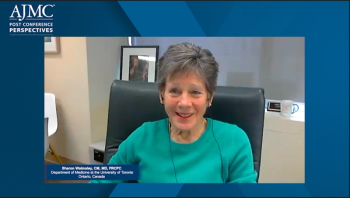
Sharon Walmsley, CM, MD, FRCPC discusses the importance of maintaining viral suppression in HIV through strategic treatment switches and highlights insights on promising emerging therapeutic agents.

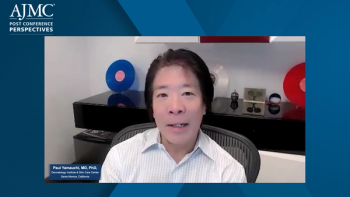
Paul Yamauchi, MD, PhD, discusses recent findings presented at the 2025 American Academy of Dermatology Annual Meeting (AAD 2025) on tildrakizumab’s efficacy for nail psoriasis, biological treatment patterns in moderate to severe psoriasis, ruxolitinib cream’s role in reducing additional medication use in atopic dermatitis, comparative infection risks between Janus kinase and cytokine inhibitors, and the evolution toward personalized dermatological treatment approaches that balance efficacy with safety considerations.

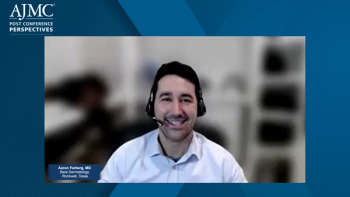
Aaron Farberg, MD, discusses how real-world studies like tildrakizumab’s help confirm efficacy and adherence outside trials, with multisite inclusion enhancing generalizability. Results aligned with clinical trials, highlighting better adherence. The VISIBLE study emphasized comorbidity impact, influencing clinical decisions and payer perspectives. Biosimilars’ role in clinical trials ensures safety and efficacy, with interchangeability gaining clinical adoption.

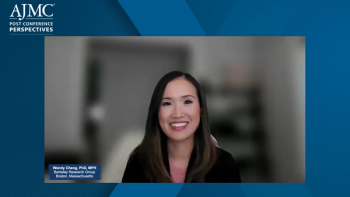
Wendy Cheng, PhD, MPH, discusses how recent research presented at ID Week 2024, including the EAGLE-2 and EAGLE-3 trials on gepotidacin, highlights new treatment options for urinary tract infections (UTIs), addressing unmet needs and the growing challenge of antimicrobial resistance.

Sergio A. Giralt, MD, discusses how the approval of axatilimab and emerging therapies, including ibrutinib and rituximab combinations, are reshaping the treatment landscape for chronic graft-vs-host disease (cGVHD), with a focus on improving efficacy, safety, and patient outcomes based on recent American Society of Hematology Annual Meeting and Exposition (ASH 2024) findings.

Saad Z. Usmani, MD, MBA, FACP, discusses how the latest findings from studies presented at the 2024 American Society of Hematology (ASH) Annual Meeting and Exposition, including the AQUILA, MajesTEC-5, and iMMagine-1 trials, highlight the potential of early intervention, bispecific antibodies, and chimeric antigen receptor T-cell therapies to transform the treatment landscape for multiple myeloma.

Orly Vardeny, PharmD, MS, discusses how glucagon-like peptide-1 receptor agonists demonstrate multiple cardioprotective mechanisms including reduced inflammation, improved glucose metabolism, and enhanced endothelial function, while clinical trials of both finerenone and ferric carboxymaltose evaluate specific outcomes in patients with heart failure through rigorous study protocols.

Sikander Ailawadhi, MD, discusses how significant research data presented at ASH 2024, including advances in targeted therapies, real-world data on patient preferences, and the importance of shared decision-making, are poised to improve treatment outcomes and quality of life for patients with hematologic cancers.

Steven Nathan, MD, discusses how key findings from CHEST 2024, including survival predictors from the IPF-PRO Registry and the potential of inhaled treprostinil for CTD-PAH, are shaping new approaches to managing IPF and PAH, with a focus on early diagnosis, personalized treatments, and improving patient outcomes.

Javed Butler, MD, MPH, MBA, discusses The American Journal of Managed Care® Post Conference Perspectives from European Society of Cardiology Congress 2024 in London, United Kingdom, focusing on key updates in heart failure management, including the implications of the FINEARTS-HF trial findings on finerenone, the role of β-blockers and dapagliflozin, and the need to address unmet needs in treatment strategies for patients with mildly reduced and preserved ejection fractions.

A key opinion leader analyzes pivotal non-small cell lung cancer trials presented at ASCO 2024, including LAURA, CHRYSALIS-2, TROPION-Lung05, and CheckMate 9LA, discussing their implications for treatment strategies in non-small cell lung cancer.

Evan J. Lipson, MD, from Johns Hopkins University School of Medicine contributes key updates in melanoma treatment presented at ASCO 2024 in Chicago, Illinois.

Joseph Mikhael, MD, shares insights surrounding key updates in multiple myeloma management as presented at EHA 2024.

Alfred L. Garfall, MD, shares insights to recent data surrounding the multiple myeloma treatment landscape as presented at ASCO 2024 in Chicago, Illinois.

Neal Shore, MD, FACS, discusses clinical trials in the treatment landscape of invasive and non-muscle invasive bladder cancer.

Richard Adler, MD, FACS, provides updates on Dry Eye Disease (DED) presented at the American Academy of Ophthalmology (AAO) 2023 conference.

Rafael Fonseca, MD, explores updates in multiple myeloma presented at the 65th American Society of Hematology (ASH) Annual Meeting & Exposition in 2023.

Siamak Daneshmand, MD, explores genitourinary cancer updates presented at ESMO 2023.

Patrick Forde, MBBCh, offers crucial perspectives on breakthroughs in Non-Small Cell Lung Cancer from ESMO 2023.

A discussion surrounding highlights and updates from the 2023 World Stroke Congress.

259 Prospect Plains Rd, Bldg H
Cranbury, NJ 08512
© 2025 MJH Life Sciences®
All rights reserved.