

emtelligent turns unstructured data into coded clinical insights, powering payer and oncology workflows to improve trial screening, EHR-to-EDC transfer, and decisions.
emtelligent turns unstructured data into coded clinical insights, powering payer and oncology workflows to improve trial screening, EHR-to-EDC transfer, and decisions.

ViroMissile shares phase 1 IDOV-Safe oncolytic virus results, showing IV activity in pMMR/MSS metastatic colorectal cancer and fueling US phase 2 plans.

SYNC-T from Syncromune delivers a 4-part localized immunotherapy regimen for metastatic prostate cancer, showing high response rates with low toxicity.

Kazia Therapeutics advances paxalisib, a dual PI3K/mTOR inhibitor, into triple-negative breast cancer, boosting immunotherapy responses with early promising data.

Our annual ASCO recap issue will have a new section, "On the Horizon," featuring emerging science, therapies, and technology.

With an FDA approval for its companion diagnostic in bladder cancer, Natera extends its Treatment on MRD strategy, deferring adjuvant immunotherapy for patients with negative results for disease following surgery.

Flatiron Telescope uses AI and transparent SQL to turn real-world evidence into quick turnaround oncology research and FDA-ready analytics.

Armored DLL3 CAR T-cell therapy from Legend Biotech/Novartis shows early responses in small cell lung cancer and neuroendocrine tumors, according to presentation at ASCO.

Investigators described the combinations as a potential new standard of care in second-line HR+/HER2− advanced breast cancer.

OPTIMA shows Prosigna guides chemo decisions in high‑risk HR+ early breast cancer, sparing two‑thirds without raising 5‑year recurrence risk.

Posttransplant revumenib maintenance shows promising survival and low relapse in high-risk AML subtypes, with manageable thrombocytopenia; the randomized MenTain trial is planned.

ASCO: City of Hope investigator highlights mosunetuzumab plus polatuzumab vedotin ADC/bispecific combo boosting PFS in LBCL with manageable adverse events outpatient.
McKesson and The US Oncology Network find EOM attribution often mislabels cancer episodes—especially oral therapy—threatening value-based care accuracy and accountability.

Real-world ASCO data link GLP-1 drugs to markedly longer survival across common cancers, raising new questions on mechanism and trials.

LINKER-AL2 shows linvoseltamab delivers rapid, deep responses in relapsed AL amyloidosis, addressing major unmet need with off-the-shelf access and a manageable safety profile.

The lead investigator for SUCCESSOR-2 discusses the potency of a potential successor to pomalidomide in treatment of multiple myeloma, with survival outcomes that rival CAR T-cell therapy.

Remote therapeutic monitoring with ePROs powered by AI cuts hospitalizations and boosts therapy time—now a key oncology leader promotes guidelines and reimbursement to make it standard of care.

Canopy remote therapeutic monitoring with ePROs cuts hospitalizations and extends time to discontinuation in metastatic cancer, saving millions.

Data presented at ASCO support wider use of prophylactic therapy to prevent cytokine release syndrome as efforts expand to promote bispecifics in treatment of multiple myeloma.

Data confirm the use of daratumumab, bortezomib, lenalidomide, and dexamethasone as the standard of care in newly diagnosed multiple myeloma.

An entirely new approach to treating one of the most intractable cancers could turn it into a chronic disease.
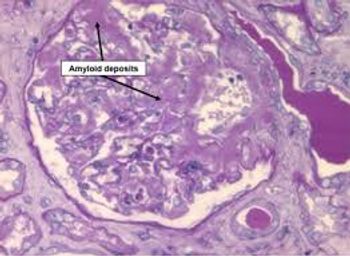
Early data for LINKER-AL2 show linvoseltamab drives rapid and deep responses following relapse after frontline treatment for AL amyloidosis, which has no approved therapies.

Teclistamab bispecific from Johnson & Johnson boosts early-line multiple myeloma outcomes, fueling safer outpatient therapy options.
Mezigdomide, a powerful CELMoD, doubles PFS in relapsed or refractory multiple myeloma, offering hope when IMiDs stop working.

ASCO highlights MorningSun results: subcutaneous mosunetuzumab offers a chemotherapy-free option for elderly patients with DLBCL, improving quality of life beyond R-CHOP.