




A new study published in Neurology, has shown that long-term inflammation in older patients with diabetes can also hasten their cognitive decline.
A new study published in Neurology, has shown that long-term inflammation in older patients with diabetes can also hasten their cognitive decline.
Cardiovascular disease may be the leading cause of death in the United States, but half of those deaths can be prevented, according to researchers from Emory's Rollins School of Public Health.
Scientists at the Imperial College London have identified a genetic link to obesity and diabetes in an extremely obese woman and her family members.
The JAMA authors recommend that HHS and the US Department of Agriculture pay attention to DGAC's recommendations on fat intake, which do not include an upper limit on total fat consumption.
When evaluating the cost-effectiveness of 4 different interventions to prevent or reduce childhood obesity, researchers found that the benefit of these interventions surpassed the current clinical interventions to treat obesity.
Home healthcare transition from hospitals for diabetic Medicare home healthcare beneficiaries can be improved by identifying risk factors for 30-day readmissions due to ambulatory care—sensitive conditions.
Quality of care and relative resource use for patients with diabetes are not necessarily positively related. Further, the relationship varies by year, plan type, and region.
Scientists at Institut Pasteur in France have repurposed DPP4 inhibitors, used to treat type 2 diabetes mellitus, to boost the body's immune response to tumors.
Medicaid-insured type 2 diabetes mellitus patients, just like the uninsured, are more likely to be hospitalized through emergency/urgent admissions.
Read how being denied new technology by my insurance company impacts me.
Glycemic control can lower the risk of diabetes-related complications, and delayed treatment intensification can impede optimal diabetes care.This study examines trends in hyperglycemia treatment intensification between 2002 and 2010.
Another 2 companies that are using natural language processing and artificial intelligence in their efforts on direct-to-person health coaching.
Published in the Journal of the American Pharmacists Association, the study found a significant improvement in the blood pressure of T2DM patients who were counseled by a pharmacist.
Integrating behavioral health care into the space where care for diabetes occurs can be aided by new delivery models and by technology, panelists say.

Robert A. Gabbay, MD, PhD, FACP, chief medical officer at Joslin Diabetes Center, moderates a discussion on the role of combination therapy in several ways, including early aggressive therapy with combination treatment and the combination of taking 2 medications in 1 tablet to encourage adherence with increased convenience and reduced copays. He is joined by S. Sethu K. Reddy, MD, MBA, FRCPC, FACP, MACE; Ravi Retnakaran, MD, MSc, FRCPC; Alexander Turchin, MD, MS; and Helen Feit, MD.

Dennis P. Scanlon, PhD, faculty member and health services researcher at Penn State University, associate editor of The American Journal of Managed Care, moderates a discussion regarding the idea of value as it pertains to the emerging treatments and approaches for diabetes care. He is joined by panelists David Brumley, MD, MBA; Edmund J. Pezalla, MD, MPH; and Michael S. Sherman, MD, MBA, MS.
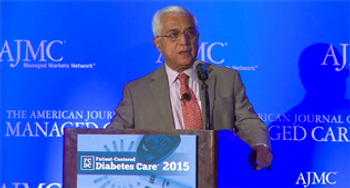
Om P. Ganda, MD, director, Lipid Clinic, Joslin Diabetes Center, discusses cholesterol and lipidemia as high risk factors for cardiovascular disease (CVD), where diabetes itself is a risk factor for CVD. Dr Ganda refutes the misconception that exposure to cholesterol complications begins for adults 40 years old or over; these complications, he points out, can begin at a very early age depending upon the individual. Individuals can face CVD in their early 20's and 30's due to the cumulative burden of cholesterol.

Howard Wolpert, MD, senior physician in adult diabetes at Joslin Diabetes Center, director of Joslin Institute for Technology Translation, and associate professor at Harvard Medical School, recognizes 3 issues with current care delivery models that with modification, can change diabetes care in this emerging digital health era. These factors, he pointed out, include: a serious lack of diabetes specialists, an unsuccessful acute-based therapeutic model that concentrates on prescriptive dose adjustment, and an unrealistic care delivery model of patient scheduled office visits. Dr Wolpert believes that care models currently in place are not effectively promoting patient engagement, self-care and self-management skills. Further, they do not adequately satisfying the needs of a patient with a chronic disease like diabetes who may require 24/7 support.

Dennis P. Scanlon, PhD, faculty member and health services researcher at Penn State University, and associate editor of The American Journal of Managed Care, leads a discussion on diabetes and patient care management that is concentrated on patient behavior, patient motivation, and ultimately, patient adherence. He is joined by Paul Ciechanowski, MD, MPH; Todd Prewitt, MD, FAAFP; Trishan Panch, MD, MPH; and Ronal Tamler, MD, PhD, MBA, CDE.

Osama Hamdy, MD, PhD, FACE, leads a discussion on how clinicians and diabetes educators can integrate clinical practices and multi-disciplinary approaches in managing patient lifestyles, and are more effective when covered by insurance. He is joined by Andrew S. Pumerantz, DO, FACP; Melinda Maryniuk, MEd, RD, CDE; Albert Tzeel, MD, MHSA, FACPE; and Edward Phillips, MD.

Frank Hu, MD, PhD, professor of nutrition and epidemiology at Harvard T.H. Chan School of Public Health and professor of medicine at Harvard Medical School, provides insight into the report of the 2015 Dietary Guidelines Advisory Committee, which spends days reviewing hundreds of thousands of scientific studies in order to develop the report that will later become the basis for policy decision making, according to Dr Hu.
Combination therapy in diabetes care can offer benefits but might not be right for certain populations or at certain stages of care.
A study published in the Medical Journal of Australia found that a TV program questioning the link between statin use and cholesterol reduction resulted in more than 60,000 Australians reducing or discontinuing the medication.
With a growing world population and a growing proportion of elderly, more people are living in suboptimal health around the world. A third of the world's population experienced more than 5 ailments in 2013, according to a study published in The Lancet.

This week the American Diabetes Association Scientific Sessions was held in Boston with results on 2 cardiovascular outcomes trials for diabetes drugs, and FDA advisory panels voted in favor of 2 PCSK9 inhibitors.

259 Prospect Plains Rd, Bldg H
Cranbury, NJ 08512
© 2025 MJH Life Sciences®
All rights reserved.