

Oncology
Latest News
Advertisement
Latest Videos

Advertisement
More News

The American Society of Clinical Oncology recommends that cancer survivors who have completed their treatment and are under surveillance with no known evidence of disease are to be kept out of care facilities to avoid developing COVID-19.

Investigators reported in Lancet Oncology that second-line treatments are needed in small cell lung cancer, as few options exist for these patients once first-line therapy fails.
The authors established a claims-based mechanism for identifying patients with lung cancer with more severe patient-reported cancer-related symptoms who could benefit from engagement with health care programs.
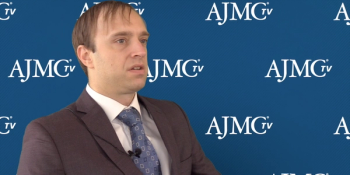
Benchmarking, accountability, bilateralism, and scalability are the 4 parameters critical to successful alternative payment models in oncology, said Aaron Lyss, MBA, director of strategy and business development at Tennessee Oncology.
In each performance period of the Oncology Care Model for which we've received data, we've seen different aspects of care that we can improve upon in the following 6 months, said Aaron Lyss, MBA, director of strategy and business development at Tennessee Oncology.
The Oncology Care Model (OCM) has helped practices develop their capacity to use data for continuous quality improvement, said Aaron Lyss, MBA, director of strategy and business development at Tennessee Oncology.
There will never be all mandatory payment models or all value-based models, but we can craft a value-based model around just about anything as long as everybody agrees on what the criteria is, said Lili Brillstein, CEO of Brillstein Collaborative Consulting, and former Director for Episodes of Care at Horizon Blue Cross Blue Shield of New Jersey.
New technologies and quick drug approvals contribute to the challenges of incorporating value-based care in oncology, said Lili Brillstein, CEO of Brillstein Collaborative Consulting, and former Director for Episodes of Care at Horizon Blue Cross Blue Shield of New Jersey.
Raising awareness on the involvement of primary care providers can assist cancer survivors in transitioning from oncology care, said Kelly Filchner, MSN, director at Fox Chase Cancer Center Partners.
Transformational changes in cancer care can bring forth important innovations, but all those come at a cost, said Ray Page, DO, PhD, president and director of research at The Center for Cancer and Blood Disorders.

Coverage of our peer-reviewed research and news reporting in the healthcare and mainstream press.
The Supreme Court says insurers are owed $12 billion under the Affordable Care Act; a study finds those with cancer are at higher risk from coronavirus disease 2019 (COVID-19); a survey shows millions would avoid seeking care for COVID-19 due to cost.
Delays in reporting Oncology Care Model results from performance periods creates tremendous uncertainty, said Ray Page, DO, PhD, president and director of research at The Center for Cancer and Blood Disorders.
Innovations to promote communication between primary care providers, oncologists are vital to delineate distinct roles in oncology patient management, said Kelly Filchner, MSN, director at Fox Chase Cancer Center Partners.
Despite the immediate distraction from coronavirus disease 2019 (COVID-19), panelists at the 2020 Virtual Community Oncology Conference said community oncologists must keep pressure on pharmacy benefit managers (PBMs) as the 2020 campaign heats up—lest they lose the momentum to rein PBM practices within the umbrella of drug pricing reform.
The bright spot of telemedicine's success during the coronavirus disease 2019 pandemic cannot overshadow the stresses on patients and practices, which will both have ongoing challenges when the pandemic ends, said panelists during a legislative update on day 2 of the 2020 Virtual Community Oncology Conference, convened by the Community Oncology Alliance.
This week, the top managed care news included HHS' plans to allocate the remaining $70 billion in COVID-19 funding to providers; an analysis finding aggressive social distancing measures economically justified; highlights from this week's virtual Community Oncology Conference.
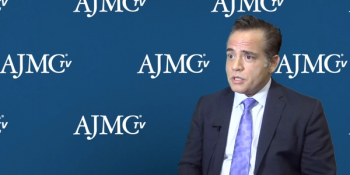
Oncology practices in 2-sided risk arrangements have reported mixed results, pointing to the need for more time to make the transition, said Michael Diaz, MD, president of Community Oncology Alliance.
Many patients when they start their cancer therapy get so ingrained in the cancer world that their oncologist just becomes their main point of contact, but we have to do a better job at letting the patients know that the PCP still is an integral part of their care, said Kelly Filchner, MSN, director at Fox Chase Cancer Center Partners.
The American Journal of Managed Care® (AJMC®) recently spoke with Dinesh Kapur, MD, of Eastern Connecticut Hematology and Oncology, also known as ECHO, an advanced community oncology conference. Kapur spoke about how the value of community oncology, clinicial trials, and how staff are spending remote work days developing artificial intelligence (AI) tools for predictive patient analytics to improve care.
Douglas M. Long, MBA, vice president of industry relations for IQVIA, surveyed the effects of COVID-19 as he kicked off AMCP eLearning Days, a webinar series held in place of the annual meeting of the Academy of Managed Care Pharmacy (AMCP).
In this preview interview for this year’s virtual 2020 Community Oncology Conference, The American Journal of Managed Care® speaks with Kathy Oubre, MS, chief operating officer of Pontchartrain Cancer Center in Louisiana, on why it is her privilege to work with patients who have cancer, as well as her thoughts on telehealth after the pandemic and why being in a hurricane-prone area necessitates healthcare that is flexible.
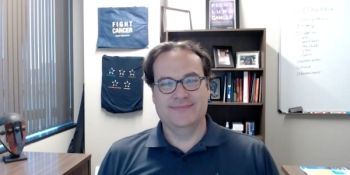
Individuals should register for Community Oncology Alliance's virtual meeting to hear "amazing" speakers present groundbreaking research, said Lalan Wilfong, MD, medical oncologist and vice president of value-based care and quality programs at Texas Oncology.
Networking with other practices, sharing ideas, and getting physicians involved in the process can aid community practices moving to alternative payment models (APMs), said Michael Diaz, MD, president of Community Oncology Alliance.
Policy, clinical, and targeted therapy updates in oncology.
Advertisement
Advertisement
Trending on AJMC
1
TrumpRx Launch Brings Savings—and Uncertainty
2
As Cencora Closes With OneOncology, Patton Says Terms Show “Trust”
3
Benefits, Tradeoffs of Medically Integrated Dispensing in Oncology Care: Katherine Tobon, PharmD, BCOP
4
Asundexian Reduces Risk of Stroke Recurrence in Phase 3 OCEANIC-STROKE Trial
5