

A groundbreaking in vivo CAR T-cell therapy shows promise for treating multiple myeloma, potentially revolutionizing cancer care with quicker, safer treatments.
A groundbreaking in vivo CAR T-cell therapy shows promise for treating multiple myeloma, potentially revolutionizing cancer care with quicker, safer treatments.

New research highlights INCA033989's potential in treating mutCALR-driven essential thrombocythemia and myelofibrosis, achieving significant molecular responses.

Shayla Bergmann, MD, explains that recombinant von Willebrand factor is both safe and highly effective in controlling perioperative bleeding in children with severe von Willebrand disease.

Erika Hamilton, MD, reports early trial data showing DB-1305/BNT325, a TROP2-targeted ADC, produced encouraging responses in heavily pretreated TNBC patients.

PARADIGM showed azacitidine and venetoclax outperform induction chemotherapy in initial treatment of acute myeloid leukemia (AML).

SABCS 2025 will spotlight new advances in breast cancer research while offering networking opportunities to foster connections among attendees.

Epcoritamab combined with rituximab and lenalidomide significantly improves outcomes for relapsed follicular lymphoma, setting a new treatment standard.
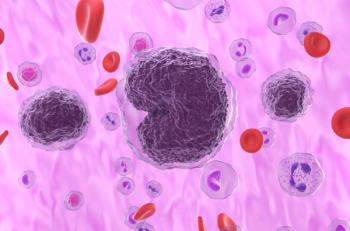
Updated results highlight the promise of epcoritamab combined with chemotherapy for newly diagnosed DLBCL.

Ivo Carre, PhD, shares subgroup data that points to potential benefit in younger patients with high-risk MDS.

A panel at the American Society of Hematology highlights the urgent need for genetic diversity in cancer studies, addressing disparities in treatment outcomes across different ancestries.

Families of children with acute lymphoblastic leukemia face significant financial toxicity, with many experiencing severe economic hardship during treatment.

New trial results reveal fixed-duration venetoclax regimens match continuous ibrutinib therapy in CLL, enhancing patient quality of life and adherence.

Andrew Evens, DO, MBA, MSc, shares insights from a study on improving prognostic accuracy for advanced-stage Hodgkin lymphoma.

Rusfertide shows promise in maintaining hematocrit control and improving quality of life for polycythemia vera patients, reducing phlebotomy needs significantly.
A new TROP2-targeted ADC showed promising efficacy in an early TNBC trial, with Erika Hamilton, MD, highlighting its potential for broader use in future treatment.
New data in high-risk MDS, emerging menin inhibitors in AML, and evolving care needs in rare bleeding disorders set the stage for major ASH 2025 discussions.


Long-term data suggest stress echocardiography can uncover impaired exercise capacity and predict worse outcomes in patients.

While artificial intelligence showed empathy and precision in respiratory health care, its equitable adoption is paramount to prevent the widening digital divide, as highlighted at the European Respiratory Society Congress 2025.

Updated guidelines set lower systolic blood pressure goals, expanded risk-based treatment, and call for stronger implementation to close care gaps.

There is an urgent need for equitable care and access to cardiovascular care, said Vallerie McLaughlin, MD; Martha Gulati, MD; and Stephen Nicholls, MBBS, PhD.

The trial did not meet its primary end point for reducing plaque progression.
Tirzepatide's dual mechanism targets GIP and GLP-1, so it provides strong cardiovascular benefits, said Stephen Nicholls, MBBS, PhD, MBA.
Integrating nephrology and cardiology care for patients with kidney and cardiovascular (CV) risks can be challenging but is possible, said Roy Mathew, MD.

Combining 3 standard therapies into a single pill improved outcomes for adults with heart failure with reduced ejection fraction.

New research suggests stress cardiac MRI could help diagnose angina and improve quality of life for patients whose arteries appear clear on angiography.

Only 4% of NIH prevention projects target health disparities, revealing a major gap between equity research and real-world implementation.
Sotatercept can enhance treatment for pulmonary arterial hypertension, even in patients already on conventional therapies, said Vallerie McLaughlin, MD.
The oral PCSK9 inhibitor enlicitide can change cholesterol management with high efficacy and improved adherence, said Ann Marie Navar, MD, PhD.

In a phase 3 trial, the investigational oral PCSK9 inhibitor enlicitide reduced LDL cholesterol by nearly 60% in adults with or at risk for ASCVD.