
Clinical
Latest News
Advertisement
Latest Videos

Advertisement
More News

What we're reading, June 6, 2016: Vice President Joe Biden will announce the launch of an open-access cancer research database, and a new bill in Congress would allow companies to repurpose existing drugs for rare diseases.
While several clinical trials have tried to identify a programmed death-1 or programmed death ligand-1 expression—dependent response, it’s been an uphill task. During one of the sessions at the annual meeting of the American Society of Clinical Oncology, researchers were tasked with sharing their data on any breakthroughs or leads with biomarker-based treatment.
During a session on the second day of the annual meeting of the American Society of Clinical Oncology, experts discussed treating patients with chimeric antigen receptor T cells (CAR-T cells).
A secondary analysis of data from the TECOS trial of sitagliptin finds that the drug does not affect the risk for heart failure hospitalization or related adverse clinical outcomes in people with type 2 diabetes
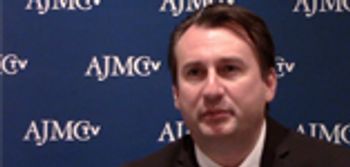
New immunotherapies and biologics that are changing the landscape when it comes to treating patients are the most exciting development in oncology in the last year, according to Lucio Gordan, MD, of Florida Cancer Specialists.
As immunotherapy continues to show promise in solid as well as liquid tumors, clinicians have been evaluating these agents in combination. During a session on the second day of the ongoing annual meeting of the American Society of Clinical Oncology, in Chicago, IL, the results from some of these trials were shared.
On the first day of the annual meeting of the American Society of Clinical Oncology, healthcare experts from the United States, Canada, and the United Kingdom, compared and contrasted the care models that are widely adopted in each nation.
A study presented at the ongoing European Obesity Summit has confirmed a correlation between the risk of developing high grade prostate cancer and high body mass index and waist circumference.
What we're reading, June 3, 2016: Florida's crackdown on opioid prescriptions is working; some California physicians are uneasy about prescribing lethal doses to terminally ill patients; and Ashish Jha, MD, MPH, shines a spotlight on the real culprit of preventable medical errors.
More than 400 comments were sent in regarding the American Society of Clinical Oncology (ASCO)'s Value Framework, and they will be incorporated as the framework evolves, explained Stephen Grubbs, MD, vice president for clinical affairs at ASCO.
One of the important findings from the American Society of Clinical Oncology’s report is that cancer mortality has gone down, said Debra Patt, MD, MPH, MBA, director of public policy at Texas Oncology.
Interim results from the ongoing CANVAS (Canagliflozin Cardiovascular Assessment Study) clinical trial have found an increased risk of leg and foot amputations associated with the popular diabetes medication.
Cigna and Anthem, which are potentially merging in the future, both announced they were taking steps to curb inappropriate opioid and prescription drug use.
The FDA has approved the first ever blood-based companion diagnostic test. The cobas EGFR Mutation Test v2 was developed by Roche for the drug erlotinib (Tarceva), which was developed by Astellas for the treatment of non-small cell lung cancer.
What we're reading, June 2, 2016: Medicaid can cover mosquito repellent to prevent the spread of the Zika virus; Karen DeSalvo, MD, MPH, MSc, discusses New Orleans post-Katrina, life expectancy, and more; and teen births hit an all-time low.
Historically, men and women who are currently serving or who have previously served in the United States military have limited treatment options when it comes to infertility resulting from service-related injury.
What we're reading, June 1, 2016: for the first time in a decade, the death rate in the United States has risen; UnitedHealth confirms it will leave the California insurance exchange in 2017; and just 6% of Americans do the 5 things they need to prevent disease.
The American Society of Clinical Oncology (ASCO)’s Value in Cancer Care Task Force has published an updated value framework that can help clinicians and patients assess the relative value of cancer therapies that have been compared in clinical trials.
A single-patient study at the Fred Hutchinson Cancer Research Center found that combining ipilimumab and interleukin-21 (IL-21) in metastatic melanoma eradicated the tumors and the patient remained disease-free 5 years post treatment.
A new analysis of children’s health found a disturbing national trend in prevalence of co-morbid chronic conditions among poor children with asthma, autism, and attention deficit hyperactivity disorder.
A substantial amount of US cancer diagnoses and deaths are preventable through lifestyle modification, according to a new study in JAMA Oncology, and the authors recommend that primary prevention remain a priority for cancer control.
A new study finds that exercise-a good mix of jogging, walking, and resistance training-can significantly help people who are addicted to methamphetamine.
Children with autism spectrum disorder who were born prior to the 2007 American Academy of Pediatrics recommendation that all children be screened for autism at the 18- and 24-month well-child visits were diagnosed significantly later than they are today, a new study found.

This week in managed care, the top stories included new guidelines for treating obesity, updated guidelines for heart failure, and a study shed light on a shift in payment for opioids.
Amid rising Rates of severe maternal morbidity, 2 new studies consider how to optimize maternal care.
Advertisement
Advertisement
Trending on AJMC
1
Oral JAK Inhibitors Boost Hair Regrowth Odds in Alopecia Areata
2
CMS Rule Ends Medicaid, CHIP Funding for Pediatric Gender Care
3
Panel Calls for Earlier Detection, Clearer Pathways in Rare Glomerular Disease
4
Medicare Drug Price Negotiations Yield Uneven Out-of-Pocket Savings
5