
Opinion|Videos|February 21, 2024
Advancements in Hemophilia A Therapies
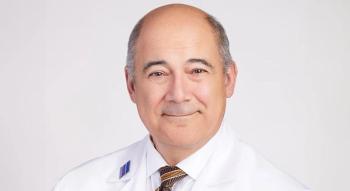
Steven W. Pipe, MD, explores the latest developments in hemophilia A treatments and prophylactic therapies, including extended half-life agents and a groundbreaking bispecific antibody.
Advertisement
Episodes in this series
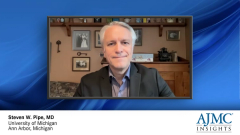
This is a video synopsis/summary of an Insights featuring Steven W. Pipe, MD.
In this insightful discussion with Pipe, the focus is on evaluating current and emerging therapies for hemophilia A. The conversation delves into the classes of prophylactic treatment available, specifically highlighting 2 distinct strategies: factor replacement therapy and substitution therapy. Pipe elucidates the evolution of factor replacement products, spanning legacy standard half-life agents to Altuviiio, a high-sustained factor VIII replacement therapy with a once-weekly dosing strategy. The extended half-life agents, utilizing recombinant platforms with modifications, have shown considerable progress in reducing the treatment burden. Notably, Altuviiio maintains normal to near-normal factor VIII levels for an extended period after treatment. The discussion also introduces substitution therapy, featuring a humanized bispecific antibody with a prolonged half-life of about 30 days. This therapy mimics the action of activated factor VIII, providing steady-state hemostatic correction, administered subcutaneously for added patient convenience. The overall exploration underscores the transformative impact of these therapies, not only in altering pharmacokinetics but also in enhancing patient experience by minimizing venous access challenges and optimizing treatment efficacy.
Video synopsis is AI-generated and reviewed by AJMC® editorial staff.
Advertisement
Related to this article

Cross-ancestry GWAS of more than 1.8 million people flags SERPINA1, SMAD3, and other bronchiectasis targets shared with COPD and chronic bronchitis.

The FDA approved bepirovirsen, the first antisense oligonucleotide for chronic hepatitis B, offering a new treatment with functional cure potential.
ALIS added to azithromycin and ethambutol raised culture conversion in new MAC lung disease, with rare resistance, in an ENCORE analysis at IDWeek 2026.

A real-world trial found 42.6% of patients with severe hand eczema cleared on oral alitretinoin.

AMCP Nexus 2026 brings managed care leaders to San Diego October 26-29 to tackle Medicare negotiation, drug pricing policy, AI, and patient access.

IDWeek 2026 posters describe a rule-based tool classifying about 1 in 5 patients with cUTI as outpatient-eligible and 5 clusters with varied LOS.
Insmed’s once-daily TPIP prodrug shows sustained lung vasodilation in PAH and PH-ILD, improving walk distance and other key measures.

An international eDelphi panel of 62 dermatologists agreed on a 2-step algorithm for tapering psoriasis biologics.
Advertisement
Advertisement
Trending on AJMC
1
Awareness Gaps Drive Narcolepsy, IH Delays: Logan Schneider, MD
2
Administrative Burden Keeps Clinicians From Bedside: Amy Morris, MD
3
International Panel Agrees on Framework for Tapering Psoriasis Biologics
4
Extension Studies in TPIP Show Promise in PAH, PH-ILD
5