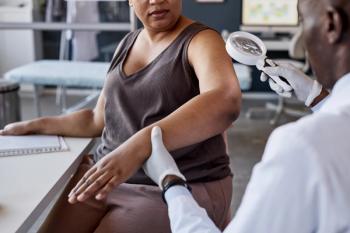
Rosacea is likely missed, not rare, in skin of color, as low suspicion and hard-to-see redness delay diagnosis, said Hilary Baldwin, MD.
Yet Khor, MD, PhD, highlights diagnostic delays, language barriers, and inequities impacting ILD and PF care access.
Clinical trial awareness in interstitial lung disease (ILD) and
These were the primary talking points during an education session at the
One of the panelists, Yet Khor, MD, PhD, an associate professor of immunology research at Monash University, said in an interview with The American Journal of Managed Care®, that one of the biggest hurdles to accessing care in ILD and PF is transitioning from primary care to specialist care.
“A lot of these patients will be sitting with the primary care physicians for at least 6 to 12 months or even longer, for years, trying to investigate symptoms…[that are]…quite nonspecific,” she explained.
In a primary care setting, a clinician may rule out standard respiratory symptoms as
She also emphasized the relationship between social determinants of health and access, noting that socioeconomic status and language barriers are 2 challenges she often sees patients face, which delay their care.
“In the lower socioeconomic kind of society, patients typically will kind of hang on to the symptoms for longer before they'll reach out to ask for kind of an investigation or try to explore what might be causing their symptoms,” Khor explained. “I think the language barrier is another thing because it's such a complex disease.”