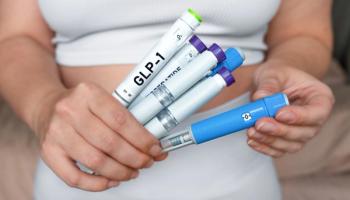
Incidence of diabetic macular edema and the need for glaucoma surgery were reduced after treatment with glucagon-like peptide-1 receptor agonists.
ASCO 2026 spotlights practice-changing cancer data: PROTEUS in prostate cancer, RAS(ON) inhibitor daraxonrasib, new bispecifics, and GLP-1 signals.
From prostate to pancreatic cancer to results with GLP-1 inhibitors, stunning science is expected this week as more than 44,000 people descend on Chicago, Illinois, for the 2026 annual meeting of the
The ASCO theme "The Science and Practice of Translation: Improving Cancer Outcomes Worldwide," selected by
Small is professor in residence of medicine and urology, deputy director and chief scientific officer and coleader, prostate cancer program, at UCSF Helen Diller Family Comprehensive Cancer Center; he is known as an expert in clinical and translational research in advanced prostate cancer and drug development.
Thus, it’s not a surprise that Sunday’s plenary session will include PROTEUS (NCT03767244), a phase 3 trial that evaluates adding perioperative apalutimide (Erleada; Johnson & Johnson), an oral androgen receptor inhibitor, to androgen deprivation therapy for patients with high-risk localized prostate cancer.
But the advances in prostate cancer don’t stop there. Sunday’s offerings will also include phase 1 data on ABBV-969, AbbVie’s investigational dual-targeting antibody-drug conjugate for the treatment of metastatic castration-resistant prostate cancer. And the ARACOG trial (NCT04335682) will compare the cognitive effects of darolutamide (Nubeqa; Bayer) with enzalutamide (Xtandi; Pfizer/Astellas), offering insight into hormone therapy selection for older patients.
Dual targets in immunotherapy and treating patients with targeted therapy earlier continue to be themes in cancer care, as seen in several solid tumor trials to be presented:
Results for hematological cancers offer updates to classic regimens as well as chemotherapy-free alternatives, including choices that could extend treatment and improve quality of life for the frailest, oldest patients—groups historically left out of clinical trials because standard treatments were too toxic.
There’s lots of news in diffuse large B-cell lymphoma (DLBCL), as ASCO promises updates to the classic R-CHOP that has been the standard frontline therapy for decades. The combination of rituximab, cyclophosphamide, doxorubicin, vincristine (Oncovin), and prednisone cures at least 60% of patients who receive it, but that leaves out lots of patients.
Early Saturday will bring the late-breaking frontMIND (NCT04824092), a phase 3 study of tafasitamab (Monjuvi; Incyte) and lenalidomide with R-CHOP for patients with newly diagnosed DLBCL. For patients with relapsed and refractory (R/R) LBCL, late Saturday will bring results from an entirely different approach, with results from the phase 3 SUNMO trial (
And Monday will bring data from the DBLCL arm of MorningSun, (NCT05207670), a phase 2 basket study evaluating subcutaneous mosunetuzumab in patients with B-cell non-Hodgkin lymphoma. These data focus on patients with DLBCL who are at least 80 years old or those 65 to 79 years of age who are ineligible for chemoimmunotherapy.
News in multiple myeloma comes bright an early Friday with news from SUCCESSOR-2, the phase 3 trial evaluating Bristol Myers Squibb’s mezigdomide plus carfilzomib (Kyprolis; Amgen) in patients with R/R multiple myeloma. The investigational mezigdomide is a cereblon E3 ligase modulatory drug, or CELMoD, part of a next-generation class of oral therapies described as an evolution of immunomodulatory drugs, such as lenalidomide, a backbone of myeloma care.
Sunday’s hematology session will be wall-to-wall newsworthy: there’s final data on CEPHEUS (NCT03652064), with the combination featuring
Although this year’s ASCO meeting holds promise for significant therapeutic advances, it is also marked by science that can improve outcomes and quality of life through low-cost solutions such as fasting before chemotherapy and incorporation of yoga into a patient’s routine. This is also the second meeting in a row to highlight how glucagon-like peptide-1 (GLP-1) receptor agonists, a drug class developed to treat diabetes and now used for weight loss,
In a message delivered in advance of this week’s meeting, Small called for solutions that can reach all patients, and pointed to sessions that fulfill current initiatives such as “
Small also issued a call to focus on science at a time when it is under attack.
”In our current environment, it’s evident to those of us involved in cancer research, care, and education that science matters,” he wrote in
“Lives literally depend on sustainable, long-term funding of scientific research, and our patients and their communities can help us carry this message forward.”