Pharmacists outline new oncologic therapeutics, from pancreatic cancer to myeloma, and what high prices and crowded markets mean for payers.
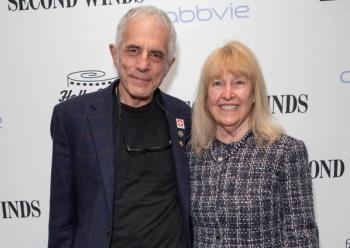
Mary Caffrey, executive editor of AJMC, interviews Patty and Brian Koffman, MDCM, on why caregivers are critical to outpatient CAR T-cell therapy and bispecific antibody access.
Caregivers are essential to cancer outcomes and to access to newer therapies, but it remains uncertain whether resources will follow the growing evidence, according to Brian Koffman, MDCM, and Patty Koffman, cofounders of the CLL Society. They were interviewed during The American Journal of Managed Care®’s Patient-Centered Oncology Care® (PCOC) conference in Nashville, Tennessee.
Patty joined a PCOC panel titled “No Caregiver, No Cure” the day before the recording. Her husband has lived with chronic lymphocytic leukemia (CLL) for 21 years and has been through a chimeric antigen receptor T-cell trial, bispecific antibody treatment, and several phase 1 trials. Brian said he could not have taken part in these without Patty watching over him, and that clinical trials are the reason he has survived more than 2 decades.1
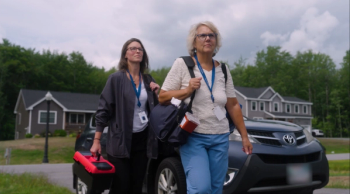
The question carries more weight as bispecific antibodies and CAR T-cell therapy move into the outpatient setting. Patients receiving CAR T generally need a caregiver available around the clock for at least 4 weeks after infusion. Brian Koffman said the data on care partners are strong.
“If care partners were a drug that you can put in a capsule, it would be a blockbuster,” he said. He is hopeful but not optimistic that resources will follow.
Thomas LeBlanc, MD, MA, of the Duke Cancer Institute, presented research on the panel linking caregiver well-being to patient outcomes. A 2026 abstract he coauthored in the Journal of Clinical Oncology examined patient and caregiver quality of life after hematopoietic stem cell transplant.2 A 2019 study in Supportive Care in Cancer found that caregivers’ emotional well-being improved as patients’ health improved and that older caregivers had trouble communicating with health professionals after discharge.3
Patty Koffman said she was surprised that anyone had studied the connection. Brian Koffman said published data give advocates leverage that anecdotes alone do not.
Patty Koffman said a pharmaceutical company representative told her after the panel that industry should lead on caregiver programs. She wants companies to fund advocacy groups that organize education and help for caregivers. “I think that we should make caregiving cool. We should make it something that people are proud to do,” she said.
Her main takeaway from the conference was unsettling. She had not realized that concerns about cost, and even profit, factor into which treatments patients receive. Brian Koffman noted that PCOC brings patients, payers, and health system executives into one cooperative conversation.
Both hope that hearing from caregivers will help others feel heard.
Listen above or on one of these podcast services:
Other resources: