Medicare Advantage exits, rising ACA premiums, a Medicare for America bill, and a Medicaid work rule ruling frame health policy on Election Day.
Clinicians at an AJMC roundtable in Cleveland said Medicare's GLP-1 Bridge came late and that cost and capacity gaps persist.
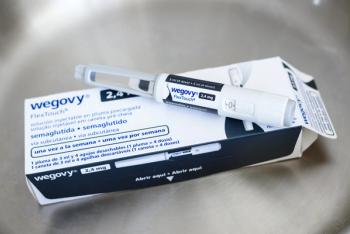
Medicare's GLP-1 Bridge gave eligible beneficiaries a fixed $50 monthly co-pay for certain glucagon-like peptide-1 (GLP-1) medications for weight management beginning July 1, 2026, and the demonstration was set to run through December 31, 2027.1 Some clinicians in Cleveland said it reached patients with obesity late in the disease course, and others described cost, continuity, and capacity gaps that remain.
Physicians, pharmacists, and a researcher from University Hospitals (UH), Cleveland Clinic, and MetroHealth gathered in Cleveland on August 18, 2026, at an American Journal of Managed Care®
Steven Nissen, MD, MACC, chief academic officer of the Heart, Vascular, and Thoracic Institute at Cleveland Clinic, said coverage came after patients already had comorbidities such as
"Medicare is late to the party," he said. “Most people that are obese at 65 were obese at 45," he added, “and so we left them untreated for 20 years."
Margarita Barreiro, MD, an endocrinologist at UH, said younger patients were still not getting covered and that what follows the Bridge was the biggest question for her. "We know they have to stay on the medication. What do we do after the bridge?" she asked.
Diana Isaacs, PharmD, BCPS, BCACP, BC-ADM, CDCES, FADCES, FCCP, an endocrine clinical pharmacist at Cleveland Clinic, agreed on timing but saw value. "It is too late, but it's something, right?" she said. Kevin Pantalone, DO, ECNU, FACE, an endocrinologist and director of pharmaceutical alliances at Cleveland Clinic, said the program offered "a good opportunity in the real-world setting to collect evidence regarding the effects of these drugs."
Maryanne Haddad, DO, FACP, an internal medicine physician at MetroHealth, said clinicians often failed to flag excess weight. When she precepted residents, she found "nobody's even identifying it as a problem." She added, "I'm a primary care doctor before I'm an obesity doctor."
Goutham Rao, MD, FAHA, chair of family medicine at Case Western Reserve University and UH, described wording that avoided judgment. "I am concerned about your weight. It puts you at risk for diabetes," he said. By his account, "we've tested that 15,000 times. Not one patient has ever said, ‘Nope, don’t want to work on it with you.’"
Scott Yasinow, MD, a primary care physician at UH Internal Medicine Group of Cleveland, described a harder experience. "It is not easy telling someone that they are overweight, obese, fat, whatever word you want to use," he said.
Michael Duffy, PharmD, pharmacy manager at UH, said his primary care pharmacy team included close to 60 clinical pharmacists. The excitement among patients for starting a GLP-1 "has been unlike anything I've ever seen," he said, and patients booked out a week or 2 for a pharmacist visit were frustrated.
Matthew Nennstiel, PharmD, a clinical pharmacy specialist at UH, said chart documentation determined eligibility. A patient with a documented baseline body mass index of 38 would automatically meet the Bridge criteria, he said, but poorly documented patients could be denied.
"I think having this team-based approach is where really our health care system needs to be moving towards to help address obesity and other cardiometabolic conditions," he said.
Neeland said the cardiovascular-kidney-metabolic framework existed because visceral and ectopic adiposity "drives all the downstream consequences."
Yasinow said 7 of 10 patients he started on therapy stayed on it. "Of the 3 that stop, 2 stop because they can't get it affordably," he said. He added that specialty tools were scarce in community settings. "I can't do a fibro scan in my building at all."
Jaclyn Prise, PharmD, a clinical pharmacist at UH, said the $50 co-pay itself was a barrier. "The patients that do need it the most, it's a barrier cost," she said. She added that Ohio Medicaid, which includes a large share of MetroHealth patients, did not cover obesity medications unless patients had another covered disease state.
Alysha Martin, PharmD, a pharmacist and supervisor on the medication adherence team at MetroHealth, said time compounded the problem. "I will talk the full 40 minutes, and we haven't even decided on which medicine to pick," she said of new patient visits.
Adam Perzynski, PhD, a sociologist in the Population Health Research Institute at MetroHealth, said county data his team reviewed showed obesity rates of about 12% in the lowest-rate neighborhoods and 80% to 88% in the highest. By his account, GLP-1 prescribing, obesity specialists, and clinical pharmacists were most available in the neighborhoods with the lowest rates. He said waiting until patients were 65 reached them "in all the wrong places and at all the wrong times." Perzynski added that care remained reactive rather than proactive. "If anything, we're still running away from the fire," he said.
Pantalone said access and cost issues, rather than intolerance, were behind much of the discontinuation he saw, noting that discontinuation in clinical trials was usually 5% to 8% or less. He said that when access "is removed as a barrier," the "vast majority of these patients will continue the medication as long as the access isn't disrupted."
Participants closed by naming changes to bring home, including dedicated nutritionists and broader use of clinical pharmacists. Haddad said, "We should invest back into primary care as a health care system."
Reference
1. CMS launches Medicare GLP-1 Bridge, expanding access to GLP-1 medications. News release. Centers for Medicare & Medicaid Services. July 1, 2026. Accessed November 3, 2026.