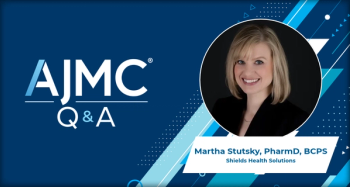
Stutsky explains why shifting therapy perceptions had more pharmacist touchpoints and longer time on therapy among patients with ATTR-CM.
Access to emergency eye care remains a public health challenge, with gaps that affect patients and communities across the country.
Ophthalmologists can help close gaps in emergency eye care by learning to stabilize patients rather than treat every condition themselves, according to James D. Auran, MD, an ophthalmologist at Columbia University Irving Medical Center and executive vice president of the American Society of Opthalmic Trauma. who spoke with The American Journal of Managed Care® at the
Auran said war has long shaped how civilian medicine handles emergencies, from Napoleon’s troops bringing trachoma back to Europe to the high explosives and chemical warfare of World War I. Since then, advances in ultrasound, CT, MRI, and optical scanners have transformed diagnosis, and telemedicine and artificial intelligence are “really on [the] horizon.”
Today, Auran said, “Ophthalmology, by design, everyone is siloed.” Because many ophthalmologists have narrow skill sets from subspecialty training or practice settings, they don’t feel equipped for the broad range of problems seen in emergency care, which makes them reluctant to take calls. Pay for emergency calls is often inadequate, he added, and physicians may lack the staff, equipment, and supplies to “do it right.”
Hospital closures are creating
To address these gaps, Auran called for promoting “damage control ophthalmology,” which empowers ophthalmologists to temporize and stabilize patients before passing them on to experts. “They don’t need to be able to treat every problem they encounter,” he said.
He also urged stakeholders to work together to improve reimbursement “so it’s worth someone’s time to come in to see a patient.”