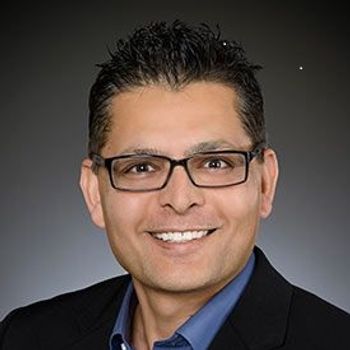
The editor in chief of Evidence-Based Oncology, who was recently named medical director of Precision Medicine for The US Oncology Network, discussed milestones met and those still to be achieved.
Closed-loop social care networks move beyond referrals, proving statewide scale can cut ED use and Medicaid costs while tracking real outcomes.
State leaders have long understood that unmet nonmedical needs—food insecurity, housing instability, and transportation barriers—drive health outcomes and costs. What has changed is the quality and breadth of evidence available to act on that understanding. A growing body of research now documents what works, for whom, and under what conditions, moving the field from promising theory to operational reality.
The challenge now is to match that evidence with infrastructure capable of delivering results not for a few hundred people, but for entire states. As policymakers consider how to allocate funds through the Rural Health Transformation Program, that is precisely the opportunity in front of them.
A recent Health Affairs
Policy makers, health systems, and payers are not trying to solve social care for a few hundred people in a controlled environment. They are trying to solve it for entire states, Medicaid populations, Medicare Advantage members, and diverse communities with varying needs from rural Appalachia to South Central Los Angeles.
That requires a different kind of infrastructure that can track outcomes and be adapted to meet local goals, conditions, populations, and policy landscapes.
A key evolution in this field is how we define success. Early efforts were focused on screening rates or referrals sent, but referrals alone cannot improve health. What’s important is whether someone actually receives the services they need.
A true closed-loop infrastructure moves beyond an initial referral. It connects
Success means ensuring that every referral has a documented status, service delivery is captured in a standardized way, and all participants in the network can see and act on that information. Temporary program design is not a substitute for durable infrastructure. Many pilot programs rely on additional staffing, bespoke incentive structures, or manual tracking processes layered on top of existing systems, approaches that can work in the short term but are difficult to sustain and even harder to scale.
Long-term success requires an integrated technology platform with core capabilities like outcome tracking, referral accountability, data exchange, and payment alignment. This is especially important for CBOs, which often operate with severely constrained resources. A closed-loop referral platform reduces staff burden, maximizes productivity, and allows CBOs to focus on what they do best.
Cost outcomes are another area where the field is evolving. As policymakers decide how to move their states forward, it will be equally important to evaluate spending in the full context of program costs and population differences.
Smaller pilots may focus on medically complex populations with higher baseline costs, which can amplify apparent savings. They may also exclude certain program expenses from analysis. At scale, the question is different: can we consistently reduce spending across broader populations while accounting for the full cost of delivering services? And can we evaluate spending to ensure taxpayer dollars are being appropriately allocated based on a community’s needs?
That is the kind of evidence state policy makers need to make long-term investment decisions.
Real-world evidence shows what happens when social care coordination moves beyond pilots. Programs built on a closed-loop referral platform that regularly track outcomes operate at the scale of tens of thousands of individuals.
In North Carolina, for example, the Healthy Opportunities Pilots program supported more than 13,000 participants, with a comparison group exceeding 70,000 individuals. The program, which allows North Carolina’s Medicaid program to cover nonmedical services like nutrition, is associated with
Peer-reviewed research has shown similar patterns in other populations. In
An innovative partnership between Ballad Health, the Virginia Department of Health, the Virginia Hospital & Healthcare Association, the Institute for Public Health Innovation, and Unite Us extended that model further: connecting over 66,000 Virginians to community services, resulting in a
Scale matters because it tests whether a model holds up under real-world conditions: multiple payers, hundreds of community partners, varying levels of need, and no artificial constraints on demand. It also reveals something that smaller pilots cannot fully capture: consistency.
The goal is not a single promising result; it is reliable performance, every day, across thousands of interactions.
Everyone benefits when credible evidence shows that social care integration works. Moving forward, the next generation of social care systems must be designed for scale from the outset. They must measure outcomes, not just activity. They must support community partners rather than burden them. And they must generate results that hold up across time, geography, and population.
We are no longer debating whether social care belongs in health care. We are determining whether we have the will to build systems worthy of that conviction. That means infrastructure capable of supporting millions of people, not hundreds. It requires accountability that extends beyond referrals to confirmed service delivery. And evidence that is not just promising, but durable.
The good news is that we are closer than ever. And policymakers have the opportunity—and responsibility—to move this field forward, all while improving health throughout their states.
Halima Ahmadi-Montecalvo, PhD, MPH, is an epidemiologist and social and behavioral scientist with extensive experience in the application and use of quantitative and qualitative methodology in behavioral health, maternal and child health, and social science broadly. She is a professional lecturer at the Milken Institute of Public Health at The George Washington University and is the vice president of research and evaluation at Unite Us.
References