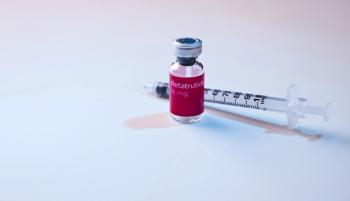
A legal fight over a single amino acid could set retatrutide's exclusivity window, its Medicare negotiation clock, and its competitive future.
Kevin Ma, PhD, discusses new data showing 2024–2025 COVID-19 vaccines reduced hospitalization and severe outcomes.
COVID-19 vaccinations were shown to reduce virus-related hospitalizations and severe disease-associated outcomes in immunocompetent adults. The findings from a recently published JAMA Network Open study suggest that vaccination remains a
In this Q&A, lead study author Kevin Ma, PhD, an epidemic intelligence service officer in the CDC’s Coronavirus and Other Respiratory Viruses Division, discusses his findings in depth and what they mean for future health policy and research.
This transcript has been lightly edited for clarity.
The American Journal of Managed Care® (AJMC®): What role did whole-genome sequencing play in this analysis, and how did sequencing success rates affect your lineage-specific estimates?
Ma: The role that whole-genome sequencing played in this analysis was to identify SARS-CoV-2 spike protein mutations and lineages. The sequencing success rate could affect the precision of some of these estimates, but likely did not have a large effect on their accuracy.
AJMC: Your results show sustained vaccine effectiveness (VE) against hospitalization through 90 to 179 days—what does this say about the durability of protection from 2024–2025 vaccines?
Ma: These findings suggest that COVID-19 2024–2025 vaccines provided protection against severe disease out to about 3 to 6 months after vaccination. While vaccine effectiveness can change over time, real-world studies show that updated vaccines provide added protection to those who receive them. Even vaccines with moderate effectiveness can reduce the risk of hospitalizations and deaths from COVID-19, especially in certain high-risk populations.
AJMC: To what extent do the lower and imprecise VE point estimates against LP.8.1 reflect potential immune evasion vs a longer time since vaccination, and how should we interpret the higher VE observed against the most severe outcomes—such as invasive mechanical ventilation or death—compared with hospitalization alone?
Ma: We were unable to distinguish immune evasion vs simply a longer time since vaccination for LP.8.1 due to limited sample sizes and overlap with longer time since vaccination. The lower, imprecise point estimates could reflect waning or limited data rather than a clear lineage effect.
COVID-19 vaccine effectiveness is often higher for the most severe end points because vaccines tend to preserve protection against progression to critical illness and death better than less severe outcomes. Few studies have evaluated protection against in-hospital outcomes this season, and our finding of higher VE against COVID-19–associated invasive mechanical ventilation or death helps to highlight the importance of recent vaccination.
AJMC: Can you expand on the implications of similar VE against lineages with spike N-terminal domain mutations (eg, S31 deletion) despite concerns about immune evasion?
Ma: Similar COVID-19 vaccine effectiveness across lineages carrying N-terminal domain mutations (like the S31 deletion) suggests that these mutations were not associated with large reductions in real-world protection against severe disease.
AJMC: Given the moderate protection against hospitalization, how should clinicians balance updated vaccine recommendations with other preventive strategies for high-risk adults, and how do you think these VE estimates should shape public health messaging about the continued importance of vaccination?
MA: For high-risk adults, strategies include precautions to prevent spread when sick and seeking health care promptly for testing and/or treatment if you have risk factors for severe illness. The decision to vaccinate is a personal one. People should consult with their health care provider to understand their options to get a vaccine and should be informed about the potential risks and benefits associated with vaccines.
AJMC: Would these findings support updating future vaccine compositions sooner in response to emerging lineages, or do they suggest broader cross-lineage protection?
Ma: These findings support and highlight how having timely data to evaluate the effectiveness of new vaccine recommendations is critical to protect public health and support decision-making on COVID-19 vaccine composition.
Reference
1. McCrear S. 2024-2025 COVID-19 vaccines provided moderate protection against JN.1 variants. AJMC. February 19, 2026. Accessed February 25, 2026.