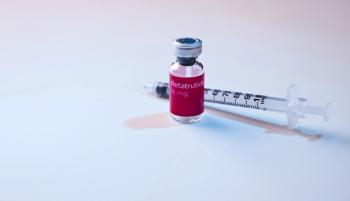
Biomarker-driven care is advancing in mantle cell lymphoma, though cost and infrastructure limit access in community oncology, according to a review.
Population Health, Equity & Outcomes
This report suggests that a unified approach to comprehensive data collection, led by a state Medicaid agency, can improve opportunities for engagement in pregnancy care management.
ABSTRACT
Objectives: This article describes changes in contact rates, care management (CM) engagement rates, and timeliness of notification after implementation of a new notification of pregnancy (NOP) process by MO HealthNet (Missouri Medicaid) and its 3 managed care organizations (MCOs).
Study Design: This is an observational study, reporting on all data collected by MO HealthNet during the pilot phase and since implementation of the new statewide NOP process, which includes an assessment of
clinical and social risks submitted to MCOs by health care providers.
Methods: Descriptive methods are employed to report average contact rates and average care management engagement rates, compared with the MCOs’ prior averages. Box-and-whisker plots depict data on gestational weeks of pregnancy over time since the
start of the project.
Results: Upon statewide implementation, MCOs are successfully contacting 52.8% of all members, compared with an average of 29.3% before the new NOP. Of those contacted, MCOs are engaging 39.7%, compared with 17.0%. Moreover, the median gestational age at NOP submission has declined from 13 to 12 weeks. As of the end of June 2025, 75% of women receive NOP screening by 17 weeks’ gestation, representing a consistent improvement since statewide implementation.
Conclusions: Implementing a comprehensive, statewide NOP process, reimbursing health care providers for their time, and adding new outreach and provider communication requirements to the Medicaid MCOs may assist state Medicaid programs in addressing their maternal/infant health concerns.
Am J Manag Care. 2026;32(Spec. No. 9):SP538-SP543.
doi:10.37765/ajmc.2026.90014
Maternal and infant health outcomes in the United States compare unfavorably to those of other developed nations, with some individual states experiencing outcomes similar to those in developing nations.1 According to a 2024 issue brief from the Commonwealth Fund, the US continues to have the highest maternal mortality rate among developed nations, with stark disparities across states and racial groups.2
Low-income women, predominantly insured through Medicaid, are disproportionately affected by adverse maternal health outcomes.3 Extensive research findings confirm that poverty in the US influences a variety of nonclinical factors—including limited access to nutritious food, transportation, and stable housing—that exacerbate clinical risks and hinder positive pregnancy outcomes.4 Furthermore, low-income individuals are significantly more likely to experience obesity and related chronic conditions, such as hypertension and diabetes, which are known contributors to complications during pregnancy.5
Many states’ Medicaid programs are administered by contracted managed care organizations (MCOs) whose obligations include care management (CM) services for people with chronic conditions, as well as for pregnant and postpartum members. Obstetric (OB) CM is tasked with member outreach for all newly pregnant members, as soon as the pregnancy is known by the MCO.6
The Health Effectiveness Data and Information Set (HEDIS) measure, Timeliness of Prenatal Care, evaluates an MCO’s ability to ensure that pregnant members initiate prenatal care during the first trimester or within 42 days of enrollment.7 Although Missouri’s Medicaid program, MO HealthNet, reports above-average performance on this measure, broader maternal and infant health outcomes remain concerning.Research demonstrates that proactive, risk-based care management improves early prenatal engagement and ties CM activities directly to stronger performance on HEDIS measures such as Timeliness of Prenatal Care.8
Approximately 40% of all Missouri births are covered by Medicaid.9 March of Dimes reports that Missouri ranks 36th out of 52 states for low birth weight, with 9.1% of infants born weighing less than 2500 g.10 The state ranks 37th for preterm birth, with a rate of 11.0%, and 40th for infant mortality.10 From 2018 to 2022, Missouri’s pregnancy-related mortality ratio averaged 32.3 deaths per 100,000 live births, exceeding the CDC-reported national rate of 22.3 deaths per 100,000.11 These outcomes suggest that, despite strong performance on individual process measures like Timeliness of Prenatal Care, Missouri continues to struggle with key indicators of maternal and infant health.
Engaging early in obstetric care management is thought to improve maternal and infant health outcomes. Research shows that the intensity and consistency of prenatal case management can lower risks such as preterm birth and low birth weight. Findings from Mallampati et al (2022) support this, demonstrating that intensive, risk-based care
management in North Carolina’s Pregnancy Medical Home program significantly reduced preterm
birth disparities.12
Programs that tailor support to individual needs and maintain consistent involvement throughout pregnancy are more effective than those offering minimal or short-term engagement.13 However, in Missouri, Medicaid MCOs face several systemic and operational barriers that hinder timely engagement. These include receiving outdated or inaccurate contact information from state information technology systems, delayed notification of pregnancy status, and limited interoperability across health information systems. Anecdotal MCO experience is that mothers on Medicaid sometimes associate MCO case management with the type of intervention mandated by child protective services and may reject engagement due to fear of loss of custody of other children.Additionally, overreliance on telephonic CM outreach is hindered by the trend toward individuals rejecting calls from unknown
phone numbers. As a result, engagement often occurs late in pregnancy or, more commonly, not at all,
reducing the potential effectiveness of care
management interventions.14
MCOs use multiple methods to identify high-risk pregnant members by analyzing diagnosis codes and historical claims data. These methods rely heavily on timely, complete claims data and may lack insight into current nonclinical factors that may exacerbate risk.
Each plan also operates its own care management program, typically structured around dedicated obstetric care managers, nurses, or social workers, who conduct risk assessments, coordinate services, and provide ongoing support throughout pregnancy and the postpartum period.
Before the current project, each Missouri Medicaid MCO used its own notification of pregnancy (NOP) form to collect contact details, demographics, clinical risk factors, and occasionally free-text fields for urgent nonclinical needs. Provider participation varied: Some submitted forms inconsistently or to multiple MCOs per patient, and their ability and willingness to support MCO outreach efforts also differed. These variations, combined with claims-based delays and limited visibility into members’ current social risks, created gaps in early engagement.
This study evaluates whether a standardized and redesigned NOP process improved early notification, member outreach, and care management engagement by comparing pre- and postimplementation outcomes.
METHODS
MO HealthNet (Missouri Medicaid), in collaboration with clinical and operational leaders from the 3 Medicaid MCOs, initiated a quality improvement effort to standardize NOP processes across the 3 MCOs, improve the accuracy of NOP data collection, and increase both the timeliness and the total number of pregnancies enrolled in OB CM. A dedicated work group was established to consolidate the 3 separate pregnancy notification forms into a single, universal form. A small initial number of OB provider groups were engaged, and the state instructed the MCOs to begin reimbursing these providers for conducting comprehensive risk screenings as part of the NOP data collection process. The results of these screenings for clinical and nonclinical risks are documented on the new universal NOP form, along with current contact information and demographics such as race/ethnicity and language. To streamline data collection, the state introduced an online portal that allows OB providers to submit NOPs to a single, secure location within MO HealthNet. This portal automatically compiles the submitted NOP information into a structured, easily accessible format and then sends it to the Medicaid MCO to which the pregnant woman is assigned.
In addition to these improvements in NOP
logistics, the work group recognized the need to enhance communication and collaboration between providers and Medicaid MCOs via a “warm handoff” approach.In this approach, a clinical team member in an OB provider’s office verbally informs Medicaid MCO members to anticipate an outreach call from an MCO OB care manager. To reinforce this message, printed materials were created for providers to distribute, highlighting the additional pregnancy-related services and support available to MCO members who engage in CM.
To support earlier entry into prenatal care and timely identification of social risk factors, the work group recognized the need to incentivize OB provider participation. In response, MO HealthNet approved reimbursement for up to 2 prenatal screenings/NOP submissions. Although the NOP is ideally completed at the time of pregnancy diagnosis, typically during an initial obstetric intake, many Medicaid members receive confirmation of pregnancy elsewhere, such as public health clinics, primary care offices, or emergency departments. These early touchpoints often precede a formal maternity care visit by several weeks. Identifying high-risk pregnancies at these initial encounters allows for earlier intervention, hopefully within the first trimester. Health plans can proactively engage members at this stage to promote prenatal care, bridge the education gap before obstetric care begins, and assess and address any nonclinical needs, further removing barriers to timely care. The NOP, then, provides a snapshot of the overall risk that a pregnant woman may be facing at a point in time.Although imperfect, this snapshot still has the potential to be very helpful in guiding the MCOs’ outreach strategies and initial care management activities.
Following the pilot period (June-October 2024), Missouri expanded access to its online portal, allowing any provider who diagnoses a pregnancy or initiates prenatal care for a Medicaid participant to submit an NOP. During the soft launch phase between November and December 2024, providers transitioned from legacy submission methods to the new portal system. This shift led to a noticeable increase in NOP submissions. As of January 1, 2025, all NOPs must be submitted exclusively through the state’s online portal.
Data
This analysis includes a prospective cohort of all NOP submissions to the state during a pilot phase (June-October 2024, N = 1622) and the first 7 months of the statewide launch (November 2024-May 2025, N = 13,368) for pregnant women who were members of an MCO (88% of all submissions). MO HealthNet’s 3 MCOs reported the total and deduplicated counts, the number contacted within 1 month post pilot, and, excluding those still in outreach, how many engaged in CM. Each MCO also provided its standard contact and CM engagement rates for its maternity population (ie, its rates based on the total number of pregnant members whose pregnancy status they have learned by any means, measured during the pilot period). Individual-level NOP and risk assessment portal data were available for the same period. These included demographic, clinical, and social risk responses; however, only gestational age at submission was used in this analysis.
Analyses
Descriptive analyses were conducted by aggregating numerators and denominators across the 3 MCOs to calculate overall pilot rates and statewide implementation rates for comparison with pre-NOP norms, which were provided by the plans (not calculated by the authors). The combined contact rates during the pilot and statewide implementation were compared with each plan’s average usual contact rate, and the overall CM engagement rate was compared with the average usual CM engagement rate during the 2 post periods. Gestational age at the time of NOP submission was averaged weekly throughout the pilot period, with trends in the mean, median, minimum, and maximum values described over time.
RESULTS
CM Engagement
During the 5-month pilot period, 1622 NOP submissions were received, of which 1539 were unique. Duplicates primarily resulted from accidental resubmissions or from some staff continuing to use the previous submission method. Of the unique cases, 920 individuals (59.8%) were successfully contacted—more than double the average usual contact rate of 29.3% reported by the MCOs (
In the first 7 months of the statewide launch, 13,368 NOP submissions were received, with 12,249 unique cases. Of these, 6470 (52.8%) were successfully contacted. As of the end of June, 39.7% of those fully outreached had accepted and begun engaging in
CM services.
Earlier Notification of Pregnancy
DISCUSSION
Improving maternal and infant health outcomes in a Medicaid population requires both individualized care and system-level coordination. Missouri’s updated NOP process is advancing this goal by enabling earlier identification, generating more complete and timely data, and fostering collaboration between health care providers and the Medicaid system to support better outcomes.In this paper, we describe how contact rates and CM engagement rates improved as a result of implementing this strategy. We showed that MCOs’ CMs are becoming aware of their members’ pregnancies earlier in pregnancy.
One strength of this study is that it reports on a large-scale policy change with complete data on the population of interest. The limitations of the study include a lack of data to date demonstrating the connection between early CM engagement and improved birth outcomes.
The trends described here reflect Missouri’s progress in promoting earlier identification of pregnancy, a necessary first step toward improving birth outcomes. The consistency and timeliness of NOP submission data from March forward suggest growing awareness of the importance of early engagement in prenatal services. It is clinically significant that more pregnancies are reported by the 17th week (end of the fourth month), as this is a necessary condition for the overall prenatal care experience to be considered “adequate” according to the widely used Kotelchuck Index.15 This earlier reporting enables care teams to identify needs sooner, coordinate services more effectively, and ultimately support healthier pregnancies and births across the state.
Following a 7-percentage-point decline in contact rates after the pilot (59.8% to 52.8%, as shown in Figure 2), Missouri is working to standardize providers’ understanding of the warm handoff process, aiming to increase patient responsiveness by ensuring that outreach is anticipated and recognizable.
Looking ahead, Missouri plans to analyze clinical and nonclinical risk factors captured through the NOP to better predict outcomes and evaluate the impact of MCO interventions. The state is also expanding targeted programs to address specific combinations of clinical and nonclinical needs identified through NOP data and resulting CM engagement.
This initiative, although regarded as foundational to building trust among MCO members and stronger partnerships between providers and MCOs, continues to evolve in policy and practice. The goal is that when new needs or challenges emerge later in pregnancy or during the 12-month postpartum period, the MCO CM will be in a position to step in and assist. A specific postpartum–focused version of the NOP screening is being developed to advance this goal.
Future research efforts will focus on collating and analyzing individual-level data on CM engagement (initiation, frequency, duration) and birth outcomes, adjusting for risk factors identified on the NOP.
Author Affiliations: Washington University in St Louis (ARB), St Louis, Missouri; BJK People’s Health Centers (NK), St Louis, Missouri; Centene Corporation (KMP), Clayton, Missouri; UnitedHealthcare (RS), Eden Prairie, Minnesota.
Source of Funding: The authors received no funding for this study.
Author Disclosures: Dr Barker reports being a paid consultant for MO HealthNet, contracted through her main employer, at the time of the study. Dr Kanafani reports employment at Healthy Blue Missouri Medicaid at the time of the study. Ms Peters reports employment at Population Health Centene Corporation.Dr Srivastava reports employment at UnitedHealthcare.
Authorship Information: Concept and design (ARB, NK, KMP, RS); acquisition of data (NK, KMP, RS); analysis and interpretation of data (ARB); drafting of the manuscript (ARB); critical revision of the manuscript for important intellectual content (ARB, NK, KMP, RS); statistical analysis (ARB); provision of patients or study materials (NK, KMP, RS); and administrative, technical, or logistic support (ARB, NK, KMP, RS).
Address Correspondence to: Abigail R. Barker, PhD, Bursky School of Public Health, Washington University in St Louis, 4300 Duncan Ave, Ste 300, St Louis, MO 63110. Email: arbarker@wustl.edu.
REFERENCES
about 1 month ago
Panelists Push for Standardization in Bronchiectasis Care