ASPEN links green sputum to neutrophils and exacerbations; brensocatib (DPP1) lowers purulence, while meta-analysis supports fewer flare-ups in bronchiectasis.
Insmed’s once-daily TPIP prodrug shows sustained lung vasodilation in PAH and PH-ILD, improving walk distance, PALM outcomes, and quality of life.
Two open-label extension studies evaluating an investigational drug that promises sustained blood flow through the lungs were among the late-breaking posters presented Tuesday at CHEST 2026, the annual meeting of the American College of Chest Physicians, meeting in Phoenix, Arizona.
Treprostinil palmitil inhalation powder, or TPIP, is being developed by Insmed to treat multiple chronic conditions. Abstracts presented at CHEST 2026 included data for patients with pulmonary arterial hypertension (PAH) and pulmonary hypertension associated with interstitial lung disease (PH-ILD),1,2 with an earlier presentation offering insight into how TPIP offers relief for patients with PAH.3
TPIP, which is currently in phase 3 trials, aims to do what no prostanoid has done: deliver a full day of pulmonary vasodilation from a single inhaled dose.
Prostacyclin-pathway drugs are a pillar of PAH care, but they can be hard to live with. Inhaled treprostinil (Tyvaso, Tyvaso DPI) is labeled for 4 dosing sessions daily because it is rapidly absorbed from the lung and has a short half-life. The resulting peaks and troughs drive cough, headache, and throat irritation.
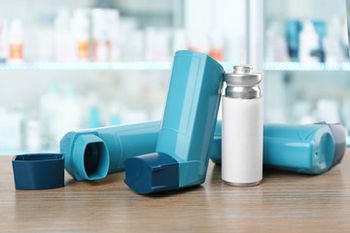
TPIP was built to fix that. Treprostinil palmitil is a prodrug in which treprostinil is linked by an ester bond to a 16-carbon chain. In the lung, native enzymes slowly cleave that bond, releasing treprostinil steadily; animal studies showed effects lasting up to 24 hours and less cough than with treprostinil itself.4 In laboratory testing, the capsule-based dry powder inhaler delivered consistent doses even at reduced inspiratory flow and lung volumes, which matters for patients with compromised lungs.5
Attendees at Tuesday’s poster session asked how a drug with a half-life of roughly 10 hours can cover a full day. The answer is that the clock starts in the lung, not the bloodstream. Laboratory studies by Insmed researchers found that lung enzymes, chiefly lipoprotein lipase, free treprostinil from the prodrug, and that the pace of release is set by how readily the enzymes can reach the drug rather than by how active they are.6 In animals, the prodrug lingered in the lungs at relatively high concentrations while peak blood levels stayed low.4
In a phase 1 study in healthy volunteers, the elimination half-life of treprostinil after a single dose of TPIP was 8.7 to 11.6 hours, and treprostinil was still detectable in the blood 24 hours later at every dose tested.7,8 In patients with PAH, the observed half-life is about 9 to 11 hours.1 In effect, the lung serves as a reservoir: rather than the spike and rapid fall seen with inhaled treprostinil, TPIP releases drug steadily enough to still be working a day later. That is why the phase 2b trial measured its primary end point at trough, about 24 hours after dosing.
The clinical data have supported the design. In a 102-patient phase 2b PAH trial (NCT05147805), once-daily TPIP cut pulmonary vascular resistance 35% vs placebo at week 16 (P < .001) and improved 6-minute walk distance by a placebo-adjusted 35.5 m. NT-proBNP fell 60%.9 Cough (41% vs 21%) and headache (32% vs 15%) were the most common adverse events; most cough was mild.
Insmed has now launched PALM, one of the broadest programs in pulmonary medicine: 4 pivotal phase 3 trials in PAH, PH-ILD, progressive pulmonary fibrosis, and idiopathic pulmonary fibrosis, aiming to enroll more than 2000 patients. Three trials are underway; PALM-IPF begins in the first half of 2027.10 If successful, TPIP could carry prostanoid therapy beyond pulmonary hypertension into fibrotic lung disease.
Patients who switched from placebo to TPIP in the open-label extension (NCT05649748) caught up with those who had taken the drug from the start, according to 12-month interim results from the 2-year study.1 Anna Stevens, MD, PhD, senior director of clinical development, Insmed, discussed data with attendees during the late-breaking poster session; Raymond L. Benza, MD, of Eastern Virginia Medical School and Sentara Health, is the study’s first author.
Of 91 patients who entered the extension, 60 continued TPIP and 31 crossed over from placebo after a 3-week titration. Nearly all of the crossover patients (90.3%) were already taking 2 background PAH therapies, and results for these patients gained notice:
Walk distance. Their 6-minute walk distance rose by a mean of 44.0 m from lead-in baseline at month 6 and 54.1 m by month 12. That nearly matched the 55.7 m gain in the continued group.
NT-proBNP. As with prior results, levels fell about 60% in both groups.
Functional class. By month 12, 42% of crossover patients had improved by at least 1 WHO functional class, compared with 50% of the continued group. No patient’s functional class got worse on TPIP.
Risk status. About three-quarters of each group reached low-risk status on the REVEAL Lite 2 calculator (74% and 75%), and about 65% reached the stricter “refined low risk” category. Mean REVEAL Lite 2 scores dropped 1.4 points in the crossover group and 2.0 points in the continued group.
Patients stayed on treatment. At month 12, 91.2% remained in the study, compliance was 97.3% and 76.9% were still on a dose of at least 640 µg. Most patients (89.0%) had an adverse event, but 92.6% of events were mild or moderate. Headache (28.6%) and cough (15.4%) were the most common, and no cough was severe. Four patients died, none from treatment-related causes. One serious adverse event, orthostatic hypotension, was linked to TPIP.
The authors noted that the extension was not designed or powered to assess efficacy. Stevens said quality of life data are being gathered for TPIP in the phase 3 PALM-PAH trial.
A second extension study took TPIP into a sicker population: patients with PH-ILD. Colin Church, MD, PhD, of Golden Jubilee National University Hospital and the University of Glasgow, presented 24-month results from the phase 2 open-label extension (NCT05649722).2
In the 16-week lead-in study, TPIP cut the risk of clinical worsening by 90% vs placebo, with trends toward better walk distance and NT-proBNP.11 Of the 32 patients who completed that study, 31 entered the extension: 23 continued TPIP and 8 crossed over from placebo. At lead-in baseline, mean forced vital capacity was 58% to 66% of predicted, which suggests severe restrictive lung disease.
As in PAH, the crossover patients improved after starting TPIP, although the group was small. Their 6-minute walk distance rose by a mean of 29.0 m at month 12 and 64.3 m at month 24, measured from when they began active drug. Their NT-proBNP fell 68% from the pre-TPIP level at month 12 and 56% at month 24. The continued TPIP group held its lead-in gains, with walk distance up 27.6 m at month 12 and 33.6 m at month 24 and NT-proBNP about 25% lower. Lung function (FVC) stayed stable in both groups.
Adherence was high: 83.9% kept the 640 µg maximum dose, and compliance was 97.2%. Cough was the most common adverse event (29.0%). Every case was mild, and none led to a dose cut or discontinuation. But the underlying disease took a heavy toll. Serious adverse events occurred in 71% of patients, 45.2% had clinical worsening, 51.6% had an acute ILD exacerbation and 6 patients died. None of the serious events, deaths or discontinuations were attributed to TPIP. Only 16 patients completed the study, 5 of them from the crossover group. The authors noted that the study was not designed or powered to assess efficacy.
Language in the abstract alludes to the competitive nature of the space; it refers to TPIP as potentially “the only once-daily inhaled prostacyclin” for PH-ILD.2
TPIP appears to move blood volume from the large pulmonary vessels back toward the small peripheral vessels in patients with PAH, according to a post hoc imaging analysis presented at a Tuesday morning late-breaking session by Ioana R. Preston, MD, of Tufts University School of Medicine and Lahey Health. Those vascular changes tracked with clinical and hemodynamic improvement.3
Preston said current therapies leave many patients symptomatic, so “we need new drugs, new therapies, and new mode of deliveries.”
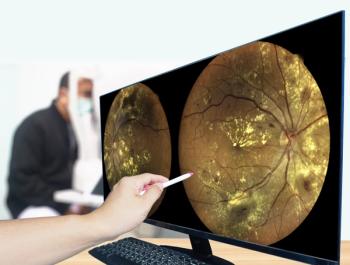
The substudy of the phase 2b trial used Functional Respiratory Imaging (FRI), which builds 3D reconstructions from high-resolution CT scans to measure blood volume in arteries and veins of different sizes. In PAH, blood shifts into the large vessels while the small peripheral vessels are lost, a process called pruning. Scans at baseline and week 16 were analyzed for 29 patients: 19 received TPIP and 10 received placebo.
Compared with placebo, TPIP reduced large-artery volume by 18.79% (P = .03). These shifts correlated with:
Better walk distance, which went with greater intermediate, large and total venous volume
Lower NT-proBNP, which went with smaller large-artery volume
Lower pulmonary vascular resistance, lower mean pulmonary arterial pressure and better pulmonary arterial compliance, which went with redistribution in both the arterial and venous compartments
Preston noted that all scans were taken at trough drug levels. She acknowledged the small sample and that the analyses were not adjusted for multiple comparisons. FRI could become a noninvasive imaging biomarker of treatment response in PAH, she said.
During a short question and answer session, Preston said investigators haven’t yet looked at oxygenation or at whether any baseline factors predict response.