Siva Mohan, MD, explains how drug costs drive silent nonadherence, PA burden, and biosimilar hesitancy, and what payers can do about it.
Measles cases hit a year high. Here's what payers need to know about outbreak costs, MMR coverage, and plans to split the vaccine
There are now 3659 reported cases of
The
Here are 4 FAQs on what the measles outbreak means for payers and health care systems.
The outbreak, which began in 2025, has already put a
A systematic review of US measles outbreak costs since 2000 estimated a mean cost of $43,204 per case. Texas, which had the largest outbreak at the time of the review with 802 cases, incurred an estimated $10 million in costs.
Costs per case, however, varied widely. A single measles case in Iowa in 2004 cost nearly $244,000. In comparison, the 2018-2019 New York City outbreak resulted in a total public health response cost of $10.6 million across 649 cases, or $16,355 per case. The 2019 outbreak in Clark County, Washington, incurred total societal costs estimated at $4.3 million across 71 cases, or $59,994 per case.3
Although these data largely predate the ongoing outbreak, they underscore how costly measles can be for health care systems. The findings highlight the need for payers and health care systems to strengthen their messaging and outreach on the importance of vaccination against measles and other vaccine-preventable diseases.
Almost all payers, including private and employer-sponsored health plans, Medicaid, and Medicare, are required to cover recommended vaccines at no cost. For private plans, that requirement stems from the Affordable Care Act; for Medicare Part D and Medicaid, it stems largely from the Inflation Reduction Act. In nearly every case, these requirements are tied to the recommendations of the Advisory Committee on Immunization Practices (ACIP) and the CDC.4
The exception is Medicare Part B, which is required by statute to cover 4 vaccines without cost sharing (pneumococcal, hepatitis B, influenza, and COVID-19), a requirement that is not linked to ACIP or the CDC.
As a result, when
President Donald J. Trump's August
This could widen existing gaps in
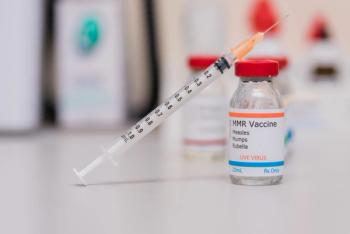
The same executive order directs HHS to develop options for administering the measles, mumps, and rubella (MMR) vaccine, currently given as a 2-dose combination vaccine, as 3 single-disease shots once such products are available domestically.2 Separate measles, mumps, and rubella vaccines are not currently licensed in the US.5
The American College of Physicians has said splitting the vaccine would create both a financial and a logistical burden for families, including additional copays and multiple appointments.2 Parents would also have to account for transportation and childcare for other children.
Merck, which manufactures an
Experts say the responsibility for countering vaccine misinformation should not fall solely on physicians. William Schaffner, MD, professor of preventive medicine and infectious diseases at Vanderbilt University Medical Center, told The American Journal of Managed Care® that the problem is "at root an educational issue."2 Yet public messaging alone may not be enough when parents are already hearing conflicting information.
Some experts suggest targeting the root of misinformation and meeting parents where they are. Other health organizations have taken a unique route, engaging teens to help spread awareness and educate those with concerns.
References
1. CDC. Measles cases and outbreaks. CDC. Updated September 2026. Accessed September 25, 2026.
2. McCrear S. Trump childhood vaccine order: what it means for parents and payers. AJMC. August 11, 2026. Accessed September 25, 2026.
3. Sriudomporn S, Patenaude. Quantifying the cost of measles outbreaks in the U.S. and how costs scale with outbreak size. medRxiv. Published online October 26, 2025. doi:10.1101/2025.10.24.25338724
4. Kates J. ACIP, CDC, and insurance coverage of vaccines in the United States. KFF. June 13, 2025. Accessed September 25, 2026.
5. Steenhuysen J, Erman M, Sunny M. US health official calls for separating measles combination shots, pulls broad COVID vaccine support. MDedge. October 9, 2025. Accessed September 25, 2026.
6. Perrone M. Trump's vaccine plan would require millions of individual shots last used decades ago. AP News. August 13, 2026. Accessed September 25, 2026.