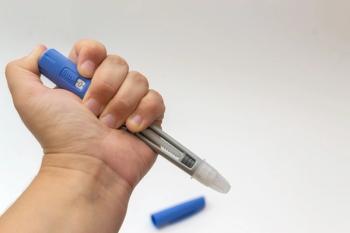
A systematic review and meta-analysis found GLP-1 RAs improved liver and metabolic markers in MASLD and MASH, but long-term benefits remain unproven.
SIRVA was rare after COVID-19 and flu shots, but COVID-19 vaccination had about 7 more cases per 100,000 doses in a study of 1.8 million.
Although rare, the absolute risk of shoulder injury related to vaccine administration (SIRVA) after COVID-19 or flu vaccination should be considered alongside the established benefits of both vaccines, according to a
Adverse events or injection site reactions are not uncommon from
The retrospective cohort study was conducted at Kaiser Permanente Southern California (KPSC), an integrated health care system whose prepaid model captures member data, including sociodemographics, encounters, diagnoses, laboratory tests, pharmacy use, and vaccinations. KPSC members 18 years or older who received a COVID-19 or
A SIRVA case was defined by 5 required criteria: anatomical concordance with the vaccination arm, symptom onset within 7 days of vaccination, symptom duration greater than 30 days to exclude transient reactogenicity events, vaccination identified as a possible cause, and no other identifiable causes for the shoulder condition.
There were 1,366,362 individuals who met the criteria for the study across 1,901,588 vaccinations. The mean age was 58.4 years, and 782,994 (57.3%) were female individuals. Among eligible vaccinations, 313,571 (16.5%) were received by Asian or other Pacific Islander individuals; 134,951 (7.1%) by Black individuals; 704,502 (37.0%) by Hispanic individuals; 667,597 (35.1%) by White individuals; and 80,967 (4.3%) by individuals of multiple, other, or unknown race and ethnicity.
Of the eligible vaccinations, 70,952 (3.7%) were simultaneous COVID-19 and influenza vaccinations and therefore were excluded from the primary analysis. Overall, the final analysis included 1,830,636 vaccinations, of which 1,234,022 were for the flu and 596,614 were for COVID-19. Of the COVID-19 vaccines, 99.98% were Pfizer-BioNTech mRNA. Of the flu vaccines, 66.40% were standard-dose inactivated quadrivalent influenza vaccine (SD-IIV4), and 33.58% were high-dose inactivated quadrivalent influenza vaccine (HD-IIV4).
In a
These findings show how common short-term reactions are after COVID-19 vaccination, which the SIRVA case definition excluded by requiring symptoms to last more than 30 days.
Researchers identified 252 SIRVA cases: 110 after a COVID-19 vaccination and 142 after a flu vaccination. SIRVA incidence was 1.84 per 10,000 COVID-19 vaccinations compared with 1.15 per 10,000 flu vaccinations (adjusted relative risk [aRR], 1.63; 95% CI, 1.16-2.28), or approximately 7 additional cases per 100,000 vaccinations.
SIRVA incidence increased with age after both vaccines. However, among adults 65 years or older, SIRVA risk did not differ significantly between COVID-19 vaccination and HD-IIV4, a recommended influenza vaccine for this age group (aRR, 1.41; 95% CI, 0.92-2.15). COVID-19 vaccination was associated with a significantly higher risk than SD-IIV4 in older adults, but that comparison was based on only 9 SIRVA cases after SD-IIV4. Furthermore, the median time to the first shoulder-related encounter was 46 days after influenza vaccination and 51.5 days after COVID-19 vaccination, even though 94.7% of confirmed cases had symptom onset within 2 days of vaccination.
The study had several limitations. Case identification relied on patients seeking care and on clinical documentation, which may underestimate true SIRVA incidence. Its observational design limits causal inference, and residual confounding from unmeasured factors, such as needle length, injection site within the deltoid, or undiagnosed shoulder conditions, may persist. Also, results from a single health system using mostly Pfizer-BioNTech doses during 1 season may not be generalizable.
"Despite the higher incidence after COVID-19 vaccination, the benefits of COVID-19 and influenza vaccination in preventing severe disease and hospitalization may outweigh the small absolute and relative risks of SIRVA," the study authors wrote.1
References
1. Zheng C, Qian L, Sy LS, et al. Risk of shoulder injury related to vaccine administration for COVID-19 and influenza vaccinations. JAMA Intern Med. Published online November 4, 2026. doi:10.1001/jamainternmed.2026.5899
2. What we're reading: COVID-19 booster adverse effects; New York health care workers hit 92% vaccination rate; global hypertension prevalence exceeds 1 billion. AJMC®. September 29, 2021. Accessed November 5, 2026.