A new tool puts this year's measles toll at nearly $83 million as global health experts weigh whether the US has lost elimination status.
Michael Mina, MD, PhD, discusses testing VMS063 against measles B3 and D8 genotypes and how it could fit alongside vaccination.
Captions are auto-generated.
Michael Mina, MD, PhD, chief medical officer and chief epidemiologist of Invivyd, explained why the company tested its measles monoclonal antibody candidate VMS063 against the B3 and D8 genotypes and how the antibody could fit alongside
Invivyd recently presented
As measles cases continue to rise and vaccine uptake wanes, VMS063 could appeal as an alternative immunization option to many
"We don't have any reason to believe that it would not also work against other variants so well," he explained. "But we are focused really just on testing those 2 because those are really the only 2 variants that are particularly relevant today."
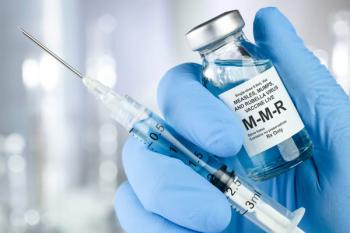
VMS063 could potentially serve as pre-exposure prophylaxis, protecting infants in the first 6 to 12 months of life before they can receive a vaccine. Mina said this could also appeal to parents who question the current childhood immunization schedule and would prefer to push back their infant's first measles vaccine, potentially to 24 months, without putting the child at risk for measles in the meantime. The CDC currently recommends the first MMR dose at 12 to 15 months of age.4
As a potential treatment, VMS063 could also address a significant gap in measles care, as there are currently no directed treatments for infected individuals.
"Being able to stop [that damage] in its tracks is extraordinarily important. And currently there's no way to do that. And so that is something we are absolutely aiming to use these monoclonals for and test them for in clinical trials," Mina concluded.
References
1. Invivyd presents VMS063, a potential best-in-class monoclonal antibody candidate for the treatment and prevention of measles, at IDWeek 2026. News release. Invivyd. October 21, 2026. Accessed November 6, 2026.
2. Martin RNA, Chupp D, Powers C, Gao F, Mina M, Allen R. VMS063: a novel, highly potent, half-life extended, pan-measles variant investigational antibody. Presented at: IDWeek 2026; October 21-24, 2026; Washington, DC. Poster P-2082.
3. McCrear S, Mina M. Who needs a measles antibody most? Michael Mina, MD, PhD. AJMC. November 9, 2026. Accessed November 9, 2026.
4. Measles vaccine recommendations. CDC. Accessed November 6, 2026.