Cosibelimab received an NCCN Category 2A preferred designation for locally advanced CSCC, supported by durable responses and low immune toxicity.

Benjamin Garmezy, MD, explains what varying Nectin-4 expression means for treatment selection in bladder cancer and what trials are still needed.
Metastatic bladder cancer being one of the worst diagnoses in oncology is no longer the case, says Benjamin Garmezy, MD, of
In perioperative therapy for muscle-invasive stage 2 and 3 disease, these regimens are outperforming chemotherapy, and Garmezy expects the majority of those patients may eventually be cured. In stage I, the conversation turns to agents delivered inside the bladder rather than systemically, sparing toxicities seen at higher stages, though durability is still unknown. Although Bacillus Calmette-Guerin (BCG) was the standard for a long time, better post-BCG options could delay surgery or radiation, preserving not just the bladder but bladder quality of life.
Both the EV-303 (
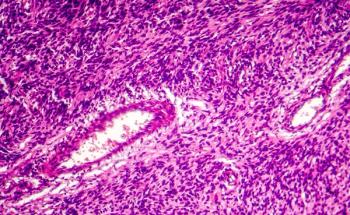
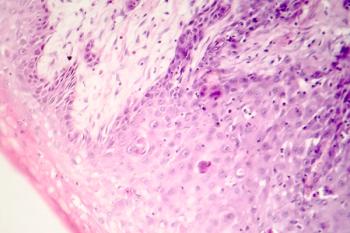
Variant histology is where more data are needed. Squamous cell and plasmacytoid disease retain Nectin-4 expression, sarcomatoid is less clear, and small cell neuroendocrine does not. Beyond target expression, the question is whether the payload still works. Garmezy calls the combination transformational in plasmacytoid disease and ineffective in neuroendocrine disease, which is treated differently. Squamous and micropapillary are more controversial, and he offers a personal impression that these patients fare worse, while noting he lacks data and that they also do poorly on alternatives. For mixed histology, he leans toward the combination while for fully squamous disease he declines to advocate either way.
Future work will build on the existing backbone, Garmezy says, reducing toxicity through approaches such as induction followed by immunotherapy maintenance. He points to T-cell engagers and radioligands as possibilities, including for PD-1–refractory patients, a group nothing currently cures. Because the transformational change arrived in the past 24 months, he expects the next leap in a decade rather than 5 years.