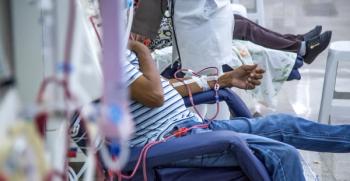
Outpatient dialysis for unfunded patients with ESKD cut ED reliance and costs, while church-based CKD screening improved blood pressure.
Soficabtagene geleucel is the first CAR T-cell therapy designed specifically to target T-cell malignancies.
Soficabtagene geleucel (WU-CART-007; Wugen), an "off-the-shelf" CRISPR-engineered
With the FDA’s Breakthrough Therapy Designation, the development and regulatory review of this treatment will be sped up as it offers a potentially substantial improvement over existing options.
Soficabtagene geleucel is the first CAR T-cell therapy designed specifically to target T-cell malignancies—an important development, as this gap has persisted while CAR-T therapies have transformed outcomes in B-cell cancers. The trial was led by researchers at Washington University School of Medicine in St. Louis, with sites across the United States, Australia, and Europe.1
T-cell acute lymphoblastic leukemia and T-cell lymphoblastic lymphoma affect approximately 1000 people annually in the United States. While frontline therapy can be effective, if the cancer does not respond to treatment or returns after initial treatment, the long-term survival rates are below 10%.1 Median survival after relapse is roughly 6 months, and stem cell transplantation, which is currently the only potentially curative option, requires achieving remission first, which is rare for these blood cancers.
Soficabtagene geleucel was manufactured from healthy donor cells using CRISPR-mediated deletion of the T-cell receptors to minimize risk of graft-versus-host disease and other antigens to prevent CAR-mediated fratricide, whereby cells attack each other. These changes are especially important for treating T-cell cancers, where therapeutic and cancer cells are similar and could otherwise cause this self-targeting. The cells are further engineered to target a protein called CD7, allowing them to destroy cancerous T cells. Fratricide has been the central obstacle to CAR-T development in T-cell cancers. All other approved CAR T-cell therapies target B-cell cancers and, as such, do not share this T-cell self-targeting complication.
Because the product is manufactured in advance from donor cells, it is available immediately. It bypasses the 3- to 4-week wait required for standard autologous CAR-T production—a delay that can be fatal in this aggressive disease.
A total of 28 patients enrolled and received lymphodepleting chemotherapy, followed by 12 receiving a single dose of soficabtagene geleucel, all treated at the recommended phase 2 dose of 900 million cells.2 Among 11 evaluable patients in the full-dose expansion cohort, the overall response rate was 91%, with 8 of 11 patients (72.7%) achieving complete remission. At the study's data cutoff, 6 patients who underwent transplant remained in remission with no evidence of disease at 6–12 months.
“This therapy has the potential to enable long-term survival for this patient population by controlling the disease and allowing patients—who would otherwise not be eligible—to proceed to stem cell transplantation, the only potentially curative treatment for these blood cancers,” John F. DiPersio, MD, PhD, the Virginia E. & Sam J. Golman Professor of Medicine and director of WashU Medicine’s Center for Gene and Cellular Immunotherapy, who first developed the therapy in his lab at WashU Medicine, said in a statement.1 “We remain hopeful that the ongoing Phase 2 study will be completed soon, and we’ll have positive results—but we’ll need some time to see how the patients do in both short-term and long-term follow-up.”
References
1. Washington University School of Medicine. Innovative CAR-T cell therapy receives FDA Breakthrough Therapy designation. WashU Medicine News. March 26, 2026. Accessed March 31, 2026.
2. Ghobadi A, Aldoss I, Maude SL, et al. Phase 1/2 trial of anti-CD7 allogeneic WU-CART-007 in patients with relapsed/refractory T-cell malignancies. Blood. 2025. doi:10.1182/blood.2025028387