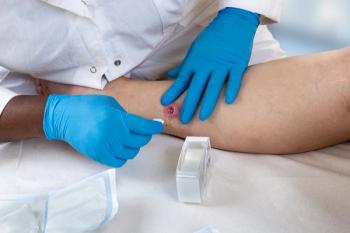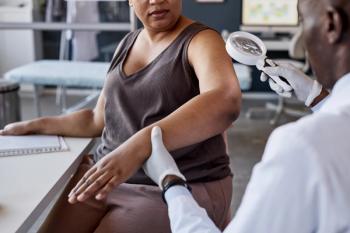
Rosacea is likely missed, not rare, in skin of color, as low suspicion and hard-to-see redness delay diagnosis, said Hilary Baldwin, MD.
Results of a study using Flatiron Health and SEER data show that community oncology patients with metastatic breast cancer and metastatic NSCLC live longer, highlighting advantages of COA-backed local care.
Physicians in community oncology practices have long pushed back at reports that care is superior in hospitals or academic centers, but they’ve lacked the data to show that their patients fare better.
Now, they have real-world evidence that patients with 2 common cancers—metastatic
“Where people receive cancer treatment matters. Community oncologists deliver care associated with longer survival, which means more time spent with family and friends,” Debra Patt, MD, PhD, MBA, president of COA and executive vice president at Texas Oncology,
The study, conducted in partnership with
Metastatic breast cancer and metastatic NSCLC are cancers that have spread to other organs in the body. Among patients who were diagnosed with metastatic breast cancer and treated at a Flatiron Health Research Network (FHRN) community oncology practice, the results showed that median overall survival (OS) was 48 months, exceeding the SEER benchmark of 40 months. Median OS for patients with metastatic NSCLC treated at FHRN practices surpassed the SEER benchmark as well, with survival at 15 months vs the SEER benchmark of 13 months, according to data presented by Cleo Ryals, PhD, senior director of community oncology research partnerships at Flatiron Health.
The study drew on the Flatiron Health Research Database (FHRD), a longitudinal, deidentified database derived from electronic health records that covers more than 220 community oncology practices, representing approximately 40% of community oncologists nationwide. The analysis included nearly 98,000 patients diagnosed with de novo stage IV metastatic breast cancer or metastatic NSCLC between January 2013 and December 2022. Using the FHRD was necessary due to SEER’s inability to reliably capture recurrences, which is an acknowledged limitation of the study’s generalizability.
Stephen “Fred” Divers, MD, of Genesis Cancer and Blood Institute in Hot Springs, Arkansas, and the American Oncology Network, opened the session with the story of a patient who had come to his practice describing her late mother's experience of receiving care at a large tertiary center as “cold and sterile,” which she contrasted with her own experience in a community setting where she felt completely at ease. This crystallized, he said, what community oncology leaders have long suspected but lacked the data to prove.
"We had patient experience, we had cost data. What was lacking was the outcomes data,” he said. SEER, widely regarded as the gold standard for cancer surveillance in the United States, provided the appropriate benchmark against which to measure community oncology's performance.
The survival advantage held up at 1, 3, and 5 years for patients treated at community oncology practices within the FHRN compared with the national benchmarks, Ryals explained. Because the SEER data account for all patients with a given cancer, researchers also evaluated whether the community oncology advantage held up when the data were limited only to patients who had received treatment. Again, Ryals said, community oncology had the edge.
“[It] doesn't matter what comparison we look at, all the different ways that we slice and dice the data, the different ways that we conducted these analyses, we continue to see the same pattern and same trend,” she said. “And that is, survival among community oncology practices within the Flatiron cohort is higher than that of SEER.”
According to the study, survival was estimated using a time-to-event analysis, in which the researchers standardized the FHRD cohort to match SEER’s demographic and clinical distribution by age, sex, race/ethnicity, and cancer subtype, using propensity-score-based inverse probability-of-treatment weights.
Notably, when the FHRD cohort was standardized to match SEER's demographic profile, the survival gap actually widened: median OS rose to 46 months (vs SEER's 29 months) for metastatic breast cancer, and to 12 months (vs 6 months) for mNSCLC. This finding reveals that the FHRD community oncology population is somewhat healthier and older on average than the SEER population, and that adjusting for those characteristics makes the community practice performance look even stronger.
Subtype-level analysis of metastatic breast cancer reinforced the overall findings, as the survival advantages were greatest for patients with HR+/HER2– or HER2+ disease—subtypes where significant therapeutic advances have occurred in recent years. By contrast, outcomes for triple-negative breast cancer were nearly identical between FHRN and SEER, where great unmet need remains. The researchers interpreted this pattern as consistent with community oncology practices rapidly adopting and effectively deploying newer targeted therapies.
Following the presentation of the data, COA Managing Director Nicolas Ferreyros moderated a discussion with Ryals, Divers, and Lucio Gordan, MD, of Florida Cancer Specialists & Research Institute and The US Oncology Network. Panelists dug into potential explanations for the results.
“We are a very high-touch site of service,” Ferreyros said. “I know [that] a modern cancer care system provides a social worker, navigation, etc. But I feel like in community oncology…the value proposition [is] the more personal side of things.”
Noting that the meeting’s theme was “Innovation in Practice,” he said the past decade has brought significant change through the Oncology Care Model, even among practices that were not enrolled, with the overall focus on keeping patients out of the hospital.
“Innovation is community oncology. Community oncology is innovation,” Gordan said. “We are the best site of innovative ideas and placement of these new types of pathways to get the best care for our patients,” he said, citing clinical research, quality outcomes, and the focus on artificial intelligence as areas where community oncology is taking the lead.
“It has to do with the personal touch,” Gordan said, as he called on political leaders to even the financial playing field for community practices.
Divers pointed to access to care as a likely contributor: Patients who can receive treatment close to home face fewer
Ryals offered a glimpse at the phase 2 results on processes of care, which are expected to be submitted for publication in summer 2026. COA and Flatiron Health are also planning future studies examining additional cancer types, advanced therapies including chimeric antigen receptor T-cell therapy and radioligands, and disease states beyond those covered in phase 1 trials.
“Survival is the gold standard of cancer care’s effectiveness, and this research underscores community oncology’s ability to deliver high-quality outcomes with both convenience and personal care,” Divers said in
References