
Commentary|Articles|September 15, 2026
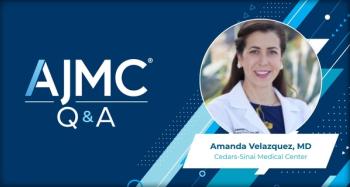
Removing Barriers to Rural Oncology Care: Christos Vaklavas, MD
Author(s)Brooke McCormick, Christos Vaklavas, MD
Fact checked by: Pearl Steinzor
Listen
0:00 / 0:00
Christos Vaklavas, MD, discussed barriers limiting rural oncology access and challenges to adopting resource-intensive therapies.
Advertisement
Vaklavas, who was a part of the “Advancing Patient-Centered Oncology in Utah: Navigating Barriers to Care” panel, discussed the regulatory and resource barriers that limit oncology care and trial participation for patients outside major metro areas, including the licensing hurdles that have slowed telehealth expansion since the COVID-19 pandemic and the infrastructure required for community sites to host clinical trials.
He also weighed in on the future adoption of resource-intensive therapies like chimeric antigen receptor (CAR) T-cell therapy, arguing that treatments requiring significant commitment and travel will need to prove their value against emerging alternatives that can be administered closer to home.
This transcript has been lightly edited for clarity.
AJMC: For patients who live across state lines, what telehealth restrictions or regulatory hurdles make it hardest to maintain continuous oncology care once they return home?
Vaklavas: Following the
We made a huge leap forward. We were forced to make this leap forward during the coronavirus pandemic, but now we have taken steps back, I'm afraid. Telehealth, at least for
AJMC: Similarly, how can academic cancer centers and community oncology practices partner to expand clinical trial access, particularly for patients who cannot regularly travel to Salt Lake City?
Vaklavas: I'm afraid doing clinical trials is becoming more and more specialized. Centers need to have the infrastructure, not only the logistical infrastructure but also all the regulatory infrastructure, having people who are study coordinators, people who oversee the protocol, and essentially building the clinical trials office, which is an enterprise in its own right. For a center that is going to have 1 or 2 clinical trials available, it may not be worthwhile.
We can have some easy-to-do clinical trials, long-term follow-ups, phase 3 clinical trials, and phase 3B clinical trials done at community centers. The other option would be that there is a mode whereby a protocol has institutional review board (IRB) approval by a central IRB, meaning a protocol that has been approved by the Huntsman Cancer Institute may not need to be approved by those local centers. So, that may cut back a little bit of the red tape for a protocol, but still, the infrastructure that it entails to run clinical trials is not trivial, and there has to be a willingness from those centers to conduct those clinical trials.
AJMC: With the growing use of high-cost therapies like CAR T-cell therapies and bispecifics, what financial counseling or navigation strategies have made the biggest difference for your patients?
Vaklavas: At the end of the day, we're building all those CAR T-cell therapies, radiopharmaceuticals, and more and more complex treatments. At the same time, we are responsible. We have a responsibility to make sure that those treatments will return the investment that we make.
Those very consuming therapies, those therapies that require a very high commitment and mobilize a lot of resources, really need to prove their investment. For example, in breast cancer, even though they're promising, all those modalities are promising. I do not see them happening just because I don't think that people will adopt them given the commitment that they require.
There is going to be a very strong push in making pills that can be administered at home, a push to make certain treatments subcutaneous, which can be administered at home. So, that's how I think about the future, and that's why I don't think that CAR T-cell therapies are going to have a broad adoption in malignancies like
Advertisement
Related to this article

A legal fight over a single amino acid could set retatrutide's exclusivity window, its Medicare negotiation clock, and its competitive future.

The study authors note there is an urgent need for "innovative value-based and alternative payment models of care."

Biomarker-driven care is advancing in mantle cell lymphoma, though cost and infrastructure limit access in community oncology, according to a review.
Build scalable obesity care with multidisciplinary teams, clear triage, and monitoring protocols; address GLP-1 gaps, Medicare access and price barriers, including oral GLP-1.

The FDA approves atezolizumab with a fluoropyrimidine and oxaliplatin as adjuvant therapy for stage III dMMR colon cancer based on the ATOMIC trial.
A JAMA analysis of 2021-2023 death records found heat-related mortality varied sharply by occupation and industry among working-age US adults.

The trade group says CMS lacks authority to impose GLOBE, which is set to begin January 1.

FDA approved tucatinib maintenance for HER2-positive metastatic breast cancer following induction therapy based on the 654-patient HER2CLIMB-05 trial.
Advertisement
Advertisement
Trending on AJMC
1
5 Things to Know if Retatrutide Is Classified as a Biologic
2
FDA Approves First Symptomatic Dermographism Treatment
3
Sacral Neuromodulation Still Seen as OAB Gold Standard in Review
4
Predoc and Nebraska Cancer Specialists: Not Letting the Fax Be the Fumble
5