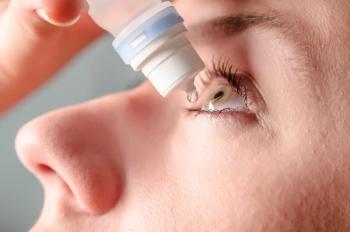
A meta-analysis found teleophthalmology satisfaction comparable to in-person eye care, but showed a gap between recommending it and reusing it.
New smartwatch data show women's nighttime awakenings jump sharply at midlife—far more than men's—hinting at a menopause-linked sleep shift.
A large multicountry analysis of Galaxy smartwatch data has found that wakefulness after sleep onset (WASO) rises sharply in women during midlife, with the increase notably steeper than the one seen in men of the same age.1
The SONAR study (
Data were drawn from Samsung Health's consumer database and captured using the Galaxy Watch's accelerometer and photoplethysmography sensors, which prior validation work has shown to have high sensitivity for detecting sleep and high specificity for detecting wake relative to polysomnography. To limit confounding from seasonal effects, all sleep data came from a single month, March 2024, and users needed at least 7 nights of recorded sleep along with self-reported height and weight to be included.
Compared with women aged 20 to 24 years, WASO increased by an average of 5.4 minutes (15.3%) at ages 50 to 54, 8.8 minutes (24.9%) at ages 55 to 59, and 11.2 minutes (31.7%) at ages 60 to 65. The corresponding increases among men were smaller across all 3 age bands. The steepest jump in women occurred between the 45-to-49 and 50-to-54 age groups, a window that overlaps with the typical menopause transition.
TSPD and TST both declined modestly with age, with TST roughly 13 to 17 minutes shorter among women in their 50s and 60s relative to the youngest group. Country-level differences were also apparent: women in South Korea had shorter TSPD and TST across all ages compared with Western countries, and their WASO began climbing as early as their early 30s, whereas the midlife jump in Western countries appeared later. Weekend nights were associated with meaningfully longer sleep duration, while BMI and physical activity level showed only small associations with WASO specifically.
The authors noted that their findings aligned with an earlier global analysis of more than 11 million nights of wearable data from nearly 70,000 adult nonshift workers across 47 countries, which similarly found that nighttime awakenings increase and sleep duration decreases with age, with distinct patterns by gender.2 That earlier study, like SONAR, relied on objective wearable measurements rather than self-report, lending convergent support to the idea that age-related sleep disruption in women is detectable at scale using consumer devices.
The 2021 analysis similarly reported that sleep onset and offset times shift earlier with age, adding a timing dimension to the duration and awakening trends observed in SONAR. Together, the studies span different device types, populations, and geographic footprints, which strengthens confidence that the midlife sleep changes are not an artifact of any single wearable platform or sample.1,2
The study authors pointed to plausible contributing factors beyond aging itself, including hormonal shifts associated with menopause, increased caregiving-related stress, and a higher prevalence of mood symptoms among midlife women, while cautioning that cross-sectional wearable data cannot establish causality.1 They also note that the Galaxy Watch is not a medical-grade device, that users opting into 7 or more nights of tracking may not represent the general population, and that data on menopausal stage, medication use, and vasomotor symptoms were unavailable.
Even with these caveats, the authors suggested wearable data could give clinicians and patients a practical tool for flagging sleep disruption earlier in the menopause transition, supporting more proactive conversations about symptom management during routine care.
References