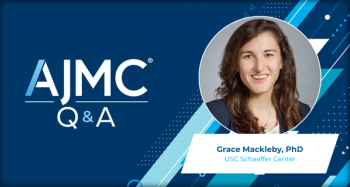
MA-to-MA switching among dually eligible beneficiaries rose sharply from 2016 to 2022, AJMC study author Grace Mackleby, PhD, found.
Fran Gregory, PharmD, MBA, explains why community providers can't go it alone—and how specialty pharmacy is stepping in to carry the load.
The advanced therapy pipeline is no longer a niche concern. Speaking ahead of her presentation at
Gregory was direct about the scope: advanced therapies now encompass not only cell and gene therapies but also bispecific therapies, sophisticated monoclonal antibodies, and other innovative treatments moving quickly through the pipeline. Critically, some of those therapies are being developed for high-volume conditions like
"The capacity to actually ensure patient access to these treatments moving forward really needs to expand," said Gregory in an interview with The American Journal of Managed Care® (AJMC®).
That expansion, in Gregory's view, runs through 2 channels: community providers and specialty pharmacy. For community providers who want to administer these therapies, the clinical and operational lift is significant—nursing coverage, triage protocols, and workflow infrastructure—and many are still building toward readiness. For those who are not yet there or who choose not to take on the buy-and-bill model, specialty pharmacy offers an alternative path to keeping patients in their care.
"I almost feel like the specialty pharmacy component is giving a physician's or provider's site a choice," said Gregory.
It is a choice that covers far more than dispensing—securing reimbursement, managing patient logistics, coordinating clinical follow-up, and collecting the long-term real-world data that the field urgently needs.
"Specialty pharmacies are really stepping into a sophisticated role, helping manage any complexity that they can kind of offload from the physician or the provider,” she continued.
The implications extend to patients directly. The easier and less burdensome these therapies are to access, Gregory argued, the more equitably they will reach the patients who need them most.