The opening session of AAO 2026 featured a keynote speech discussing how artificial intelligence (AI) will play a part in health care.
The dual glucagon/GLP-1 receptor agonist is also being studied in the SYNCHRONIZE-2, SYNCHRONIZE-CVOT, LIVERAGE, and LIVERAGE-Cirrhosis trials.
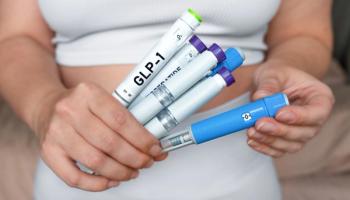
Survodutide, the dual glucagon/glucagon-like peptide-1 (GLP-1) receptor agonist already drawing attention for its weight loss profile, has now demonstrated what investigators describe as targeted, organ-specific reductions in visceral and liver fat. These are findings with the potential to reframe how clinicians and payers evaluate efficacy in obesity pharmacotherapy, according to phase 3 data presented at the
Phase 3 results from the SYNCHRONIZE-1 (
SYNCHRONIZE-1 was a 76-week, phase 3, double-blind, randomized, placebo-controlled trial that enrolled 725 adults with a body mass index (BMI) of 30 or greater, or 27 or greater with at least 1 obesity-related complication, excluding type 2
At week 76, the mean change in body weight under the treatment-regimen estimand, which accounts for early discontinuations and protocol deviations, was −12.2% in the 3.6-mg group and −13.0% in the 6.0-mg group vs −5.4% in the placebo group (P < .001 for both comparisons). Under the efficacy estimand, which models the effect of full protocol adherence, weight reductions reached −15.3% and −16.6%, respectively, vs −3.2% with placebo. Overall, 72.6% and 71.9% of survodutide-treated participants achieved at least 5% body weight reduction at week 76 vs 46.3% with placebo; 28.5% of those on the 6.0-mg dose achieved at least 20% weight reduction vs 6.6% on placebo.
Baseline characteristics were notable: the mean BMI was 37.9, the mean body weight was 108.8 kg, and nearly 70% of participants had at least 1 obesity-related complication, most commonly hypertension (40.1%), dyslipidemia (33.9%), and obstructive sleep apnea (18.3%). Females achieved substantially greater weight loss than males, at approximately 19.5% vs 12.6% at the 6.0-mg dose in clinical discussions of the data, a sex-differential pattern seen across the GLP-1 receptor agonist class.5
One of the more clinically striking findings from SYNCHRONIZE-1 emerged from a prespecified magnetic resonance imaging (MRI) substudy of 25 participants per arm. At the 6.0-mg dose, survodutide was associated with a 63.1% relative reduction in liver fat content from baseline to week 76 compared with 24.5% in the placebo group. Visceral fat volume fell by 34.0% with the higher survodutide dose vs 11.8% with placebo, while lean body volume declined by only 9.8%, meaning that more than 89% of total tissue change was fat mass, not lean mass.
Lee Kaplan, MD, PhD, director of The Obesity and Metabolism Institute at Massachusetts General Hospital and chair of the SYNCHRONIZE program executive committee, noted that the liver fat reductions appeared earlier in treatment than would be expected from weight loss alone and
“What we’re seeing is something that is specific to the treatment and is specific to the liver more than it is just an association with the amount of weight loss,” Kaplan stated in an interview with The American Journal of Managed Care®.8 The observation carries clinical weight, he explained: excess visceral adiposity and hepatic fat are key drivers of metabolic dysfunction, closely linked to systemic inflammation, impaired insulin sensitivity, and progression to metabolic dysfunction–associated steatohepatitis (MASH).
The science underlying survodutide’s dual mechanism traces back more than 2 decades. In the early 2000s, researchers including Matthias Tschöp, MD, Ludwig Maximilian University of Munich, began exploring oxyntomodulin, an endogenous incretin-related peptide hormone that stimulates both the glucagon and GLP-1 receptors, as a template for engineered compounds that could reduce food intake, increase energy expenditure, and directly modulate hepatic lipid metabolism.1 Early work in rodent and primate models demonstrated that combined glucagon/GLP-1 receptor activation achieved greater fat loss than GLP-1 agonism alone, without the hyperglycemic liability of pure glucagon agonism. Survodutide (also known as BI 456906) was developed from that mechanistic lineage.
“Glucagon can drive energy expenditure. It can help with burning calories, thermogenesis, metabolism, maybe even contribute to satiation,” Tschöp said, “so it’s a good thing if you want to have that in your polyagonist approach to obesity.”
A parallel 48-week phase 3 trial, SYNCHRONIZE-MASLD, provided more direct evidence of survodutide’s hepatic potential. The trial enrolled 218 adults with obesity or overweight and metabolic dysfunction–associated steatotic liver disease (MASLD), defined by hepatic steatosis with evidence of inflammation and/or fibrosis, both with and without type 2 diabetes. Participants received survodutide 6.0 mg or placebo in a 2:1 randomization.
The trial met both co-primary end points. Under the efficacy estimand, up to 84.2% of survodutide-treated participants achieved at least a 30% relative liver fat reduction from baseline to week 48 compared with 24.3% on placebo (P < .0001). Body weight declined by up to 12.2% with survodutide vs 1.0% with placebo. Critically, a prespecified secondary end point found that 61.0% of treated participants achieved liver fat normalization, defined as liver fat content below 5% by MRI-measured proton density fat fraction vs 5.7% with placebo.
Kaplan placed those numbers in clinical context: a 30% reduction in liver fat has been associated in the literature with improvement in MASH activity, while a 50% reduction has been linked to improvements in fibrosis stage. The reductions observed in SYNCHRONIZE-MASLD exceed both thresholds, suggesting the potential for meaningful disease modification in patients at elevated risk for hepatic progression.
The study population reflected the real-world complexity of MASLD comorbidity: average age 55, BMI 39.6, and 38.4% with type 2 diabetes. Liver fat at baseline averaged 16.9% by MRI-measured proton density fat fraction, and moderate liver stiffness was present on FibroScan assessments. Improvements in alanine transaminase levels, a liver inflammation biomarker, were observed as a secondary end point, consistent with the drug’s proposed anti-inflammatory hepatic mechanism.
The safety profile of survodutide across both trials was broadly consistent with the GLP-1 receptor agonist class. Gastrointestinal (GI) adverse events, primarily nausea, vomiting, diarrhea, and constipation, were more frequent with survodutide than placebo and occurred most commonly during dose escalation. In SYNCHRONIZE-1, GI events led to treatment discontinuation in 17.8% of participants in the 3.6-mg group and 20.2% in the 6.0-mg group vs 2.9% with placebo.
No deaths were reported, and no adjudication-confirmed cases of major adverse cardiovascular events occurred in the survodutide arms; one ischemic stroke was confirmed in the placebo group. There were no confirmed cases of pancreatic cancer, thyroid cancer, or acute pancreatitis. Asymptomatic pancreatic hyperenzymemia was slightly more common in the survodutide groups. A modest increase in heart rate of 3.2 to 3.5 beats per minute was noted at week 76, consistent with the known pharmacodynamic effects of the drug class.
A key limitation of SYNCHRONIZE-1 was the unexpectedly high weight loss in the placebo group, at 5.4% vs the 2% to 3% assumed in the power calculation, which investigators attributed in part to substantial crossover use of GLP-1 receptor agonist medications among participants who discontinued placebo. More than 16% of the placebo group reported using a prohibited GLP-1-based medication while still enrolled in the trial, a reflection of the rapidly widening commercial availability of obesity pharmacotherapies during the trial period.
Ania Jastreboff, MD, PhD, professor of medicine and director of the Yale Obesity Research Center, who presented on the rationale and design of the SYNCHRONIZE trials, noted, “It’s becoming increasingly challenging to keep participants on treatment, given that they seek out other forms of treatment when they realize they are not losing weight.”
Lead investigator Carel le Roux, MBChB, FRCP, FRCPath, PhD, University College Dublin, drew the broader implication: "We are getting into a space now where it’s becoming harder and harder for us to run drug against placebo,” he said. “What we are seeing now more and more is that we’re going to run drug against usual care.” This real-world complication of the control arm has direct implications for how managed care stakeholders interpret treatment-regimen vs efficacy-estimand results.
Discontinuation due to tolerability remains a meaningful clinical and economic consideration. As discussant Jaime Almandoz, MD, MBA, FTOS, UT Southwestern Medical Center, noted in his discussion of these data, premature treatment discontinuation rates of 35% to 40% in the trial underscore the need for individualized dose titration protocols and wraparound behavioral support.5 These are factors with direct implications for real-world treatment persistence and long-term cost-effectiveness modeling.
“What is a maintenance dose that's appropriate?” Almandoz posed. “It's not the tolerated dose, but perhaps the minimum effective dose for helping someone to achieve not just their weight, but their health goals.”
The SYNCHRONIZE program data arrive at a pivotal moment for obesity
The obesity pharmacotherapy landscape is evolving rapidly, causing managed care organizations to weigh the cost of newer agents against the long-term burden of obesity-related complications, including
Results from SYNCHRONIZE-2 (
Survodutide remains an investigational agent; its efficacy and safety have not been established by a regulatory body, and it is not yet approved for use in any market.
References