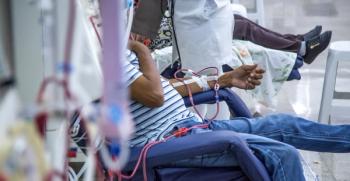
Outpatient dialysis for unfunded patients with ESKD cut ED reliance and costs, while church-based CKD screening improved blood pressure.
Shields Health Solutions leaders say GLP-1 discontinuation is a support problem, not a medication problem, and pharmacist-led care can help close it.
Nearly half of patients with type 2 diabetes (T2D) stop their glucagon-like peptide-1 receptor agonist (GLP-1 RA) within a year, a gap that the convenience of direct-to-consumer (DTC) prescribing alone may not close. Among more than 125,000 adults with overweight or obesity who started a GLP-1 RA, 46.5% of those with T2D and 64.8% of those without T2D discontinued therapy within 1 year, according to findings published in
“The DTC model succeeded by making care more convenient, faster, and easier to access,” wrote Brian Smith, PharmD, chief pharmacy officer at Shields Health Solutions, in a statement to The American Journal of Managed Care® (AJMC®). “But while it simplifies getting a prescription, it often stops there.”
GLP-1 therapy requires ongoing support with dose titration, adverse effects, nutrition, exercise, motivation, and affordability, Smith wrote, and providers may have limited visibility into care delivered outside the broader health system.
“Discontinuation is often a support issue, not a medication issue,” he wrote.
Patients frequently stop because of adverse effects, unmet social determinants of health needs, waning motivation, or uncertainty about what to expect from treatment, he added.
New GLP-1 starts show no sign of slowing. About 1.46 million patients filled their first GLP-1 prescription in each of the first 2 quarters of 2026, the highest quarterly totals since the second quarter of 2023, according to a MedScout analysis of pharmacy claims and CMS’ Part D public use file, provided to AJMC in a tailored report.2 Paid GLP-1 fills across all payers more than tripled, from 42.5 million in 2022 to 133.6 million in 2025.
Keeping those patients on therapy is another matter. Of the 5.1 million patients who started a GLP-1 in 2024, 71% were still filling prescriptions at 3 months, 55% at 6 months, and 37% at 12 months. Overall, 59% discontinued within the first year, defined as a gap of more than 60 days after a fill’s supply ran out. With a 90-day gap, the share was 56%.
Because the analysis relies on insurance claims, it does not capture cash-pay prescriptions, including many filled through DTC channels. A paid fill also does not confirm that a patient took the medication.
At Shields’ partner sites, the specialty pharmacist works inside the health system alongside physicians, nurses, and dietitians, with access to the electronic medical record and prescriber notes.
“Everyone is, so to speak, reading from the same page,” said Jennifer Donovan, PharmD, vice president of clinical services at Shields, in an interview with AJMC. “That allows us to have this integration and prevent the fragmented care that often is seen outside the health system.”
The work begins before the first fill. Pharmacy liaisons run benefits investigations, complete prior authorizations, and arrange financial assistance, steps Donovan said are “often barriers that prevent patients from starting therapy.” Patients are often on therapy within 48 hours, she said. At the same time, a pharmacist calls the patient to walk through which adverse effects to expect and when, the dose titration schedule, and how to administer and store the medication.
That first call is also where pharmacists learn patient preferences, which matter more now that oral GLP-1 RAs have joined injectables. Some patients don’t want or have difficulty with injections, while others prefer a once-weekly shot to a daily pill. Frequent travel with medication that needs refrigeration can also factor in.
“At the end of the day, we want the patient to get the right med that they’re going to take consistently,” Donovan said.
About a month after the first fill, the pharmacist checks in on how the patient is managing adverse effects and may suggest practical changes, such as eating smaller meals, so gastrointestinal symptoms don’t push the patient to stop therapy.
“In some instances, the patients really can’t tolerate that next dose titration,” Donovan said. “So we’re able to work with the prescriber and change the dose back down to a more tolerable dose. And I think that’s a great example of the integrated care.”
For patients with T2D who also take insulin or sulfonylureas, pharmacists monitor closely for hypoglycemia. Check-ins continue through the rest of the year to keep patients on therapy and catch problems early.
Shields’
The figures reflect Shields’ own partner network and were not compared head to head with the national data.
“I think it’s a good illustration of that high-touch care and that relationship that allows patients to continue,” Donovan said.
She also pointed to a pharmacist care coach program at one Shields partner site, where patients with diabetes had 30% fewer emergency department visits, lower costs of care, improved hemoglobin A1c, and sustained weight loss.
The Medicare GLP-1 Bridge, which launched July 1, gives eligible beneficiaries GLP-1 RAs for obesity at a $50 copay and now runs through the end of 2027. CMS’ BALANCE model, designed to pair GLP-1 coverage with lifestyle support, will not launch in Medicare Part D as scheduled on January 1, 2027, after plan interest fell short,
The stakes for Medicare are large. Part D spending on GLP-1s rose 68%, from $11.4 billion in 2022 to $19.1 billion in 2023, the most recent year of CMS data, as the number of beneficiaries using the drugs grew from 2.9 million to 4.5 million, according to the MedScout analysis of the CMS Part D Prescribers by Provider and Drug public use file.
Donovan said she couldn’t speak to specific policies. Based on her observations, patient engagement lets care teams anticipate coverage changes and address barriers that affect whether patients start and stay on therapy. Health systems that own their specialty pharmacy, with liaisons running benefits investigations and pharmacists working with both prescriber and patient, keep patients from “getting left behind with a fragmented system,” she said.
“When relationships are formed, patients share information that allows the pharmacist to engage with the provider and ensure patients’ needs are being met,” Donovan said.
References