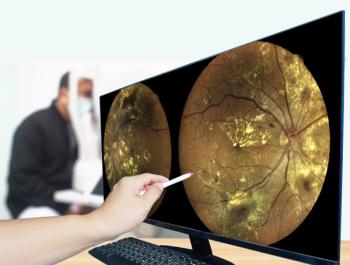
The meeting covered several topics in eye care, including how artificial intelligence (AI) can play a part in eye care.
Posters presented during the Conference on Retroviruses and Opportunistic Infections 2026 highlight the safe use of tirzepatide in patients with HIV.
The recent approval of tirzepatide, a glucagon-like peptide-1 receptor agonist (GLP-1 RA) to treat obesity1 and diabetes2 has made it a hot-button topic among researchers for use in other areas, including obstructive sleep apnea, cardiovascular disease, and chronic kidney disease. However, its use in patients with
The first poster4 detailed a real-world study that focused on metabolic outcomes in patients with HIV using tirzepatide for weight loss or the treatment of diabetes. Patients included in the study were seen at the University of California-San Diego Owen Clinic. The patients were prescribed tirzepatide between May 2022 and December 2024, with a minimum of 6 months of follow-up. Patients who had previously received GLP-1 RAs for treatment were excluded from the study.
The weight measurement, changes in hemoglobin A1C, and blood pressure were collected every quarter for 12 months. Previous antiretroviral therapy (ART) regimens, demographics, and presence of comorbidities were collected from all patients to start the study.
There were 61 patients included in the study, of which 67.2% were men and 52.5% were White. The median (IQR) age of the cohort was 51 (39-59) years. A total of 62.3% of the patients were receiving an ART regimen of tenofovir alafenamide with a second-generation integrase strand transfer inhibitor. The mean changes in weight were –7.2 kg at 3 months, –12.2 kg at 6 months, –12.9 kg at 9 months, and –15.4 kg at 12 months, all considered statistically significant.
“Other secondary outcomes demonstrated statistically significant improvements in BMI (-4.8 kg/m2, p<0.001), A1C (-1.6% in diabetics, p=0.005), systolic BP (-5.9 mmHg (p=0.02), HDL-cholesterol (+4.7 mg/dL, p=0.002), and ASCVD risk score (-3.0%, p=0.0005), suggesting that tirzepatide use can improve weight as well as a variety of other cardiometabolic factors,” said coauthor Daniel Lee, MD, professor of medicine at UC San Diego Health, in a statement to The American Journal of Managed Care®.
However, 24.5% of patients discontinued tirzepatide, with primary obstacles being adverse effects in 6 patients, lack of efficacy in 1 patient, and supply or insurance challenges in 8 patients.
The researchers concluded that patients with HIV saw benefits across A1C levels, blood pressure, and weight loss but that the discontinuation rate, especially due to insurance or supply-related challenges, remains an issue.
A second poster5 looked into the efficacy of tirzepatide in weight loss and diabetes control, using real-world evidence of its use in patients with HIV getting tirzepatide in routine care. The researchers aimed to evaluate changes in body weight and diabetes control in patients with HIV who started the treatment.
The study enrolled patients with HIV who were part of the Centers for AIDS Research Network of Integrated Clinical Systems (CNICS) cohort and started tirzepatide between June 2022 and February 2025. Changes in hemoglobin A1C and the percentage of body weight in the new users of tirzepatide were evaluated. Multivariable linear mixed models of the trajectory of the outcome were used to estimate the outcomes and adjusted for age, sex, diabetes status, and race/ethnicity. Effect measure modification was also evaluated.
There were 743 patients with HIV included in the study, of which 28% were women, the mean age was 53 years, and the mean body mass index was 35 kg/m2. Most of the patients were virally suppressed (95%). A total of 84% of the patients were classfied as obese, and 62% had diabetes. Body weight had a mean drop of 5.9% (95% CI, –6.9% to –5.0%), whereas A1C saw a drop of –0.58% (95% CI, –0.75% to –0.41%) through the first year of treatment. Men saw more of an improvement in A1C compared with the women (–0.66% vs –0.15%), but this was the only difference in outcomes based on demographic group.
This poster reaffirms tirzepatide’s use in patients with HIV. As patients with HIV are diagnosed with diabetes at a higher rate, it is important that GLP-1 RAs are known to be safe and effective for treating these patients in the long term and can have other positive effects with body weight
References