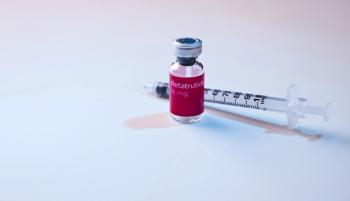
A legal fight over a single amino acid could set retatrutide's exclusivity window, its Medicare negotiation clock, and its competitive future.
Trump said imported generic drugs will face no tariff for 2 years starting August 1, then a 100% rate in 2028 and 200% in 2029, extending his trade fight to the drugs most Americans actually take.
President Donald J. Trump announced a phased tariff plan for imported generic drugs, ending the category's exemption from his broader pharmaceutical trade agenda and setting a multiyear timeline designed to pressure manufacturers into shifting production to the US.1
In a Truth Social post Tuesday, Trump said generic drugs imported into the United States would continue to carry a 0% tariff during a 2-year transition period beginning August 1, 2026. Under the announced plan, the tariff would then increase to 100% for 1 year before rising to 200% thereafter. Trump said the policy is intended to "reshore" generic pharmaceutical manufacturing in the United States, describing the eventual tariff as "a penalty" for companies that do not establish domestic manufacturing capacity within the allotted timeframe. He also said the administration's separate tariff policy for patented, branded drugs—which can reach as high as 100%—would remain unchanged.
The announcement marks the first time the administration has outlined a specific timeline for imposing tariffs on generic medicines, a category that had previously been exempted under the administration's Section 232 pharmaceutical trade framework. However, the administration has not yet released implementation guidance detailing how the tariffs would be applied or whether product-specific exemptions would be available.
Generic drugs account for approximately 90% of prescriptions dispensed in the US but only a fraction of overall prescription drug spending. Because manufacturers often operate on narrow profit margins, analysts have warned that large import tariffs could have disproportionate effects on affordability and product availability compared with earlier proposals focused on higher-margin branded medicines.
The Association for Accessible Medicines (AAM), which represents generic drug manufacturers, said it is seeking additional details about the proposal while urging the administration to address existing barriers to expanding domestic pharmaceutical manufacturing. India, the largest foreign supplier of generic medicines to the US and a major source of finished generic products and active pharmaceutical ingredients, could be particularly affected by the proposed tariffs. Industry analysts have noted that already-thin margins on many generic medicines could prompt some manufacturers to discontinue certain products if wholesalers and purchasers are unable to absorb higher costs.
The announcement follows months of warnings from health policy experts about the risks of extending tariffs to generics. Earlier this year, industry analysts cautioned that tariffs on pharmaceutical imports could raise costs for both branded and generic drugs by increasing prices on finished products and active pharmaceutical ingredients, particularly given that roughly 80% of active pharmaceutical ingredients used in the US are sourced from China and India, according to a
Association for Accessible Medicines leadership had previously cautioned that tariffs would not improve patient care or strengthen the resilience of the US health care system, warning that older injectable generics, including certain cancer drugs, are especially exposed given their already slim margins, according to additional AJMC
The announcement gives generic drugmakers and their supply chains a firm, if distant, deadline for the first time in a tariff debate that has otherwise unfolded through shifting proclamations, exemptions, and last-minute reprieves.4
Whether the policy achieves its stated goal of reshoring production remains an open question, given that building and validating new US manufacturing capacity typically takes years longer than the 2-year runway Trump has offered. In the meantime, the announcement adds a new source of uncertainty for an industry already operating on thin margins, and it sets up 2028 as a pivotal year for the future of drug affordability and supply chain stability in the US, with India's pharmaceutical sector and its trade relationship with Washington likely to remain central to how the policy ultimately plays out.
References