A higher PNR is associated with lower odds of MASLD and advanced liver fibrosis, but further studies are needed to validate findings.
A researcher explains why cardiac diagnoses, not all-cause mortality, are the most reliable finding in her vaccine-safety study.
Toraih, who is a part of the department of cardiovascular perfusion at SUNY Upstate Medical University, is the corresponding author of a recent study in
In an interview with The American Journal of Managed Care® (AJMC®), Toraih discussed why infection and vaccination appear to carry different cardiac risk profiles, how gaps in electronic health record capture could bias the comparison, why the mortality finding deserves more caution than the cardiac diagnoses, and what she sees as the most important message for clinicians talking with families.
This transcript was lightly edited for clarity.
AJMC: One particularly important finding was the difference in myocarditis risk between infection and vaccination, but you also observed differences in pericarditis and all-cause mortality. What do you think explains the different cardiac risk profiles associated with SARS-CoV-2 infection vs vaccination?
Toraih: Our study cannot establish the biological mechanisms, but infection and vaccination are very different exposures.
SARS-CoV-2 infection involves viral replication and can produce a broad systemic illness. Cardiac injury may result from several processes acting together, including immune activation, endothelial and microvascular injury, thrombosis, hypoxia, and, in some cases, direct or indirect myocardial inflammation. Vaccination produces a much more limited antigen exposure. Myocarditis after mRNA vaccination is thought to be a rare immune-mediated response, but the exact mechanism has not been fully established.
That difference in the scale and duration of the inflammatory exposure may help explain why myocarditis and pericarditis were recorded more often after infection in our study. Vaccine-associated myocarditis is generally reported soon after vaccination and usually has a relatively mild short-term clinical course. However, persistent MRI abnormalities have been observed in some patients, so continued follow-up remains important. Our study examined the occurrence of diagnoses, not their clinical severity or long-term cardiac consequences, so we cannot directly compare those features.
Pericarditis followed the same general pattern. In the matched analysis, its recorded risk was lower after vaccination than after infection. That could reflect the broader inflammatory effects of infection and, potentially, protection against infections not captured in the medical record. We cannot determine the exact pathway from our data.
I would interpret the mortality finding more cautiously. The difference in all-cause mortality is too large to attribute entirely to a direct biological effect of vaccination, particularly in this young population. Healthy-vaccinee selection, differences in health care behavior, incomplete exposure capture, and deaths unrelated to either COVID-19 or cardiac disease probably contributed. Therefore, the myocarditis and pericarditis findings are biologically plausible, but the mortality result should not be interpreted as evidence that vaccination directly caused the observed reduction in all-cause death.
AJMC: The study relies on routinely collected electronic health records, and you note that infections and vaccinations occurring outside participating health systems may not have been captured. How might this under-ascertainment have affected the comparison, particularly given that only about 6% of the cohort had a recorded vaccination?
Toraih: The 6% figure should not be interpreted as vaccination coverage. It is simply the proportion of our study population with a vaccination documented in the available TriNetX records.
Many vaccinations may have occurred at pharmacies, schools, mass vaccination sites, or community clinics without appearing in the participating health systems. Infections were also missed, particularly asymptomatic infections, home-tested cases, and infections managed outside the network. That is why we consistently described the reference group as having no recorded exposure, rather than calling those individuals truly uninfected and unvaccinated.
This under-ascertainment could have placed people in the wrong exposure groups. For example, someone recorded as infected and unvaccinated may actually have been vaccinated elsewhere. Similarly, someone classified as vaccinated without infection may have had an undocumented infection. Some people in the reference group probably had 1 or both exposures. Because these errors may differ across groups, we cannot confidently determine the overall direction of the bias.
There is also the possibility of differential outcome detection. People with documented infection may have more clinical encounters, testing, or imaging, making myocarditis and pericarditis more likely to be detected and recorded. That could exaggerate the difference associated with infection.
Therefore, our results should be interpreted as comparisons among groups defined by recorded exposure within a health-system-engaged US population. The findings were consistent across several analytical methods, but incomplete exposure capture and differential detection prevent us from treating the estimates as causal.
AJMC: You specifically caution against interpreting the mortality findings as causal, noting potential healthy-vaccinee selection and immortal-time bias. How should readers weigh the mortality finding against the myocarditis and pericarditis findings, which you consider more reliable?
Toraih: The first thing to say is that TriNetX records that a death occurred, not what caused it. So, our mortality outcome is all-cause death, cardiac and non-cardiac together, and that alone limits how far it can be interpreted. In this age group, most deaths result from causes such as unintentional injury, suicide, and homicide—outcomes that vaccination would not be expected to prevent. Vaccination may reduce deaths related to COVID-19, but it cannot plausibly explain the full magnitude of the all-cause mortality difference we observed.
Two features of the study design probably contributed. First, people who get vaccinated differ from people who do not in health status, in how readily they seek care, and in social circumstances that structured health records do not capture. Second, follow-up did not begin the same way in each group. Vaccinated individuals had to survive until their vaccination date to enter the analysis, while the unvaccinated reference group entered at a routine health care encounter. Matching can balance recorded characteristics, but it cannot correct a difference in when the clock starts. That is why the primary comparison in our study was infection vs vaccination rather than vaccinated vs unvaccinated. In that comparison, both groups begin follow-up at a documented event, so the starting point is more comparable.
I would therefore give more weight to the myocarditis and pericarditis findings. They are specific diagnoses that exposure can plausibly cause; they were identified by defined diagnostic codes, and the direction of the association held across all our analyses. That does not make them causal. They remain open to missed exposures, to more complete testing in infected patients, and to confounding we could not measure. But a specific cardiac diagnosis is more interpretable than a count of deaths from unknown causes.
So, the practical interpretation is that the cardiac findings represent the stronger evidence from the study. The mortality association is descriptive and hypothesis-generating; it should not be interpreted as the number of deaths directly prevented by vaccination or used alone to guide policy. The same caution applies to the national projections in our discussion.
AJMC: Given the ongoing public debate around COVID-19 vaccine-associated myocarditis, what do you think is the most important takeaway from this study for clinicians communicating with adolescents, young adults, and their families about the risks of vaccination vs infection?
Toraih: The most important takeaway is that vaccine-associated myocarditis should not be discussed without also discussing the cardiac risk associated with infection.
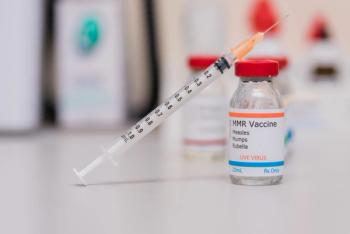
Clinicians should acknowledge that myocarditis after vaccination is real and occurs most often in adolescent and young adult males. Families should also know that in our study myocarditis was rare after both exposures and that myocarditis and pericarditis were recorded more often after SARS-CoV-2 infection than after BNT162b2 vaccination. Those findings come from the same network, over the same years, using the same diagnostic codes.
The reason this matters is that a young person who is not vaccinated is not therefore unexposed. They meet SARS-CoV-2 instead, and it carries its own cardiac risk. I want to be careful about what that does and does not mean. Not every unvaccinated person will become infected, and vaccination does not completely prevent infection. So, the decision is not vaccination risk vs zero risk. It is the small cardiac risk associated with vaccination weighed against the likelihood and potential consequences of infection.
The conversation should also be individualized. Sex, age, prior infection, previous vaccine doses, underlying health, and the level of viral transmission may all influence the balance of risk. Our study could not provide dose-specific or formulation-specific estimates, and because it was observational, it demonstrates associations rather than proving causation.
I would end where the study began. Much of this debate has been shaped by a passive reporting system that has no denominator and no control group. Such a system can raise a question, and that is its purpose. It cannot answer one. Answering requires 2 groups observed at the same time, identified the same way, with their outcomes counted the same way. So, the message is not that vaccination has no cardiac risk. It is that the risk was rare and, in our data, lower than the cardiac risk recorded after infection.