

Coverage of our peer-reviewed research and news reporting in the health care and mainstream press.
Coverage of our peer-reviewed research and news reporting in the health care and mainstream press.

Researchers raise questions on rapid tests' accuracy early in COVID-19 infection; data show dementia prevalence could triple by 2050; COVID-19 vaccines could lead to minor, temporary changes in menstruation cycles.

In a career spanning 45 years, Gabriel N. Hortobagyi, MD, has seen the number of cancer therapies increase from 8-10 for all of oncology to more than 400. Here, he discusses the importance of overall survival in breast cancer as seen in the MONALEESA-2 trial.

The CDC recommends children aged 12 years and up to receive COVID-19 vaccine boosters; nearly 2 million children develop asthma as a result of breathing in an air pollutant; nurses unions sue the Biden administration for withdrawing COVID-19 worker protections.

The Biden administration doubled its order of Pfizer’s COVID-19 antiviral drug; California is now the first state to require health insurance plans to cover at-home STI tests; the Supreme Court will hear in-person arguments Friday to decide whether to block federal vaccine mandates.
US cases of COVID-19 surge to record levels; FDA expands eligibility for Pfizer/BioNTech booster doses to children ages 12 to 15 years old; Israeli study finds fourth shot of COVID-19 vaccine effective and safe.

Ray Bailey, BPharm, RPh, senior vice president of Pharmacy Services for Florida Cancer Specialists (FCS) Pharmacy Services operations, spoke with The American Journal of Managed Care® (AJMC®) just after the conclusion of the 63rd American Society of Hematology Meeting & Exposition, which took place December 11-14, 2021.

Anthony Fauci, MD, said the CDC is considering changes to its guidance requiring a negative COVID-19 test after 5-day quarantine; bipartisan legislation banning surprise medical billing goes into effect; booster vaccine programs may be limiting global vaccine supply for low- and middle-income countries.

ACCC created a survey to better understand multidisciplinary cancer providers’ experiences with bispecific antibodies, with a focus on experiences with blinatumomab. Results of the survey were presented in an abstract during the 2021 American Society of Hematology Annual Meeting & Exposition.

The FDA this week approved cabotegravir (Apretude), the first and only long-acting injectable pre-exposure prophylaxis option to reduce the risk of sexually acquired HIV-1.

Although 2021 closes with a plentiful supply of COVID-19 vaccines and boosters, Americans continue to face challenges with the widespread Omicron variant and new testing hurdles.

The United States has authorized Pfizer’s oral COVID-19 treatment for at-home use; study results show that the Omicron variant may have a lower risk of hospitalization; and Chicago and Boston announce proof of vaccination requirements for indoor settings.
Coverage of our peer-reviewed research and news reporting in the health care and mainstream press.

Health care professionals in oncology comment on the evolving concept of precision medicine in cancer care and the role of comprehensive genomic profiling.

COVID-19 at-home test kits are in short supply; 2021 is on track to surpass 2020's death toll; hospitals report patient surges.
Up to 500 million at-home COVID-19 test kits will be sent to US households for free, by request; Biogen cut the price of its Alzheimer disease drug Aduhelm nearly in half; the FDA approved the world’s first injectable medication to reduce the risk of sexually transmitted HIV.

Nicholas McAndrew, MD, MSCE, a medical oncologist and breast cancer specialist at UCLA Health and assistant clinical professor of Medicine at UCLA in the Division of Hematology/Oncology, discusses the arrival of CDK4/6 inhibitors in the treatment landscape.
CDC data shown to overstate US vaccination rates; school-based cognitive behavioral therapy for overwhelmed children; Moderna to develop Omicron-specific COVID-19 booster dose.
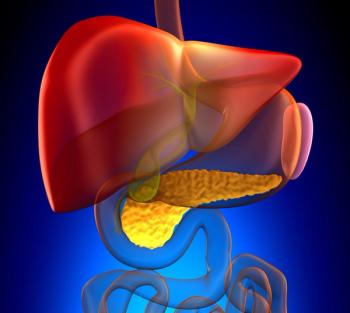
Using the fatty liver index (FLI) to identify nonalcoholic fatty liver disease (NAFLD), researchers sought to understand the association between first-degree family members of patients with diabetes and NAFLD.
There are 2 such vaccines now in use in the United States; the Pfizer-BioNTech vaccine is fully approved for the first 2 doses for those 16 and older, and the Moderna vaccine has an emergency use authorization for those 18 and older.
Coverage of our peer-reviewed research and news reporting in the health care and mainstream press.
The CDC is recommending that people at risk of developing blood clots receive the Moderna or Pfizer/BioNTech vaccines instead of Johnson & Johnson (J&J); the FDA lifts restrictions on mail order access to abortion pills; US health care spending more than doubled during the first year of the pandemic.

Two doses of the Moderna COVID-19 vaccine have reduced efficacy against the Omicron variant; a federal appeals court reinstates the Biden administration’s health care worker vaccine mandate in 26 states; a new combination therapy may reduce breast cancer progression.
The Omicron variant may cause a wave of infections as soon as January 2022; Pfizer’s COVID-19 pill, Paxlovid, was found to reduce the risk of hospitalization and death by 88%; JPMorgan Health Care Conference will move to a virtual format after receiving pressure from major drug companies.
More Americans reported skipping medical care over cost concerns; today marks the 1-year anniversary of the COVID-19 vaccine rollout; hospitals in Minnesota are overwhelmed with COVID-19 patients.
Two doses of the Pfizer vaccine may only have 22.5% efficacy against the Omicron variant; as of 2018, less than 16% of orthopedic specialists are people of color; a mask mandate for stores and indoor spaces in New York state went into effect.
The Supreme Court will allow a challenge to Texas' controversial abortion law; the FDA broadens booster eligibility for teens; Kentucky declares an emergency over nurse shortages.
Pfizer predicts that a fourth dose of a COVID-19 vaccine may be needed to quell the Omicron variant; CMS officials share figures on enrollment for health coverage under the Affordable Care Act (ACA); City of Hope announces acquisition of Cancer Treatment Centers of America.
Antibodies produced by vaccinated people may be less successful at fighting against Omicron compared with other variants; Congressional leaders created a plan to lift the debt limit with only Democratic votes in the Senate, staving off Medicare cuts; cases of depression and anxiety among youths both doubled during the pandemic.
British study finds higher immune response when mixing Pfizer, AstraZeneca COVID-19 vaccines with Moderna; World Health Organization strongly advises against the use of convalescent plasma to treat COVID-19; disparities in pay by gender among physicians.