Articles by Alana Hippensteele, MA
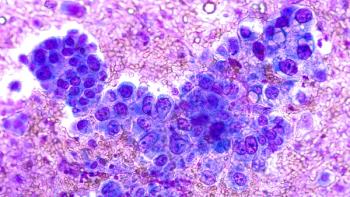
Jonathan Thompson, MD, MS, emphasized that broader molecular testing in early-stage non–small cell lung cancer (NSCLC) is essential to guide perioperative treatment decisions, while selective retesting at progression can identify resistance mutations or new targets to optimize value-based care.
Emilie Aschenbrenner, PharmD, BCOP, outlines how Froedtert Health and the Medical College of Wisconsin use outpatient-based care models, standardized protocols, and collaborative partnerships to improve cost-effectiveness, accessibility, and patient experience.

Jonathan Thompson, MD, MS, emphasized that comprehensive biomarker testing with next-generation sequencing and PD-L1 analysis—implemented as reflex testing at biopsy—is essential to guide precision therapy in lung cancer and to address persistent disparities in timely, equitable access to care.

Clayton Irvine, PharmD, MBA, MS, discusses how pharmacists are essential to advancing payer–provider collaboration in value-based care by shaping formularies, standardizing drug reviews, leveraging real-world evidence, and leading pilot programs to optimize patient outcomes and cost-effectiveness.
Emilie Aschenbrenner, PharmD, BCOP, highlights how measurable residual disease (MRD) testing can support value-based care in multiple myeloma by guiding personalized treatment intensity, potentially reducing costs and improving outcomes.

Clayton Irvine, PharmD, MBA, MS, emphasized that optimizing value-based access to cell and gene therapies requires standardized care protocols, coordinated transitions between care settings, careful evaluation of prior authorization and financial assistance options, and formulary decisions that balance clinical outcomes with both direct and indirect costs to patients and institutions.
Emilie Aschenbrenner, PharmD, BCOP, discusses how integrating CD38-targeted therapies into first-line treatment for transplant-ineligible multiple myeloma requires balancing clinical benefit, cost, and insurance coverage.
Jason Bergsbaken, PharmD, MBA, BCOP, explains the value of pharmacist involvement in precision molecular tumor boards and end-of-life care discussions, highlighting their role in ensuring evidence-based therapy selection, patient-specific recommendations, and shared decision-making that aligns treatment with individual goals.
Clayton Irvine, PharmD, MBA, MS, discusses strategies to address payer-driven biosimilar and prior authorization challenges through integrated digital solutions, while advocating for flexible, regularly reviewed treatment pathways supported by molecular tumor boards and artificial intelligence to balance standardization with personalized, biomarker-driven oncology care.
Clayton Irvine, PharmD, MBA, MS, explains that leveraging high-quality, real-world data; cross-institutional collaboration; standardized care pathways; advanced technologies; and integrated academic–community oncology partnerships can improve treatment decision-making, reduce financial toxicity, address drug shortages, and optimize infusion center efficiency.
Jason Bergsbaken, PharmD, MBA, BCOP, highlights the operational challenges of value-based oncology care while emphasizing the need to balance standardized treatment pathways with flexibility for personalized, biomarker-driven care.
Jason Bergsbaken, PharmD, MBA, BCOP, highlights the growing role of real-world data in validating or de-implementing therapies, the need for vigilant postapproval outcomes monitoring, and the value of academic–community oncology partnerships.
Chimeric antigen receptor (CAR) T-cell therapy and bispecific antibodies are transforming multiple myeloma care, with earlier use, expanded community access, and outpatient delivery models offering opportunities to improve value, safety, and equity in treatment.

Prenatal exposure to per- and polyfluoroalkyl substances (PFAS), a class of persistent environmental pollutants, was linked to significant shifts in infant T helper cell development, raising concerns about long-term effects on vaccine response, immune regulation, and disease susceptibility.

A meta-analysis showed that control group outcomes in psilocybin trials for depression were significantly weaker than those in selective serotonin reuptake inhibitor (SSRI) and esketamine trials, suggesting that psilocybin’s large observed treatment effects may be inflated by methodological factors such as functional unblinding and expectancy bias.

A nationwide Danish cohort study demonstrated no increased risk of serious adverse events following vaccination with JN.1-updated mRNA COVID-19 vaccines, reinforcing their safety profile and supporting continued use in high-risk populations amid ongoing viral evolution.

The Commonwealth Fund’s updated July 2025 brief on maternal mortality highlights how systemic disparities, Medicaid coverage gaps, and behavioral health challenges continue to drive poor maternal and infant outcomes across the United States.

Key legal, ethical, and compliance considerations for managed care professionals navigating the evolving landscape of psychedelic-assisted therapy include regulatory risks, data privacy challenges, reimbursement limitations, and the need for culturally informed care models.

At ESMO Congress 2024, Shuji Ogino, MD, PhD, MS, explained that the rising incidence of young-onset cancer may be due to generational risk factors such as lifestyle, diet, and environmental changes, emphasizing the need for long-term research and follow up to understand early-life influences on cancer development.

Clinical research presented at the European Society for Medical Oncology Congress 2024 highlights the significant survival benefits of perioperative and neoadjuvant immunotherapy with nivolumab and nivolumab plus ipilimumab, while emphasizing the role of biomarkers, such as circulating tumor DNA and KRAS mutations, in guiding treatment decisions.

Disparities continue in younger patients, raising the need for novel interventions to mitigate challenges associated with younger age at diagnosis.

High circulating tumor DNA (ctDNA) tumor fraction after induction chemotherapy identifies a population with an unmet need who has low chances to benefit from immune checkpoint blockades for non–small cell lung cancer (NSCLC), according to research discussed during a presentation at the American Society of Clinical Oncology Annual Meeting.

These study results are the first to demonstrate randomized evidence that a personalized neoantigen approach could be beneficial for patients with cancer.

Biosimilars may not be perfect, but they are, at the very minimum, helping to make cancer therapies a little bit more accessible, said Andre D. Harvin, PharmD, MS, executive director of pharmacy, oncology, Cone Health.

Selected coverage from the Quality Cancer Care Alliance (QCCA) Summer 2022 National Leadership Summit, the National Comprehensive Cancer Network (NCCN) Fall Policy Summit, and the American Association for Cancer Research (AACR) Conference on the Science of Cancer Health Disparities in Racial/Ethnic Minorities and the Medically Underserved.
