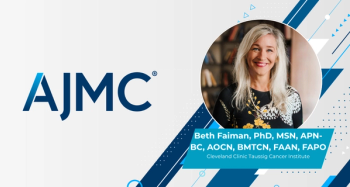
Cleveland Clinic's Beth Faiman, PhD, MSN, discusses advanced practitioners' reimbursement and how outpatient trispecific antibodies could increase access.
Cleveland Clinic's Beth Faiman, PhD, MSN, discusses advanced practitioners' reimbursement and how outpatient trispecific antibodies could increase access.
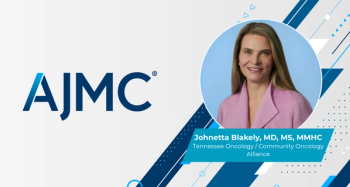
Tennessee Oncology’s Johnetta Blakely, MD, MS, explains why physicians must review high-stakes AI-assisted orders and how patients view AI in oncology.
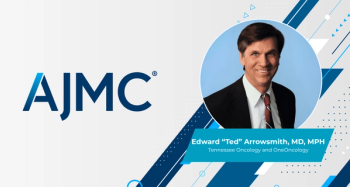
OneOncology's Edward "Ted" Arrowsmith, MD, MPH, explains why cost stays out of its pathway process and how point-of-care ordering puts pathways to work.
Tennessee Oncology's Wade Iams, MD, MSCI, discusses insured patients' out-of-pocket costs, platinum shortages, and access to CAR T and BiTE therapies.
Cathy Eng, MD, says flat funding for NCI-sponsored trials discourages site participation and slows data, despite their importance.
OneOncology's Larry Bilbrey discusses why unstructured data limits artificial intelligence and how practices can weigh AI purchases by their payoff.
Weill Cornell's Mateo Mejia Saldarriaga, MD, discusses patient preference for on-body isatuximab and how to sequence CAR T and bispecifics in myeloma.
COA's Nicolas Ferreyros discusses real-world survival data for community oncology, health system consolidation, and barriers to CAR T-cell access.

Washington, DC, clinicians shared how order sets, pharmacist-led dosing, and better handoffs can close iron deficiency gaps in heart failure care.
Cathy Eng, MD, discusses a BREAKWATER post hoc analysis showing poorer survival in early-onset BRAF V600E colorectal cancer.
Cleveland Clinic's Beth Faiman, PhD, MSN, discusses AP-led clinics, managing talquetamab taste changes, and infection prophylaxis with bispecifics.
OneOncology's Edward "Ted" Arrowsmith, MD, MPH, explains how patient-reported outcomes and national disease groups can make cancer pathways more dynamic.
Cathy Eng, MD, explains how young adults with cancer face career, fertility, and body image concerns as well as where to find support.
Cathy Eng, MD, FACP, FASCO, says young patients with colorectal cancer often look healthy and present at stage IV, making symptom awareness critical.

A recent study reveals a heightened stroke risk in asthma patients recovering from severe COVID-19, emphasizing the need for proactive monitoring and management.

Speakers at the 2024 International Myeloma Society (IMS) conference share the updates from the myeloma space that they were most excited about this year.

Saad Z. Usmani, MD, MBA, FACP, myeloma specialist and cellular therapist at Memorial Sloan Kettering Cancer Center, presented the results of the CEPHEUS trial and emphasized the positive impact daratumumab has on patients with multiple myeloma.

In 2024, the Asembia Specialty Pharmacy Summit celebrated 20 years and speakers highlighted the conversations around improving access and affordability taking place at the meeting.
While the novel payment models for expensive cell and gene therapies have been effective, they need to continue evolving, said Joe DePinto, MBA, of McKesson.
The health-system specialty pharmacy has the unique ability to coordinate better with the provider and take a team approach that reduces the chances of dropping the ball on the patient’s care.
There are multiple levers that need to be pulled to allow biosimilars to come to market more broadly in the US, explained Fran Gregory, PharmD, MBA, vice president of emerging therapies, Cardinal Health.
When the same product comes to market with additional indications, irrational pricing decisions result in ever-increasing prices instead of volume translating to lower costs, said Jon Mahrt, MBA, of OptumRX.
The real-time monitoring of patients through medically integrated dispensing (MID) programs can reduce costs of care and remove barriers, said Christie Smith, PharmD, MBA, vice president, pharmacy and payer strategy, Cencora.
Payer coverage of biosimilars is always shifting as new ones come to market, explained Tasmina Hydery, PharmD, MBA, BCGP, associate director in digital solutions, Cencora.

Although all legislation is currently on hold in Congress, there are important actions under consideration for pharmacy, including digital therapeutics, access to care, and health care disparities.

The supplemental biologics license application (sBLA) is supported by the results of the XTEND-Kids study, demonstrating a once-weekly 50 IU/kg dose of antihemophilic factor (recombinant) provides effective bleed protection in children with hemophilia A and can be used across clinical scenarios.

Applying novel and effective approaches based on behavioral economics for pre-exposure prophylaxis (PrEP) dissemination programs could help to tailor the programs to the populations and settings of areas with high HIV burden.

The study authors said that, to their knowledge, this will be the first systematic review focusing on the effects of cognitive interventions for those with chronic respiratory diseases.

Elizabeth Johnson, LPN, PACS, BPCA, CEO of MedicoCX, co-CEO of Healthcare Advocate Summit, and an Asembia 2023 presenter, discusses why more empathetic approaches that take into account the full range of the patient experience are needed to improve patient-focused health care.

The American Journal of Managed Care® interviewed 2 presenters at Asembia 2023, gaining insight on how the specialty pharmacy pipeline is growing and how health systems and payers can affect the accessibility and affordability of new specialty therapies.

September 29th 2023