

Children were hospitalized most commonly due to respiratory syncytial virus (RSV) compared with influenza and COVID-19 during a season with respiratory pathogen cocirculation.

Julia is an associate editor for The American Journal of Managed Care® (AJMC®) and joined AJMC® in 2022. She produces written and video content covering multiple disease states, and assists in the screening process for manuscripts submitted to AJMC®.
She has a BA in English language and literature from Rutgers University. You can connect with Julia on LinkedIn.
Children were hospitalized most commonly due to respiratory syncytial virus (RSV) compared with influenza and COVID-19 during a season with respiratory pathogen cocirculation.

The SLEEP 2023 conference will be held in Indianapolis from June 3 to June 7 and promises to feature topics including sleep health disparities, hypersomnia, geriatric medicine, and new technologies.

Adalimumab had a slight advantage over infliximab in terms of adverse events when used to treat patients with noninfectious uveitis (NIU).

Nicholas Bagley, JD, professor at Michigan Law at the University of Michigan, speaks about the benefits of ongoing communication about the effects of the Braidwood ruling and what will be done to keep preventive care accessible.

Although lack of routine testing and limitations to current diagnostic testing likely lead to underreporting of respiratory syncytial virus, RSV still poses a substantial economic burden.

About 69% of pediatric patients had discontinued amblyopia therapy during COVID-19 even as their parents reported that adherence was good.
Nicholas Bagley, JD, professor at Michigan Law at the University of Michigan, discusses how Congress can help address the consequences of Braidwood v Becerra.
Aflibercept was a less cost-effective treatment for retinal vein occlusion (RVO) compared with bevacizumab, although visual acuity outcomes were similar.

A recent study compared hospitalizations and ages of children with respiratory syncytial virus (RSV) infection before the pandemic and afterwards.
Nicholas Bagley, JD, says immediate effects of the ruling have been modest so far.

An analysis of an urban population of children indicated that age was a strong predictor in the diagnosis of respiratory syncytial virus (RSV) and influenza.

The relationship between myopia and primary open-angle glaucoma (POAG) was stronger in Asian, Black, and Hispanic individuals compared with White individuals.

A study found that not being infected with respiratory syncytial virus (RSV) in the first year of life was associated with a decreased risk of developing asthma in childhood.

Cost sharing for several treatments could disappear following the Braidwood v Becerra ruling, according to A. Mark Fendrick, MD, director of the V-BID Center at the University of Michigan and co-editor in chief of The American Journal of Managed Care®.

A vaccine for adults 60 years and older was approved by the FDA for protection against respiratory syncytial virus, making it the first such vaccine to be approved worldwide.

Further epidemiologic studies on nonpharmaceutical interventions are warranted to assess their relationship with respiratory syncytial virus (RSV).

When presented with a set of multiple choice questions used to help trainees practice for the ophthalmology board certification exams, the artificial intelligence (AI) chatbot ChatGPT was able to answer only half correctly.

Reducing disparities in the treatment of atopic dermatitis (AD) was the focus of a session of the final day of the Revolutionizing Atopic Dermatitis 2023 conference.
A panel held at Revolutionizing Atopic Dermatitis 2023 reviewed therapies to expect within the next year for the treatment of atopic dermatitis (AD) as well as investigational therapies currently undergoing trials.
Janus kinase (JAK) and phosphodiesterase-4 (PDE-4) inhibitors were primary topics covered at the third symposium at the Revolutionizing Atopic Dermatitis fifth annual conference.
A. Mark Fendrick, MD, co–editor in chief of The American Journal of Managed Care® and director of the V-BID Center at the University of Michigan, discusses how the Braidwood ruling can affect the efficacy of preventive care.
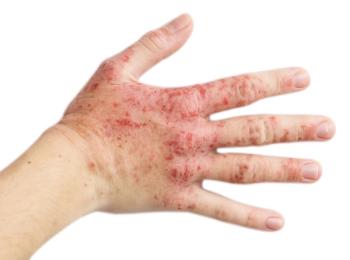
In posters presented at the Revolutionizing Atopic Dermatitis conference, ruxolitinib cream was found to be both safe and effective in treating atopic dermatitis (AD).

Researchers found that eyeglasses with traditional steps of 0.25D were less effective and less preferred by participants compared with those refracted in 0.05D steps.
The Revolutionizing Atopic Dermatitis conference, set to begin on April 29 in Washington, DC, promises to offer symposia on emerging therapies and new insights into treating atopic dermatitis (AD).
A nomogram that could assist physicians in predicting severe respiratory syncytial virus (RSV)–associated bronchiolitis early on was established and validated in a recent study.

A new study found that the MVA-BN-RSV vaccine was able to lower symptom scores and resulted in fewer confirmed RSV infections vs placebo.
Nicholas Bagley, JD, of Michigan Law, University of Michigan, explained what the Braidwood v Becerra court case was about and how the ruling affected preventive care across the country.
Although the 28-day mortality for patients with respiratory failure did not differ between patients with and without respiratory syncytial virus (RSV), complications were more common in those with RSV.

Retinopathy of prematurity (ROP) was found to have increased from 2003 to 2019, especially in Black and Hispanic children.

Although new guidelines from the CDC say that masks need not be worn in counties where transmission level for COVID-19 isn’t high, many health systems still plan to mask.