

Trust is crucial when employers are trying to have successful healthcare programs and engage employees to change behaviors, said panelists at the Midwest Business Group on Health’s 39th Annual Conference, held May 8-9 in Chicago, Illinois.
Trust is crucial when employers are trying to have successful healthcare programs and engage employees to change behaviors, said panelists at the Midwest Business Group on Health’s 39th Annual Conference, held May 8-9 in Chicago, Illinois.
As the United States debates the feasibility and benefits or harms of a single-payer system, the important thing is to have a fact-based discussion and to ask questions, Jan Berger, MD, JD, chief executive officer of Health Intelligence Partners and medical director of the Midwest Business Group on Health (MBGH), said during a session at MBGH’s 39th Annual Conference, held May 8-9 in Chicago, Illinois.

Bisphosphonates, which are used to treat osteoporosis and prevent fractures, are increasingly being used more effectively in a population more likely to benefit, according to results presented at ENDO 2019, the Endocrine Society’s annual meeting.
Healthcare is very comfortable with treating a disease, but it’s not as good with handling cures. However, the advent of gene therapy and precision medicine means more and more expensive cures are coming down the pipeline, said panelists on the last day of Asembia’s 15th annual Specialty Pharmacy Summit, held April 29 to May 2 in Las Vegas, Nevada.

Patients with cancer who receive high doses of bisphosphonates, used to treat bone cancer, can experience jaw damage. New preclinical research published in Bone Science Direct could prevent these patients from experiencing this loss of jawbone tissue after routine oral surgery.

While most people with employer-sponsored insurance were satisfied with their coverage and used positive words to describe their health plan, people with low incomes, chronic conditions, or high deductibles faced healthcare affordability challenges.
Out-of-pocket (OOP) costs remain a problem, and even patients who are receiving co-pay assistance worry about these expenses. Unfortunately, charitable foundations that provide financial assistance are under increasing strain as demand rises, with funds running out of money quickly, explained Ayesha Azam, senior director of medical affairs, Patient Access Network Foundation.
Analyses of real-world data have broadened the understanding of multiple sclerosis (MS) and provided a snapshot into patient conditions and healthcare costs in the years leading up to and the years after an MS diagnosis, explained Bruce Pyenson, FSA, MAAA, Principal, Consulting Actuary, Milliman, Inc, during a session highlighting findings of a recent Milliman white paper at Asembia’s 15th annual Specialty Pharmacy Summit, held April 29 to May 2 in Las Vegas, Nevada.
During a session at Asembia’s 15th annual Specialty Pharmacy Summit, Greg Simon, president, Biden Cancer Initiative, outlined commitments that came out of the Cancer Moonshot, the work of the Biden Cancer Initiative, and ongoing challenges that patients with cancer face.
During his keynote speech at Asembia’s 15th annual Specialty Pharmacy Summit, Scott Gottlieb, MD, reflected on governing principles he learned during his time as FDA commissioner, highlighted secular trends for which FDA wrote modern rules, and outlined ongoing reimbursement challenges. He even discussed the likelihood of some form of Medicare for All passing.
A policy from the Trump administration to benefit patients and alleviate the high cost of prescription drugs would eliminate rebates from pharmaceutical companies to pharmacy benefit managers. However, there is still a lot of uncertainty around the rule. Two speakers from Deloitte Consulting LLP outlined what models are expected to result from the changes to rebates and how they will affect various stakeholders in healthcare.
In a session at Asembia's 15th annual Specialty Pharmacy Summit, held April 29 to May 2 in Las Vegas, speakers highlighted a pilot program to gather and use real-world evidence to compare outcomes at 7 large academic medical centers for patients with rheumatoid arthritis, multiple sclerosis, and malignant melanoma.
As the number of health system specialty pharmacies grows, and they become more complex, they have a role to play in integrating at the point of care to collect data and drive value-based care, said panelists at Asembia's 15th annual Specialty Pharmacy Summit.
Transforming a practice to become proactive in delivering care, rather than reactive, will be crucial in improving patient care and reducing costs, said Thomas Graf, MD, president, Ascension Medical Group, at the spring session of the National Association of Accountable Care Organizations, held April 24-26 in Baltimore, Maryland.

Ultrasound can be a cost-effective alternative to dual-energy x-ray absorptiometry, which is considered the gold standard for assessing bone health but has limited use due to the the cost, size, and technical needs required to operate the machine.

New report from Blue Cross Blue Shield Association finds millennials are less healthy than Generation X was at the same age. Millennials are also less likely to have a primary care provider and seek regular preventive care.

Creating a value-based care system means upending the current one and providing more models to encourage providers to take on risk.

Currently, there is no universally accepted treatment standard for multiple sclerosis (MS), but 2 abstracts being presented at the American Academy of Neurology annual meeting evaluated the use and impact of highly effective therapies.

A majority of physicians reported in 2018 that their financial situation had remained the same, and fewer said they were worse off compared with the previous year, according to the 90th annual Physicians Report.

The percentage of US adults who used strategies to reduce prescription drug costs, such as skipping medication doses, asking the doctor for a lower-cost medication, and using alternative therapies, was stable from 2015 to 2017 and was down from 2013 to 2015.

Circulating tumor DNA (ctDNA) can be analyzed in patients with cancer to detect minimal residual disease (MRD). Two abstracts, presented at the American Association for Cancer Research Annual Meeting 2019, evaluated ctDNA analysis and ways of tracking MRD.

When breast cancer spreads, it often goes to the bones, and new research has found that exposure to dim light at night may contribute to this spread. Results from the animal study were presented at ENDO 2019, the annual meeting of the Endocrine Society.
Conference coverage updates from the Community Oncology Alliance's annual meeting.
Updates from the Association of Community Cancer Centers annual meeting.
Policy updates from the National Comprehensive Cancer Network's annual meeting.
Clinical updates from the National Comprehensive Cancer Network's annual meeting.

When antibiotics were discovered, they were considered a miracle. Decades of overuse have created a current public health crisis with a growing number of antibiotic-resistant bacteria. However, not all hope is lost in the fight against antibiotic resistance. There are programs in place to promote judicious use of antibiotics and policies and funding to help incentivize development of new antibiotics.

FDA has approved a monoclonal antibody to treat postmenopausal women who have a higher risk of bone fracture.
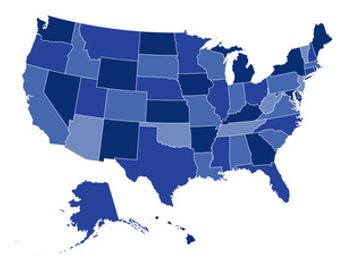
In the past 5 decades, there has been a steady rise in the prevalence of multiple sclerosis (MS), according to estimates using a validated algorithm across 5 large US administrative health claims data sets. The research was published in Neurology.

Genetic alternations in colorectal cancer (CRC) are linked to different survival and treatment outcomes, according to a study that used next-generation sequencing (NGS) of tumor DNA. The study was published in Journal of Clinical Oncology.