

Investigators examined the downstream effect of single-gene testing for guideline-recommended biomarkers on comprehensive genomic profiling in non–small cell lung cancer (NSCLC).

Maggie is a lead editor for The American Journal of Managed Care® (AJMC®), AJMC.com, and Evidence-Based Oncology, for which she produces written, video, and podcast content covering several disease states. She joined AJMC® in 2019, and she has been with AJMC®’s parent company, MJH Life Sciences®, since 2014, when she started as a copy editor.
She has a BA in English from Penn State University. You can connect with Maggie on LinkedIn.
Investigators examined the downstream effect of single-gene testing for guideline-recommended biomarkers on comprehensive genomic profiling in non–small cell lung cancer (NSCLC).

The approval follows fast track, orphan drug, and rare pediatric designations and an original Prescription Drug User Fee Act date of December 21, which the FDA pushed back to March 21 to have more time to review Italfarmaco’s application.
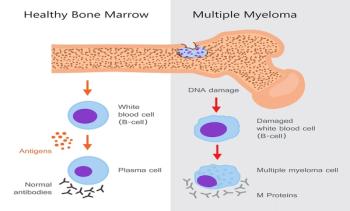
In this analysis, 3 bisphosphonates (alendronate, pamidronate, and zoledronic acid) and 1 RANK ligand inhibitor (denosumab) were evaluated for their effectiveness at preventing osteoclasts from facilitating jaw degradation and reducing vertebral fracture risk among patients being treated for multiple myeloma.

Overall rates for lung cancer screening remain low, despite the US Preventive Services Task Force revising its annual screening recommendation in 2021 by lowering the age of initial screening for current or former smokers and their pack-year history.

The approval makes atidarsagene autotemcel (arsa-cel [Lenmeldy]; Orchard Therapeutics) the first approved treatment for metachromatic leukodystrophy, a disease caused by a mutation in the ARSA gene and marked by progressive declines in both the central and peripheral nervous systems.

In a recent issue of JAMA, a team led by Benjamin N. Rome, MD, MPH, examined how the FDA’s accelerated approval process has moved 5 genetically targeted treatments for Duchenne muscular dystrophy (DMD) through its pipeline despite limited evidence on their efficacy.

In this interview, Pat Van Burkleo, executive director of Feeding Louisiana, explains why food access initiatives are a top priority.

Since 2016, 5 targeted treatments have received accelerated approval from the FDA for use in Duchenne muscular dystrophy (DMD), and the total spend for just 3 of them is $3.1 billion.

March 1 saw the FDA grant full approval to amivantamab plus chemotherapy for first-line use in patients who have non–small cell lung cancer (NSCLC) with EGFR exon 20 insertion mutations, converting the May 2021 accelerated approval for this treatment in the second line.

Teclistamab (Tecvayli, Johnson & Johnson), a first-in-class bispecific T-cell–engaging antibody, is approved to treat relapsed/refractory multiple myeloma in the US.

Stress has potential links to worse outcomes in cancer, such as decreased quality of life and greater risks of disease progression and metastasis. There is a complex mix of emotions patients with cancer experience.

In this study, the 42-patient population was enrolled from 5 sites in Canada and 1 site in Scotland, and data were gathered from March 7, 2019, to January 12, 2022; all had interstitial lung disease (ILD) and early-stage non–small cell lung cancer (NSCLC).

Knowledge gaps persist in awareness of and education on the use of chimeric antigen receptor (CAR) T-cell therapies for hematologic malignancies, especially multiple myeloma and lymphoma.

The authors of this report stress the importance of awareness of COVID-19–related complications in young patients who have Duchenne muscular dystrophy, paying particular attention to a potential higher risk of respiratory infections in these patients.
The approval converts the May 2021 accelerated FDA approval for second-line treatment of non–small cell lung cancer (NSCLC) with EGFR exon 20 insertion mutations to a full approval in the first line following results from the phase 3 PAPILLON study.
The FDA recently approved the supplemental biologics license application for teclistamab (Tecvayli; Johnson & Johnson) to treat relapsed/refractory multiple myeloma on a biweekly dosing schedule.

Investigators were searching for answers to the question, “Does it matter if a vein- or artery-first approach is used when performing a robotic lobectomy for non-small cell lung cancer (NSCLC)?

With little data available on outcomes among patients who have B-cell lymphoma (BCL) and secondary central nervous system (CNS) involvement who were administered CD19-targeting chimeric antigen receptor (CAR) T-cell therapy, these investigators enrolled 4 male patients in their study.

Outside of a gait laboratory, this investigation compared gait pattern differences between children who have Duchenne muscular dystrophy (DMD) and their typically developing counterparts to gain more real-world data of DMD-associated gait characteristics.

This most recent analysis from the CheckMate 9LA trial provides 4-year follow-up data on patients with stage IV metastatic/recurrent non–small cell lung cancer (NSCLC) randomized to treatment with nivolumab plus ipilimumab and chemotherapy vs chemotherapy alone.

Teclistamab (Tecvayli) was first approved for use in patients who have relapsed/refractory multiple myeloma (RRMM) in October 2022, making it a first-in-class bispecific antibody.

Fabiola Molina, MD, MHS, is a practicing hospitalist and assistant professor of medicine at Yale School of Medicine and Yale New Haven Hospital. An immigrant from Mexico, her experiences straddling 2 worlds, while attempting to navigate with her family the complicated safety-net system for health care in Texas, were key influences to her ardent focus on health equity.

In this final part of our interview with James Robinson, PhD, MPH, he underscores the need for employer education about the health plans they offer, fostering managed competition among hospital systems to drive down costs, and innovation in financing drug development.
In part 3 of our interview with James Robinson, PhD, MPH, he discusses the need for reforms to commercial insurance that reflect the changes to Medicare under the Inflation Reduction Act, how the 340B drug pricing program has veered widely from its original goals, and ongoing cost sharing struggles among patients, insurers, hospitals, and drug companies.

Shauna Downs, PhD, MS, is an associate professor in the Department of Health Behavior, Society, and Policy at the Rutgers School of Public Health. A former figure skater, her research now focuses on interventions to promote healthy and sustainable food choices and exploring how our changing climate, food systems, diet, and nutrition are inextricably linked.

Data are scarce regarding the benefits of strength training for muscular dystrophies, for which there are no cures.

For chimeric antigen receptor T-cell therapies (CAR T) approved to treat B-cell lymphoproliferative disorders and multiple myeloma, more data are needed on the effects of posttreatment myeloid neoplasms to optimize patient counseling, risk stratification, and surveillance.
In part 2 of our interview with Robinson, he addresses the potential for exacerbated health care disparities in the aftermath of hospital price markups and how insurance plan design often disadvantages the patients who most need expensive infusion therapies but cannot afford them.

Douglas K. Marks, MD, is a breast medical oncologist and director of the Clinical Trials Office, Perlmutter Cancer Center, NYU Langone Hospital—Long Island, as well as associate professor in the Department of Medicine at NYU Grossman Long Island School of Medicine. As a phase 1 clinical trialist, he sees both patients with breast cancer and those who are looking to receive innovative treatments for their early-stage disease.
In the January issue of The New England Journal of Medicine, James Robinson, PhD, MPH, and his fellow investigators published their findings from an analysis of how insurer drug expenditures on infused drugs influenced price markups at hospitals.