
To ensure patients are getting timely access to their treatments, there needs to be better collaboration between payers and providers, said Christine Pfaff, RPh, senior regional director of operations, American Oncology Network.

Maggie is a lead editor for The American Journal of Managed Care® (AJMC®), AJMC.com, and Evidence-Based Oncology, for which she produces written, video, and podcast content covering several disease states. She joined AJMC® in 2019, and she has been with AJMC®’s parent company, MJH Life Sciences®, since 2014, when she started as a copy editor.
She has a BA in English from Penn State University. You can connect with Maggie on LinkedIn.
To ensure patients are getting timely access to their treatments, there needs to be better collaboration between payers and providers, said Christine Pfaff, RPh, senior regional director of operations, American Oncology Network.
A 2022 yearlong initiative at Summa Health Cancer Institute saw 100% of its patients with head and neck cancer undergoing radiation treatment referred to an oncology dietician for nutritional support and/or speech and swallow therapy.
Kristine Slam, MD, FACP, Central Ohio Surgical Associates, addresses the importance of involving patients in decisions regarding their goals for treatment, emphasizing that this involvement is critical to uncover what they value, as well as their short- and long-term goals for treatment.
According to the National Cancer Institute, in the year following a cancer diagnosis, the average cost of medical care plus medication exceeds $42,000, with some treatments having a price tag of more than $1 million.

Fabric Health is transforming laundry time into an opportunity for community well-being, engaging families in laundromats to address health needs and connecting them with health care experts and needed social services. Adaptable and problem-solving oriented, the social-impact startup helps to bridge pandemic-exacerbated disparities by meeting people where they are, fostering health equity.

For patients who had 12 months of continuous health care coverage before and after receiving a diagnosis of vitiligo, treatment rates were at suboptimal levels.

Asian and Hispanic/Latino veterans experience insomnia at some of the highest rates, but these patient groups are also among the least likely to seek treatment for the common sleep disorder.

Qualitative interviews were conducted and a web-based quantitative survey was administered to have a clearer understanding of the economic impact of social determinants of health on patients living with generalized myasthenia gravis (gMG).

Pinky, a mobile mammography unit from Stony Brook University Hospital Cancer Center on Long Island, increased screening for breast cancer from 9% to 69% among the predominantly Latina population that it serves.

Christine Pfaff, RPh, senior regional director of operations at American Oncology Network, discusses the role of immunotherapy and precision medicine in oncology, as well as considerations for patient safety and financial toxicity when prescribing oncology drugs.

The interrelated concepts of burnout, secondary traumatic stress, moral distress, compassion fatigue, and compassion satisfaction have been identified as having a profound impact on the quality of life of health care providers.

A presentation at the Association of Community Cancer Centers’ 40th National Oncology Conference explored how a cancer screening initiative can be sustainable and revenue positive while driving value-based savings in an evolving market.

A poster presented at the 40th National Oncology Conference addressed several hot topics in the oncology treatment and research space: addressing medical mistrust in underresourced communities, partnering with trusted organizations to improve health equity, and increasing inclusivity in research.

Among Latino men who have sex with men (MSM), access to and use of pre-exposure prophylaxis (PrEP) remain at suboptimal levels, despite this population of individuals having disproportionately high rates of diagnosed HIV in the United States.

Jennifer Sturgill, DO, Central Ohio Primary Care, discusses how shortages of antibiotics and medications for attention-deficit/hyperactivity disorder have affected primary care, as well as addresses the impact on heart failure care of CMS’ recent announcement of the first 10 drugs up for price negotiation in 2026 under the Inflation Reduction Act (IRA).

Fee-for-service care is not really in line with how primary care physicians think or how primary care should be delivered; the crux of value-based care is wanting patients to have the care they want and need, noted Kristin Oaks, DO, Agilon regional medical director at Central Ohio Primary Care.

This year’s 40th National Oncology Conference from the Association of Community Cancer Centers (ACCC) will take place in Austin, Texas, from October 4-6, with content designed to reflect the theme of “Reimagining Innovation.”
In this interview from our recent Institute for Value-Based Medicine® event, Kristine Slam, MD, FACP, Central Ohio Surgical Associates, discusses the positive impact that Choosing Wisely and enhanced recovery after surgery, or EROS, protocols have had on patients receiving treatment for breast cancer.
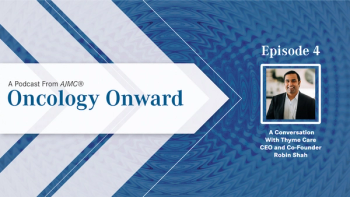
Robin Shah, CEO of Thyme Care, which he founded in 2020 with Bobby Green, MD, president and chief medical officer, joins hosts Emeline Aviki, MD, MBA, and Stephen Schleicher, MD, MBA, to discuss his evolution as an entrepreneur in oncology care innovation and his goal of positively changing how patients experience the cancer system.

As of November 2022, the Pittsburgh Financial Empowerment Center has helped 1227 clients, saved them over $2 million, and helped reduce their debt by almost $3.5 million. Counselor Alicia Donner discusses how the organization not only provides financial assistance but also helps patients cope with unexpected health care expenses.

The number one ingredient that an oncology-based alternative payment model needs to succeed is collaboration, explained Nicolas Ferreyros, managing director of policy, advocacy, and communications, Community Oncology Alliance (COA).

Data from fee-for-service Medicare claims that were linked to the Surveillance, Epidemiology, and End Results program were used for this retrospective cohort analysis among women 70 years and older.

Overactivation of the immune system is a potential serious adverse event (AE) following immune checkpoint inhibition (ICI) treatment for any of several cancers in the first and second line; among these AEs is myasthenia gravis.
In a few short years, biosimilars have driven down total cost of care in oncology through providing competition for expensive drugs, explained Christine Pfaff, RPh, senior regional director of operations, American Oncology Network (AON).

Data from 6 states—California, Florida, Louisiana, New Jersey, North Carolina, and Pennsylvania—and 2 metropolitan areas—Atlanta, Georgia, and Detroit, Michigan—collected through the National Institutes of Health–AARP Diet and Health Study were used for the investigation.
Jennifer Sturgill, DO, inpatient medical director of population health, Central Ohio Primary Care, co-presented “Value-Based Care: What Is It and Why Should We Care?” at our most recent Institute for Value-Based Medicine® event with the Zangmeister Cancer Center of Columbus, Ohio, on September 14.
Kristin Oaks, DO, Agilon regional medical director at Central Ohio Primary Care, spoke at our recent Institute for Value-Based Medicine® event held with Zangmeister Cancer Center. Here, she addresses the importance of value-based care within the primary care space.
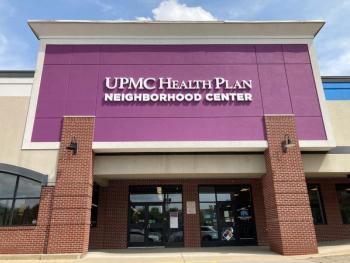
The UPMC Health Plan Neighborhood Center, which first opened its doors in December 2022, offers a wide array of services to support plan members and others living in the community.

Approximately 70 to 300 million individuals worldwide are living with myasthenia gravis, an antibody-mediated autoimmune disorder that adversely affects neuromuscular junction function.
We are in the midst of a transformative time in oncology that could also be a little scary if you are not prepared, said Nicolas Ferreyros, managing director of policy, advocacy, and communications, Community Oncology Alliance.