





Undetectable measurable residual disease rates can help predict progression-free survival in patients with chronic lymphocytic leukemia, according to an analysis.
Undetectable measurable residual disease rates can help predict progression-free survival in patients with chronic lymphocytic leukemia, according to an analysis.

The latest study findings suggest that acalabrutinib may be a safer option than ibrutinib for patients with chronic lymphocytic leukemia, offering a lower risk of serious cardiovascular and infection-related adverse events.

A recent study has found that higher serum levels of B-cell activating factor and anti-CCP3 are associated with a reduced risk of developing chronic lymphocytic leukemia (CLL), suggesting potential biomarkers for assessing CLL risk.

The authors said their findings also suggest AXL inhibition might be an important therapeutic strategy.

Experts discuss future directions of BTK inhibitors.
A panel of specialists discuss patient access advocacy for BTK inhibitors.
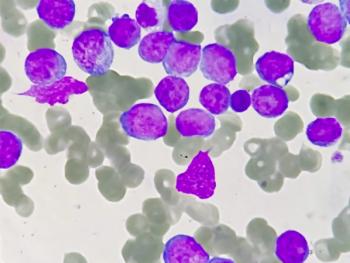
A meta-analysis demonstrated the superiority of Bruton tyrosine kinase inhibitors (BKTi) in the overall survival of patients with chronic lymphocytic leukemia compared with other therapies.

A mathematical model using pharmacodynamic parameters, including duration of hyperlymphocytosis, may help clinicians better predict patient responses to ibrutinib administered for chronic lymphocytic leukemia (CLL).
A group of experts discuss implications for patient access in CLL.
A panel of experts discuss navigating access challenges in CLL treatment.

A Canadian study showed a high probability that using next-generation sequencing (NGS) for treatment sequencing based on risk stratification is cost-effective.

As the treatment landscape for chronic lymphocytic leukemia (CLL) has moved into an era where targeted treatments are a mainstay of treatment, new opportunities to tailor therapy have emerged.
Experts discuss financial challenges of BTK inhibitor therapy.
A panel of experts discuss combination regimens with BTK inhibitors.

Researchers believe that in their revised 4-factor model to predict patient outcomes in chronic lymphocytic leukemia (CLL), CD49d tops lactate dehydrogenase.

The findings support previous research suggesting that worse prognosis in patients with del(6q) is not solely a result of genomic instability or presence of multiple genetic alterations.
A discussion on therapeutic decision-making in CLL and the role of real-world evidence.
Experts discuss leveraging MAICs for decision-making when choosing a CLL BTK inhibitor.

This systematic review focusing on the targeted therapy era found solid associations between measurable residual disease (MRD) and clinical outcomes in patients with chronic lymphocytic leukemia.

Ryan Jacobs, MD, lymphoma division director at Atrium Health Levine Cancer Institute, explains the design and objectives of the phase 2 CAPTIVATE study comparing ibrutinib and venetoclax in patients with chronic lymphocytic leukemia (CLL).
A panel of experts discuss optimizing therapy sequencing in CLL.
A conversation on how to empower patients and the considerations for BTK inhibitor adherence.

Researchers of a new study explore what areas of chronic lymphocytic leukemia (CLL) treatment and care are important to patients and identify key areas for improvement.

In this interview from our coverage of the European Hematology Association 2024 Congress, we spoke with Brian Koffman, MDCM, DCFP, FCFP, DABFP, MSEd, executive vice president and chief medical officer of the CLL Society and himself a survivor of chronic lymphocytic leukemia (CLL), to discuss treatment advancements and the importance of addressing both unmet needs and patient treatment preferences.
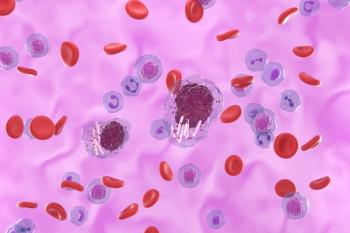
Pirtobrutinib led to improved outcomes compared with venetoclax in patients with relapsed chronic lymphocytic leukemia (CLL) following covalent Bruton tyrosine kinase inhibitor therapy.