




Heart Failure
Latest News
Advertisement
Latest Videos





Advertisement
More News

This new investigation serves to update decades-old data on patient eligibility for and participation in cardiac rehabilitation programs.

During an interview at the 2022 American Heart Association Scientific Sessions in Chicago, Michael A. Portman, MD, FAHA, Seattle Children's Hospital addressed how cardiac disease presents in pediatric vs adult patients.

Patients included in this subanalysis of data from the REHAB-HF trial were 60 years and older and had been hospitalized for acute decompensated heart failure.

Michael Paull, MD, medical director of primary/urgent care and continuous improvement at the Vancouver Clinic (TVC), explained how TVC was able to improve its hypertension metrics to align with CMS' targets.

The efficacy and safety of sacubitril/valsartan, the angiotensin receptor neprilysin inhibitor, was investigated among a patient population who had heart failure with preserved ejection fraction (HFpEF) and currently receiving maintenance hemodialysis (MHD).
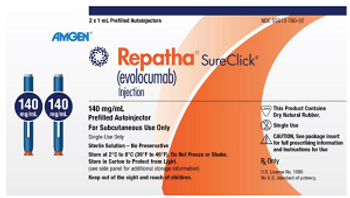
Experts Issue Caution for Evolocumab Following New Review of FOURIER Data; Amgen Disputes the Claims
Investigators writing in BMJ Open called for “a complete restoration of FOURIER trial data.” Amgen, the maker of evolocumab, said it stood by the data.

The American Journal of Managed Care® covered thousands of miles in 2022, virtually and in person, criss-crossing the country and the world to deliver the latest clinical data, trial results, and drug developments.
In heart failure this year, value-based care, left ventricular ejection fraction, and disease prevention were among the most popular topics discussed.

At this year’s American Heart Association (AHA) Scientific Sessions, held November 5-7 in Chicago, Illinois, hot topics for discussion included VICTORIA trial data and the great need for new antihypertensive agents to reduce health care disparities.

Initial data on NTLA-2001, which is a novel investigative intravenous agent that works to prevent development of cardiac transthyretin (ATTR) amyloidosis by targeting the TTR gene and TTR protein levels, were presented at this year’s American Heart Association’s Scientific Sessions in Chicago.

The American College of Cardiology’s 71st Scientific Session covered how to address the impact of social determinants of health on cardiovascular outcomes, understanding the latest developments in digital health, and the role of COVID-19 on heart health.

This analysis evaluates the relationship between hospital care delivery network fragmentation and in-hospital and 90-day outcomes. These networks may be novel targets for improving outcomes.
Predictive analytics–driven disease management outperforms standard of care among patients with chronic heart failure.

All-cause mortality was investigated among individuals who had heart failure as it related to their daily caloric intake and energy outcome.

Researchers pulled data from the FDA’s Adverse Event Reporting System to analyze cardiac arrhythmia–related outcomes among patients on a mono or combination regimen for cancer treatment that included immune checkpoint inhibitors (ICIs).

Study authors initiated this study because of a lack of data on arrhythmia trends among pregnant women who have been hospitalized for delivery, accounting for their age, comorbidities, and obesity status.

In an interview at this year’s American Heart Association Scientific Sessions meeting in Chicago, Tochi M. Okwuosa, DO, cardiologist and director of cardio-oncology at Rush University Medical Center, discussed the importance of addressing cardiovascular disease (CVD) prevention in patients with cancer who are undergoing treatment.

This international study, from investigators in Germany and Austria, looked at the effect sacubitril/valsartan can have among patients who have heart failure with reduced ejection fraction (HFrEF) and the impact on their cardiac autonomic nervous system.

Disease symptomatology may be the same, but the presentation of heart failure (HF) and heart attacks differ between women and men, explained Amresh Raina, MD, of the Allegheny Health Network in Pittsburgh, Pennsylvania.

Patients with heart failure frequently suffer from fluid overload, and for those with heart failure with reduced ejection fraction (HFrEF) also suffering from septic shock—a condition often treated with fluids—more data are needed on outcomes following fluid administration.
Risk factors not properly addressed in patients with asymptomatic heart failure, such as high blood pressure and having diabetes or mild heart valve problems, can lead to structural heart problems or heart failure itself, noted Amresh Raina, MD, of the Allegheny Health Network in Pittsburgh, Pennsylvania.

The limited data on heart failure (HF)-related mortality among young adults, those aged 15 to 44 years, prompted this analysis of data from 1999 to 2019 that considered HF as a contributing or underlying cause of death.

Despite known racial disparities in access to advanced heart failure (HF) treatments, the reasons for this continue to require further exploration. In this new study, investigators searched for associations between ventricular assist device use and heart transplant and race (Black or White).
There is potential impact on the heart, coronary arteries, and heart function following radiation to the left side of the body, explained Amresh Raina, MD, director of the Advanced Heart Failure and Pulmonary Hypertension Program at Allegheny General Hospital and the Allegheny Health Network in Pittsburgh, Pennsylvania.

The impact of the COVID-19 pandemic on pediatric heart transplant waiting list times was evaluated in this new study that used data from the United Network for Organ Sharing.
Advertisement
Advertisement
Trending on AJMC
1
IRA, 340B, Medicaid: The Policy Pressures on Community Oncology
2
Drug Price Drives Value of MASH Therapies More Than Efficacy
3
Retatrutide Yields Up to 20.8% Weight Loss in Obesity With T2D
4
Vibegron Outranks Mirabegron, Tolterodine on Several OAB Measures
5