


Hematology
Latest Content
Advertisement
Latest Videos

Advertisement
More News

Experts at the “Paying for Cures: Ensuring patient access and system sustainability" event discussed how the healthcare system can pay for curative therapies that have high upfront costs with benefits that accrue over time.

Two studies presented at the 60th American Society of Hematology Annual Meeting and Exposition examined patient preferences in multiple myeloma (MM) treatment and the importance of understanding these preferences when making treatment decisions.

Patients with acute myeloid leukemia (AML) who are ineligible for intensive chemotherapy tend to have poor health-related quality of life (HRQoL) scores that are independent predictors of poor survival, a recent study reported.

A recent observational study, which used data covering more than half of the US population, found that the incidence of cancer linked to obesity is on the rise in young adults.
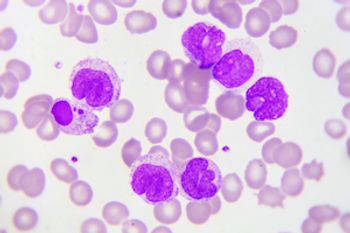
Long noncoding RNAs (lncRNAs) are involved in the pathogenesis of b-cell precursor acute lymphoblastic leukemia (BCP-ALL) and contribute to the stratification of BCP-ALL subtypes, according to results from a recent study.

The approval marks the first non-chemotherapy combination regimen for the treatment of patients with chronic lymphocytic leukemia (CLL).
Two recent studies analyzed patients with multiple myeloma to identify factors that impacted response to therapy.

As patients with multiple myeloma live longer thanks to advancements in treatments, more attention is being paid to treatment-related toxicities that are becoming more relevant.

Patients with multiple myeloma (MM) who have high-risk cytogenetic abnormalities typically have shorter progression-free survival (PFS) and overall survival (OS) compared with standard-risk patients. In an analysis of 2 studies, patients with high-risk MM had improved outcomes when taking carfilzomib once a week compared with a twice-weekly dose.

Policy
By
Updates from the annual ASH meeting, December 2018.
Published results confirm the efficacy of tisagenlecleucel in patients with relapsed or refractory diffuse large B-cell lymphoma.

Maintenance therapy with lenalidomide remains a standard of care for patients with multiple myeloma. However, optimizing maintenance therapy in this setting is required as a result of lenalidomide’s lack of overall survival benefit and improvement in outcomes for patients with high-risk cytogenic abnormalities, according to a recent study.

Bristol-Meyers Squibb (BMS) and Celgene kicked off the 37th Annual JP Morgan Healthcare Conference by discussing their leading drugs, near-term launches, and early pipeline assets.
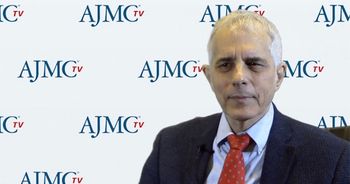
As a physician, Brian Koffman, MDCM, DCFP, DABFM, MS Ed, medical director, CLL Society, was able to leverage his medical and scientific knowledge during treatment for his chronic lymphocytic leukemia (CLL), and he encourages other patients to educate themselves on their illnesses in order to receive the best care.

Pediatric patients with early-stage Hodgkin lymphoma who are treated with chemotherapy followed by radiotherapy, known as combined modality therapy, have an improved 5-year survival rate compared with patients treated with chemotherapy alone.
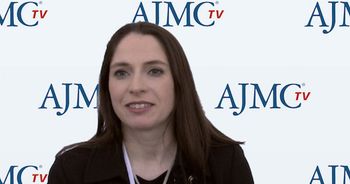
Elizabeth Griffiths, MD, associate professor of oncology, department of medicine, Roswell Park Comprehensive Cancer Center discusses recent approvals for acute myeloid leukemia (AML).
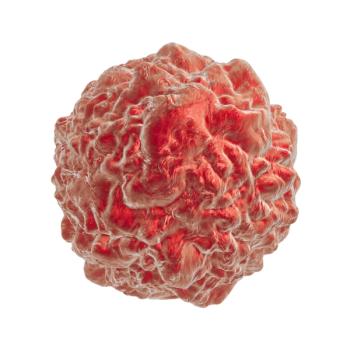
Children with Hodgkin lymphoma who are treated during childhood and survive to adulthood have higher incidence rates of breast, lung, colorectal, and thyroid cancer than the general population, according to a recent study.
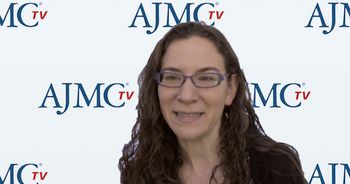
Patients who are over 60 with Hodgkin lymphoma have much lower survival rates than patients who are under 60, explained Alison J. Moskowitz, MD, medical oncologist, clinical director, lymphoma inpatient unit, Memorial Sloan Kettering Cancer Center.

Patients who are treated with chemotherapy for their solid tumors have an increased risk of therapy-related myelodysplastic syndrome and acute myeloid leukemia (tMDS/AML) despite advances in chemotherapy regimens, according to a new study in JAMA Oncology.
There have been incredible responses to treatments for chronic lymphocytic leukemia (CLL), but there remains a tremendous unmet need for patients, said Brian Koffman, MDCM, DCFP, DABFM, MS Ed, medical director, CLL Society.
Throughout the year, The American Journal of Managed Care® (AJMC®) offered a number of video programs, including Peer Exchange discussions and interviews, on a range of topics. Here are the most-watched videos published by AJMC® in 2018.
During the 60th American Society of Hematology Annual Meeting & Exposition held December 1-4 in San Diego, California, Norman Sharpless, MD, director, National Cancer Institute (NCI), brought attention to several advances made in hematologic malignancies over the past year and highlighted 4 areas of focus going forward.

Ibrutinib-containing regimens have similar overall survival rates but significantly higher progression-free survival (PFS) rates at 2 years compared with bendamustine plus rituximab.
Following failure with ruxolitinib, there are limited treatment options available and among these patients who fail on the treatment, prognosis is unfavorable, particularly among those who started ruxolitinib with advanced stage disease, according to a study presented at the 60th American Society of Hematology Annual Meeting & Exposition.

ELOQUENT-3 trial results found that adding elotuzumab to pomalidomide and dexamethasone improved progression-free survival (PFS) and overall response rate in patients with multiple myeloma that had relapsed from or were refractory to (R/R) lenalidomide and a proteasome inhibitor.
Advertisement
Advertisement
Trending on AJMC
1
Merck, Moderna Cancer Vaccine Cuts Melanoma Recurrence Risk by 42%
2
IDWeek Studies Tie RSV, Flu, and COVID-19 to Harm After Acute Illness
3
Former USAID Health Chief Says Aid Cuts Are Costing Children's Lives
4
It’s the Best of Times and Worst of Times for Cancer Care in Tampa
5