



Non-Small Cell Lung Cancer
Latest News
Advertisement
Latest Videos





Advertisement
More News

This investigation sought to expand knowledge of the impact of comorbid pulmonary hypertension (PH) on diagnosed non–small cell lung cancer (NSCLC), using data from adult patients treated at military hospital facilities within the US.

Encouraging trends were seen with osimertinib and platinum-pemetrexed chemotherapy in patients with EGFR-mutated advanced non–small cell lung cancer (NSCLC) in the phase 3 FLAURA2 study.

This investigation used data from The US Oncology Network on trends in lung cancer stage when patients present for care.

The TRITON study is evaluating tremelimumab/durvalumab/chemotherapy vs pembrolizumab/chemotherapy in non–small lung cancer (NSCLC) with STK11 and/or KEAP1 and/or KRAS mutations.

This investigation sprung from a lack of current knowledge on the impact of nonmalignant results following thoracic surgery for lung cancer, according to the authors.

Data presented at the recent American Thoracic Society 2024 international conference identified the top barriers to lung cancer screening in Asian Americans, and common risk factors among this population.

This qualitative study on primary care physicians yielded suggestions that can inform the design of an effective lung cancer screening decision aid tool and implementation into the electronic health record.

This international study, incorporating data from the US, Brazil, Singapore, and Spain, shows that durvalumab as maintenance therapy for use against non–small cell lung cancer remains a cost-prohibitive treatment option.

For this analysis of how body composition might affect the impact of immunotherapy used to treat non–small cell lung cancer (NSCLC), investigators from Dana-Farber Brigham Cancer Center compared patient outcomes based on baseline body composition measurements or first follow-up scan.
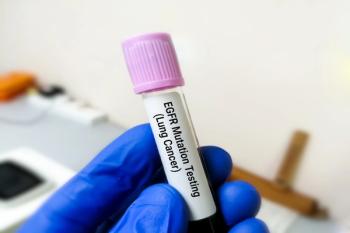
Investigators continue to seek more information on how to optimally integrate treatment with tyrosine kinase inhibitors (TKIs) into an established concurrent chemoradiotherapy regimen.

Data from real-world and clinical-trial settings on frontline monotherapy treatment with the KRAS inhibitor sotorasib both show similar progression-free survivals and a high likelihood that the treatment’s efficacy is not affected with dose reduction.

Outcomes among patients with stage IV non–small cell lung cancer as evaluated within clinical trials via Response Evaluation Criteria in Solid Tumors (RECIST) and clinician response criteria in observational studies were compared for their concordance and reliability.

Consistent with previous observations, overall survival and progression-free survival remained strong at the follow-up point.

This analysis evaluated patient-related outcomes between those who did and did not receive consolidation durvalumab after chemoradiotherapy for unresectable stage III non–small cell lung cancer.
For patients with early-stage non–small cell lung cancer (NSCLC), combining neoadjuvant immune checkpoint inhibitors and platinum-based chemotherapy improves 2-year outcomes over chemotherapy alone, suggest findings of an extensive literature review and meta-analysis.

Seeking more data on adjuvant alectinib in patients who have resectable ALK-positive non–small cell lung cancer (NSCLC), investigators compared outcomes vs chemotherapy.

The data for this analysis on survivors of lung cancer came from Johns Hopkins Sidney Kimmel Comprehensive Cancer Center thoracic oncology clinics.

Authors conducted a systematic literature review to gather evidence on the appropriateness of recommended treatments for locally advanced non–small cell lung cancer (LA-NSCLC) from the American Radium Society Appropriate Use Criteria Thoracic Committee.

The study compared the adverse events and surgical, pathological, and efficacy outcomes associated with neoadjuvant chemoimmunotherapy vs chemotherapy, particularly focusing on patients with PD-L1 levels less than 1%.

This analysis found the complex decision-making process of lung cancer screening among eligible individuals is infused with 3 principal themes that may influence how primary care physicians approach patients with comorbidities.

This analysis included 119 patients with advanced lung cancer, who were evaluated on 3 facets of physical activity over 14 days of using the amuelink wearable device from Sony: metabolic equivalent tasks, distance walked, and steps taken.

Investigators examined the downstream effect of single-gene testing for guideline-recommended biomarkers on comprehensive genomic profiling in non–small cell lung cancer (NSCLC).

Overall rates for lung cancer screening remain low, despite the US Preventive Services Task Force revising its annual screening recommendation in 2021 by lowering the age of initial screening for current or former smokers and their pack-year history.

A review explores the evidence supporting the use of circulating tumor DNA (ctDNA) liquid biopsies to help direct the evaluation and management of EGFR-mutated non–small cell lung cancer (NSCLC), including for assessing resistance to certain treatment options.

In this study, the 42-patient population was enrolled from 5 sites in Canada and 1 site in Scotland, and data were gathered from March 7, 2019, to January 12, 2022; all had interstitial lung disease (ILD) and early-stage non–small cell lung cancer (NSCLC).
Advertisement
Advertisement
Trending on AJMC
1
COVID-19 or Flu? Symptoms Alone Can't Tell: Tammy Lundstrom, MD, JD
2
Nearly a Decade After CAR T, Medicare’s Cell and Gene Therapy Payment Gap Persists
3
Twice-Daily Deuruxolitinib Outperformes Once-Daily in Severe AA
4
Inside the CAR T-Cell Therapy Process for CLL
5